
It is a misty Sunday morning in the year 2014, but as with all affairs pertaining to Cambridge – does it really matter?
At the fringes of Market Hill, a street magician is summoning the middling early morning crowd. The air is rife with summons interspersed with limericks, quips and some impromptu songs. Under the shadow of the antediluvian Church of St. Mary the Great, a motley of seduction techniques are being used to lure the mildly interested mob.
Of course, in addition to the little bag of tricks, it is vital that every showman exudes some charm, some allure to captivate the audience. But street artists, in particular, perform for an audience that has neither prematurely paid for the performance nor set out of their homes with the intention of watching a show that day. An audience that is waiting, hoping rather, for a lull in captivation to walk away.
It is imperative the artist vociferously snatches their evanescent attention away from their premeditated agenda for the day. Imperative that they desperately fetter it, incarcerate it within the permeating aura of their showmanship. Yet, the nature of this business dictates that even if they managed to suspend the audience on tenterhooks till the final act, the top hat that would get passed around would only jingle if the audience had change to spare.
It is the law of the jungle where the strong survive.
Having finished his summons for an audience, the busker has now put on his top hat. The show is ready to begin.
In line with Christopher Priest\’s prestidigitation maxims, the magician holds up an ordinary object – his hands in this instance. In a bid to provide substance to this act, your undying belief in the normalcy of his hands is crucial. He turns them to reveal the apparent emptiness of his palms to further solidify this belief. With a final tug at his cuffs, he reveals his wrists to cement the bond of trust we have just created. The audience is now bound with conviction – his hands hold no secrets.
He then proceeds to drape a black cloth over one hand.
A little count to three and the cloth is unveiled.
A fluttering white dove perched on the tip of his finger.
\”If you could fool them, even for a second, then you can make them wonder. Then you… then you got to see something really special. You really don\’t know? It was… it was the looks on their faces.\”
The looks on their faces.
It is time to reveal to you, the reader of this piece, a little parallelism. This little anecdote of the busker under the shadow of the Great St. Mary was not just arbitrary literary theatrics. There is more to this street magician that concerns Cambridge, why because, and I must insist you believe me, this street magician and the town of Cambridge are one and the same.
Unaware of my participation in wizardry of unimaginable proportions, I was subject to a year-long magic trick.
Initially, the town too came at me with fingers splayed, asking me to inspect the quasi-ordinary elements of its serenity.
With a turn of its hands and twinkling smile, it prodded me to view it from all facets to further solidify my belief that there is nothing more to it.
With a final tweak of its cuffs and a fleeting wink, it seemingly bared down to its roots, deceptively goading me into confirmation that all that I saw was unaltered, normal and ultimately, real.
But it wasn\’t.
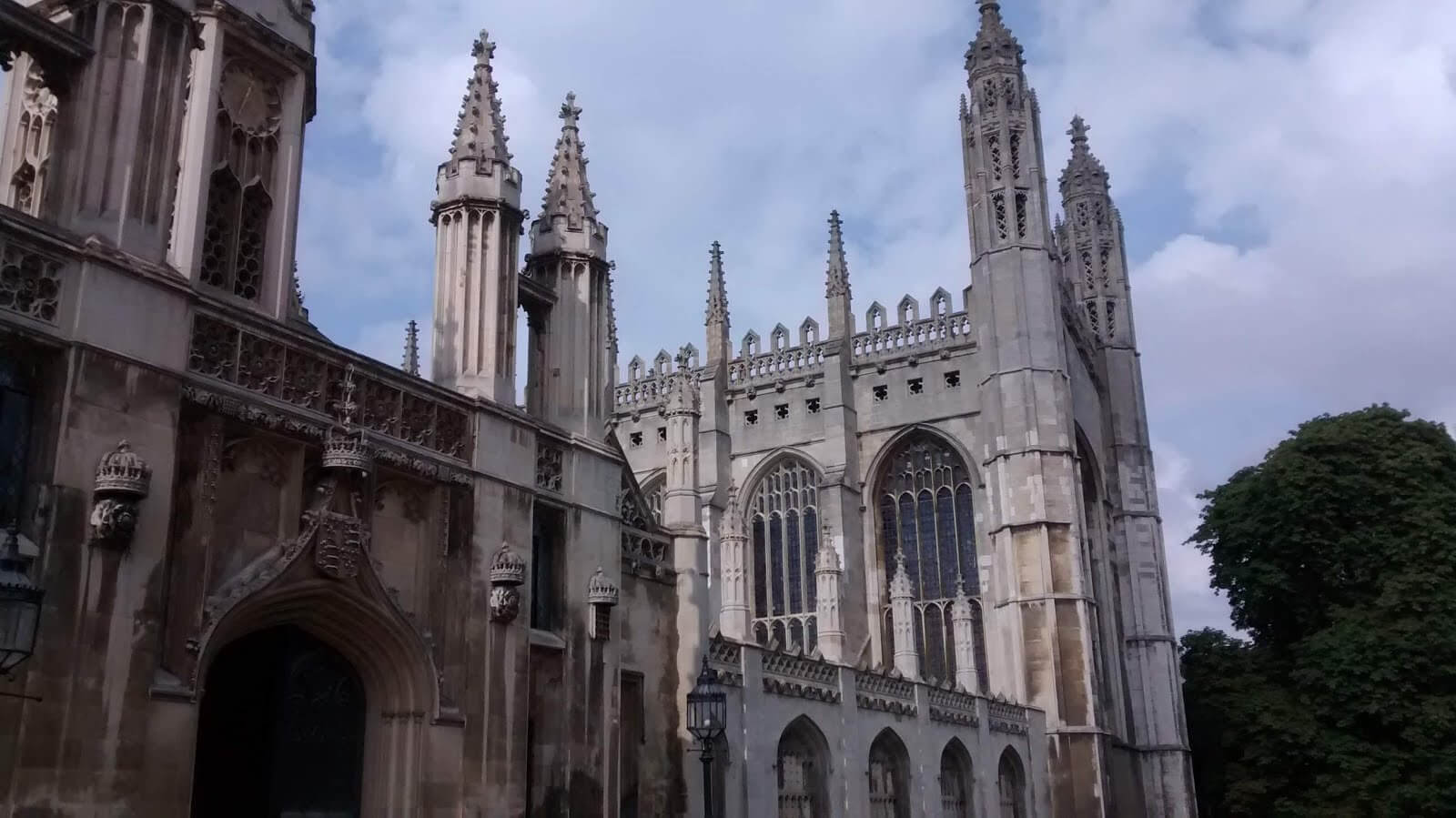
I feel it is important to provide you with the right context – this piece, after all, is my personal account of Cambridge. Not the Cambridge you know from the Internet, on celluloid or from hearsay. The town that I saw and lived in.
And, more than all, a strangeness in the mind,
A feeling that I was not for that hour,
Not for that place.
But wherefore be cast down?
* * *

I, however, did not add to that ghoulish collection of academic despair as I never got a chance to walk through the Bridge of Sighs.
In fact, my first sighting of it was on my last day in C town, a year from the day I first stepped through the archway at the railway station. You see, unlike most accounts of this magical place, mine isn\’t one of the infamous university it houses. While the confines of living in a university town ensure that you are never really cut off from its ominous presence, I was still an outsider to this renowned echelon of academia.
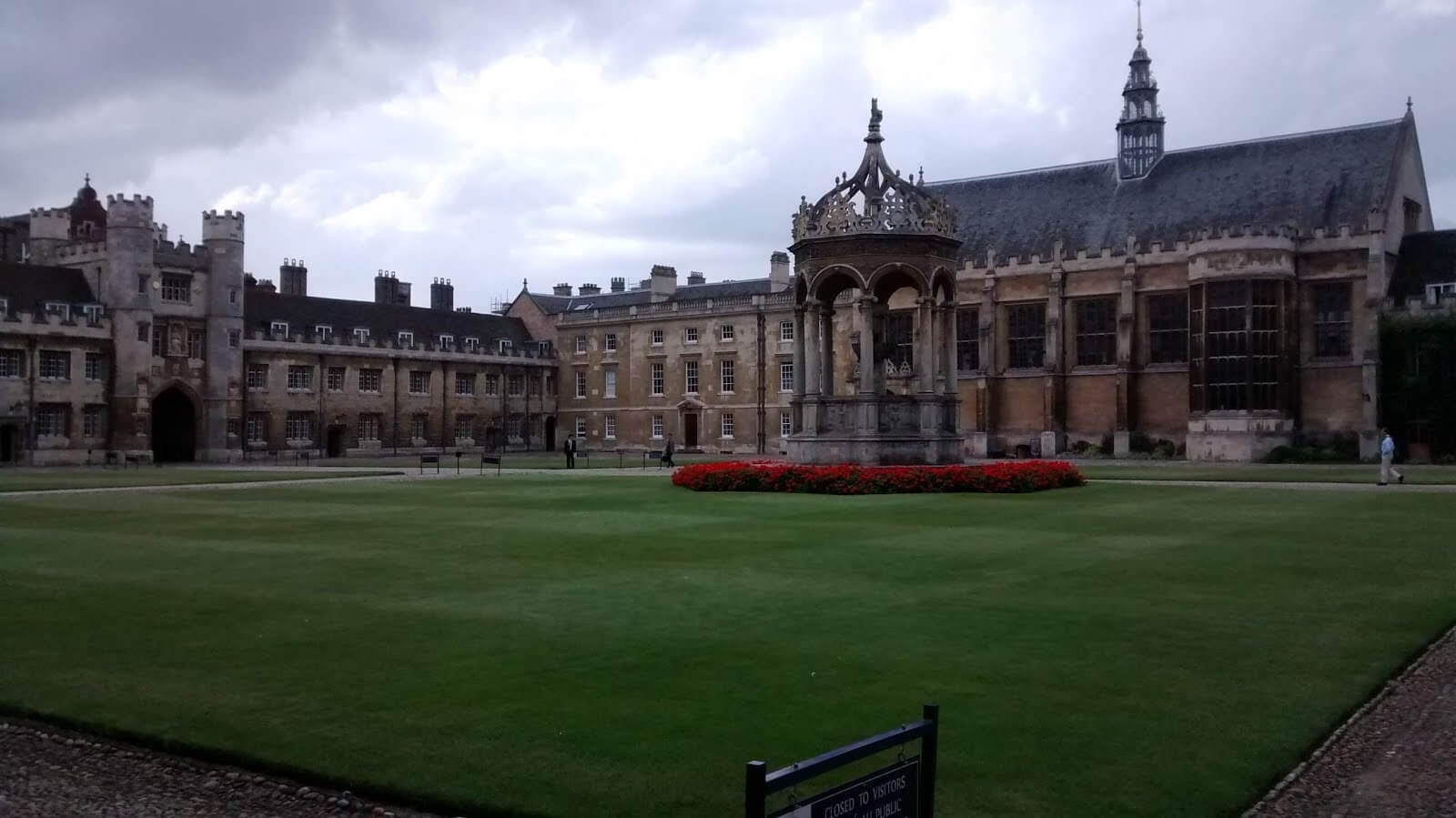
At the Great Gate of Trinity College, you will find an endangered Flower of Kent cultivar that is named \’Newton\’s Apple Tree\’. Touted to be grafted from the very same tree that purportedly stemmed the birth of the universal laws of gravitation. A spawn of the original at Woolsthorpe Manor in Lincolnshire, now serving as a reticent gatekeeper of Trinity College – in the rooms of which Isaac Newton once resided.
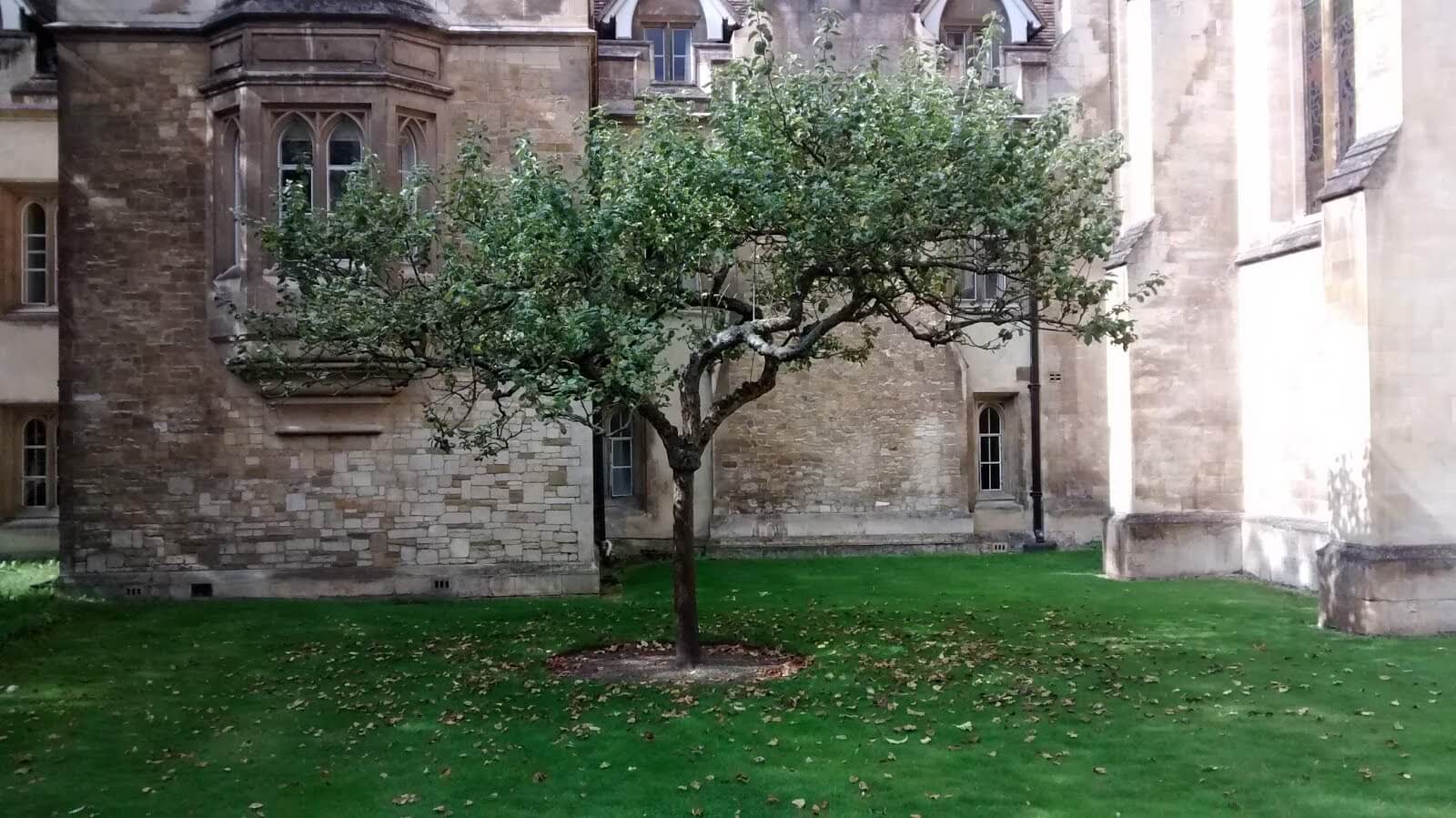
Before I moved to my permanent residence overlooking Cambridge Railway station, where every morning I was woken by the rumble of trains taking the daily workers into the heart of London, I first hung my hat at the front of the \’The Backs\’, not too far from Newton\’s Apple Tree at the oldest college in the university.
Around Peterhouse, as with most things in Cambridge, there hung a heavy weight of history. Of students, mentors, treaties, bishops, religion, discord and nobility. Of honour and customs, of chivalry and principles.
The hands of the magician, splayed for the world to see.
It seemed that the creeping ivies, rusted plaques, peeling coat of arms and creaking staircases were just by-products of a legacy that dated back to 1284.
1284!
Once again, does it really matter?
No other place could be more befitting for Professor Stephen Hawking to explore his thesis on time. A few minutes north from Peterhouse, he had inaugurated the Corpus Clock. With no clock hands or numerals, the clock tracks time with a metal creature named the Chronophage turning concentric gold plates to count down. The Chronopage, which translates to Time Eater in Greek, seems to sadistically revel in its ingestion of each second, its eyes lit with the arrogance of its gluttony.
The clock, however, is only accurate every fifth minute. The phases in between are mingled with functional aberrations that seemingly represent the irregularity of life.
Yet, despite time being eaten up, consumed whole second by second to never return, Cambridge doesn\’t seem perturbed.

It is well documented that Parker\’s Piece bore witness to a feast of grand proportions. In 1838, over 15,000 guests gathered at the 25-acre green common to celebrate the coronation of Queen Victoria. Yet, as I dawdle along one of the only two diagonal paths that dissect this ground, I could easily be back in 1838, adrift in the continuity of time. Back there amongst the revelry and grandiosity of the nineteenth century, drinking away to the merriment of a new monarch. Save for the trundling traffic on the roads at the perimeter, the sight I see with my eyes could well be a portrait from a previous century.
Another masterpiece, by the creatures of the night.
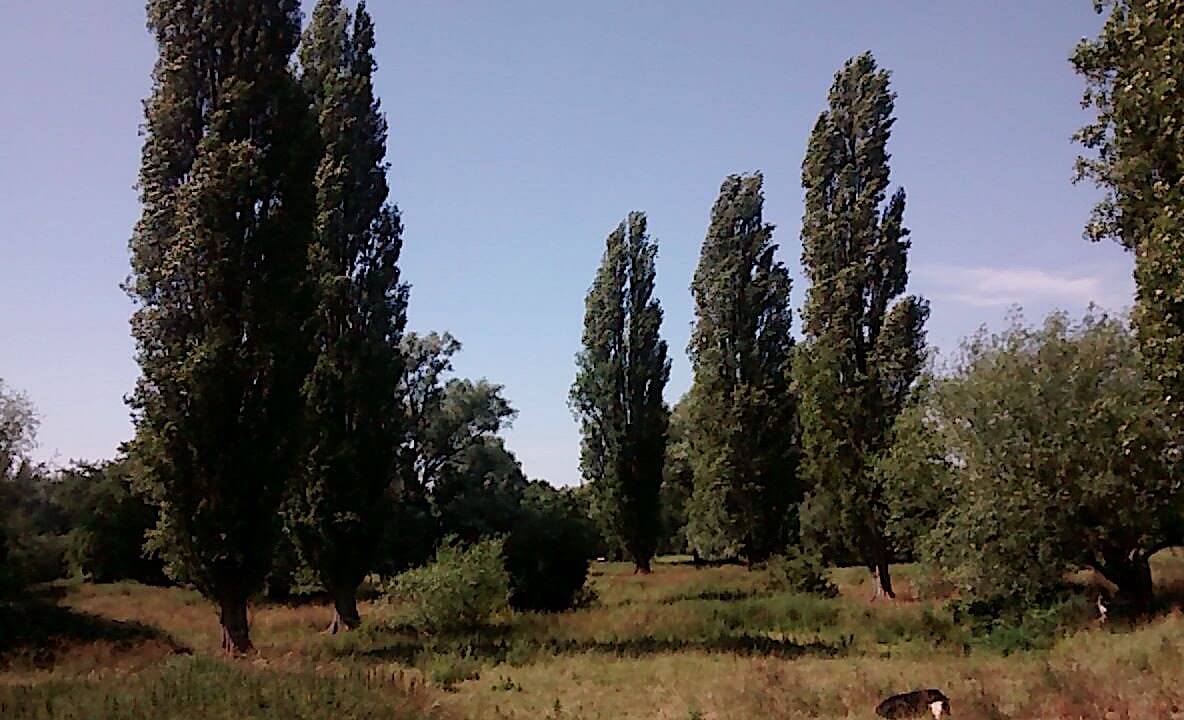
The Lombardy Poplar trees are an incredible sight.
I\’m pretty sure you would have come across them in some capacity in your adventures, and if you haven\’t I would insist you try and see them for yourself. They seem haughtily impervious to the world around them, and immensely disinterested in this young man staring at them over a fence, silently astray in intrigue at the sight of Coe Fen, a sprawling meadowland to the east of River Cam.
But I am not here to mislead you – the world harbours multiple spectacular natural reserves that effortlessly eclipse this unimportant, and in all honesty – quite an ordinary fen. For a botany aficionado, even the Cambridge Botanic Gardens would easily be a greater outing than a visit to the Coe Fen.
But I like what I see.
Easily surpassing 50 feet in height (a four-storey building?), the noble Poplars stand as mute, unflinching sentinels guarding the beauty of this fen. Apart from the rustle of leaves and the sporadic rumble of a lone car on the Fen Causeway, there are only whispers in the wind. Even though I\’m aware I\’m hardly a mile from the city centre, the Coe Fen is an abstract gateway into my childhood idea of a British countryside.
This is the countryside I used to read about in books, nestled in the cement cocoons of my urban cities. From delving through volumes of literature by Enid Blyton and Ruskin Bond that asked me to embrace the rustic fantasy to here and now, helplessly beset by the inescapability of its entrancing actuality.
A final tweak of the cuffs and a fleeting wink.
It is tempting to lose yourself in this enchantment, to never worry about those mundane, unimportant problems of daily city life. The whispers in the wind have now taken the shape of a hand. It seems to shimmer with mischief, and with a beckon, it asks you to step forth into the foliage. Step forth, and let it caress your soul.
Somehow, I had made it to the imaginary countrysides of my childhood.
* * *
Green as a dream and deep as death
\”See, sacrifice, that\’s the price of a good trick.\”
Despite my determination to detest this town, Cambridge never fought back. It seemed happy to goad me further. Happy to throw me further into the discomfort of lifestyle extremities. It wanted me to feel out of place. Me, a child of the skyscrapers, a stickler for the grind, prodigal son of the future against the might of the past.
That it was an illusion against the reality of my life. A draped black cloth, and a fluttering white dove.
Now you\’re looking for the secret.
Driven by the omnipresent wizardry in the Cambridge, that in the process of seducing me with caressing hands, seems to have surreptitiously embedded an abstraction, a thought.
A thought latched onto my soul that this, around me, is the discontinuity.
You can like this blog\’s Facebook page here, follow the Twitter feed here, follow me personally on Twitter here, like the Instagram post here or upvote this piece on Reddit here.
Similar articles:
A City\’s Soul In Deira, Dubai: Read More
The Unheard Voices Of Tehran: Read More
In The Alleys & Valleys Of East India: Read More
 Know Time
isc123Thanks for this weeks post. However some questions are more appropiate for one method and some can benefit from both.
LikeLike
Magic is regularly viewed as strange or suspicious by the bigger network and is in this way polished in disengagement or in mystery. magic illusion show
LikeLike
Thanks for taking the time to discuss this, I feel strongly about it and love learning more on this topic. If possible, as you gain expertise, would you mind updating your blog with extra information? It is extremely helpful for me. click here
LikeLike
The magic should not contradict. Use the theory of cancellation- If you start with a sleight of hand effect, then follow it with a self-working effect.penn and teller fool us
LikeLike
mushroomsmagicthese mushrooms all their life to have the option to recognize them. A large portion of us.
LikeLike