The Castle Of Dreams

For the audio version of this story, click here (YouTube) or here (Spotify) or here (Anchor).
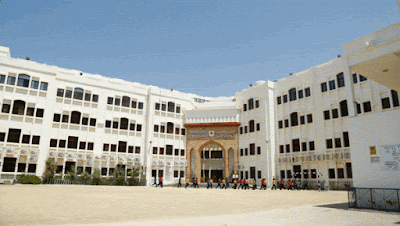
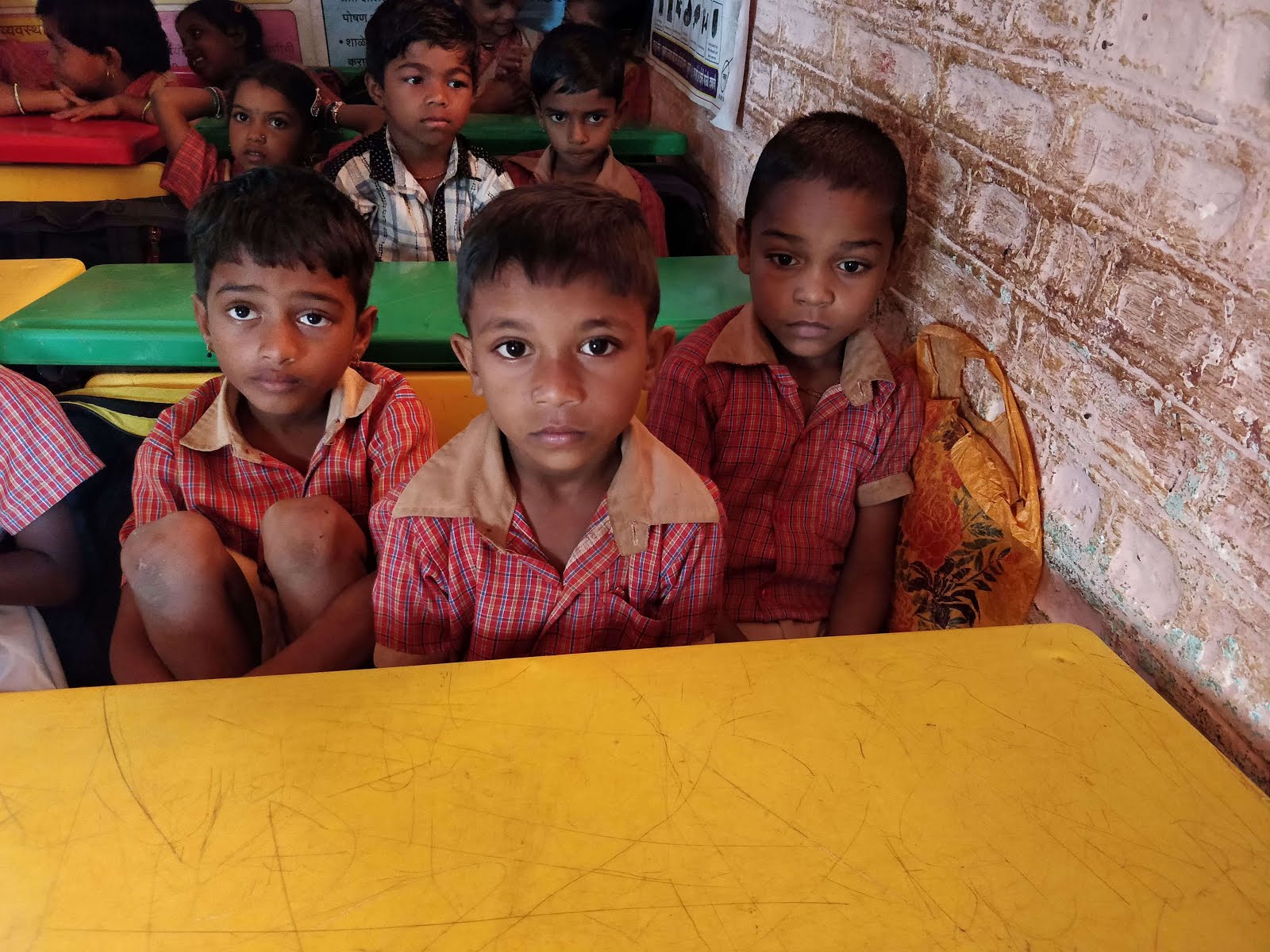
Indian School Al Wadi Al Kabir In Muscat, Oman

When I was two years old up to the age of four, for five mornings every week, at 7 AM on the dot, I remember being extremely unhappy.

I remember clinging to my mother’s hand. I remember looking at her with wide eyes, begging, pleading, often with a solitary tear, often silently, but screaming deep inside. On some days, the sadness and angst became unbearable for my tiny heart, and it gushed out in a mournful whisper:

Mummamain kab jaunga?”
(Mom, when will I go?)
I remember the afternoons of those unhappy mornings. When the Muscat sun was in its element, we heard the distant rumble of a bus engine, growing louder and louder like an omen. That was the first warning. My mother took a deep breath, chanted a few prayers and braced herself for pandemonium. I ducked for cover under our dining table, fingers plugged in my ears and eyes screwed up in anticipation. The bus came and went, and there was blissful silence for a few minutes. It seemed the danger had passed. I poked my head out of my shelter, ears still plugged, squinting through one eye to look at my mother.
She still chanted soundlessly, knowing it was inevitable.
And then, with a screech that cleaved our home apart, our doorbell rang.
The earth shook as it rang and rang with a deafening din. Birds screeched in the distance. The dining table trembled, clothing me with sawdust and fear. Steel utensils fell to the floor, adding to the cacophony. My mother staggered through the world that was ending, eyes pinched against the bone-shattering clanging and opened our front door.
A tornado of ebullience burst through, shaped indistinctly like my elder brother. For a while, we only saw a speeding blur that launched school bags, bottles, shoes, socks and books into every room it passed. Despite the wreckage it left in its wake, the twister chattered nonstop about this dreamland called school. Even when it settled, it yammered through mouthfuls of lunch, barely stopping to breathe. It boasted of dramatic cricketing feats and howled at uproarious pranks pulled on new friends. It doted on these lovely beings called ‘teachers’. It spoke of all the adventures, friendships, happiness and love that I was missing.
Everything about it was irresistible. I was dying to go to this wonderland. I longed to be a ‘big boy’. I longed to ‘study’ and answer important questions from adults like “What did you learn in school today?” and “What grade are you in?”
I remember the first time I visited my brother’s school. I remember gaping at its giant brown facade, a small solitary figure swallowed by its vast shadow. The Indian School Al Wadi Al Kabir stretched for miles like the length of its name, like the meaning of its name. A giant fortress in the desert, a wadi unexplored, an adventure denied.
I remember it vividly, as it was the source of my unhappy mornings. On schooldays at 7 AM, my mother took us to the curb below our building to wait for my brother’s school bus. As it rumbled over, I clung to my mother, my hands encircling her arm like vines on a trellis, beseeching for consolation. The bus conductor was a big, booming man named Prakash who smiled with his eyes more than his mouth. He put one giant foot on the road, with half of his body hidden in the minivan and the other half sprawling out like a genie from a lamp. He greeted my mother, winked at me, and beckoned my brother.
Faceless shrieks of welcome emerged from the shadows of the bus. My brother forgot his early morning tantrums in an instant. He vaulted in, flung his bag on his reserved seat and sat on his knees in reverse, facing the other boys. My mother and I waved at him as the bus rolled away, but my brother never waved back. He never looked at us. He was already deep in conversation with his friends. Peals of youthful laughter flitted through the bus windows as it sailed away towards another day of laughter, adventure and love.
Mummamain kab jaunga?”
The pain was unbearable, unfair and suffocating. Time was my enemy. I asked my mother the same question every morning, usually with sad eyes accompanied by a tiny, broken whisper. I asked not to hear the answer but to soothe the throbbing ache in my heart.

My mother, to her credit, answered the same question for two years with unwavering love, pity and compassion. She didn’t count the weeks, months or years till I went to school but rather the experiences I would have. She described the cartoons on my school bag, the shape of my water bottle. She listed the delectable delicacies she would put in my tiffin box and the loveliness of my notebooks. She painted a picture of classrooms and crayons so wonderful, so positive, so enchanting that I was already laughing by the time we were back home.

When I was four, it was finally time, and my excitement knew no bounds. We went shopping for my bag, water bottle, tiffin box, books and uniform. For days on end, I bounded around the house in full gear, carrying a Mickey-Mouse-themed bag and a camera-shaped bottle, as if school had begun early. I pored over my textbooks and empty notebooks, envisioning the letters I would write, the colours I would fill. I was finally going to that fortress I had dreamed about for years. I was so excited that I failed to notice the strained smiles on my parents’ faces.

A week before my first day, my mother informed me that I wouldn’t be going to the fortress. ISWK had constructed a small new kindergarten school, far off in the Muscat desert. Slightly taken back, I still maintained the spirit. After all, I was finally going to school, wasn’t I?

On my first day of school, my father insisted on dropping me in his car.

“No, I want to experience the school bus,” I beamed.

Years later, I discovered that my father had driven behind the school bus that morning, on the chance that I might start crying as kids on their first day invariably do. Yet Prakash reported to him that I sat silently on the tiny footrest they used as seats for the little ones, not speaking to anyone but just looking around with wide eyes, afraid to blink, trying to take it all in with just my sight, unable to contain a smile. This is it, here we go, my first day of school. I entered the class to begin my new life of happiness.

In a few hours, I experienced the worst day of my life.

On my first day, I sat amidst wailing girls and boys, miserably crying tears upon tears, filling up puddles by their feet.

“This? This is school?” I thought in disbelief for the entirety of those hours that stretched for years, for decades, for centuries.

Just an eternity of crying? An eternity of abject misery and pain? There had to be a mistake.

My mother beamed at me when I got home, hoping her son’s day was filled with as much joy as he had hoped for years.

“Kaisa tha pehla din?” she asked warmly.

I stared at her with suppressed tears, shocked by the tragedy, stumbling for words. I broke down, unable to comprehend if it was a huge mistake.

Over the weeks, as the kids’ tears dried up and I started settling into school, I still felt incomplete. School was the formidable fortress my brother attended. This modest dull building in the middle of nowhere did not compare. My parents decided to carpool our morning ride, with driving duties split between my father and a friend’s mother. Every morning, a car carrying four kids stopped first at the fortress, dropping off three of them. Then it sputtered deep into the desert towards my shanty, my nose pressed against the backseat window as I watched my brother and his friends disappear beyond the big white and blue gate.

Two years, my mother coaxed and cajoled. By the end of KG 2, my excitement was on the rise again. “Now, I begin school”, I thought as I gambolled across the house. Once again, I failed to notice my mother’s strained smile in my delirium.

A week before Grade 1, my mother sat me down to explain that ISWK had now shifted primary classes from the main school to expand intake. A dull new building, housing Grade 1 to Grade 4, had been erected next to my KG building in the extremities of the wilderness. My dream would have to wait for another four years.

The first year was easy since all four kids in the car headed to the same building. But a year later, we were back to dropping them off at the main school while I stared mournfully through the window. When I reached Grade 4, I was no longer oblivious. All year, I had heard the thudding hammer and grating saw. My mother sat me down to explain that they had added another floor to the primary school, to include Grade 5.

Just one more year, she consoled, and I would finally go to the big school.

Nearly a year later, a month before I would have finally started classes in the main school, I had my face pressed against a car window once again. But that afternoon of April 7th was different. We were moving permanently to Dubai, away from the only apartment, building and city I had called home.

I never walked through the gates of the main school, the fortress of dreams.

I haven’t returned to Muscat ever since.

* * *

What have you done?

You either die a window seat loyalist or live long enough to see yourself picking aisle seats on flights (if you prefer the middle, then you’ll be pleased to hear that there is medication for what you have). Ever since I reached the age of reason, I scoffed at window seats. Two minutes of good views on the fringes of hours of darkness were not worth perching like a tarantula with legs bent where they shouldn’t be bent.

My loyalties started to sway on my annual redeye flights from Manchester to Dubai. As the flight descended on the lands of Arabia, I craned my neck from my aisle seat to steal a glimpse outside the window. Darkness was all I saw. Impenetrable, spreading all across and beyond, unrelenting in its uniformity. I yawned, stretched, hit my knee in the process, cursed aloud, whispered an apology, checked the time and returned to waiting.

After minutes that felt like hours, hours that felt like years, I heard a whisper from a window seat. A child tugged his mother, pointing excitedly into the void. I craned forward once again.

This time, I saw it.

Far off in the abyss, one small golden dot had blinked into existence.

Then another, and another. In a matter of seconds, like golden dominoes toppling into sight, lines of dots emerged at the horizon. Yet, there was structure in their formation.

In 1903, the Argonaut anchored off the shores of the Trucial States, as Lord Curzon did not deem the land worthy to set foot on. Instead, he welcomed the sheikhs onboard for a durbar. 

“We found strife here, and we have created order,” he exclaimed bombastically.

A century later, peering out of an airplane window, I did see order in the desert.

But it was not the British who had created it.

The dots were streetlights. They snaked out like tendrils, linking up with other patterns emerging from the sides. As we flew, the roads of the Emirates emerged thousands of feet below, awash with bright golden light, twinkling in the haze just like the stars in the heavens above. As I watched the child try to trace the lights towards the horizon, a destination was apparent. There was a purpose, a crescendo. With gradually increasing radiance, all paths led towards a giant golden dome of light on the horizon. It was something extraordinary, still hundreds of miles away, still indistinct, yet ominous in its presence.

It had the mark of a creator, divine and powerful.

At that moment, I stopped craning my neck to look outside the window. I settled back into my inferior aisle seat, sheepishly muttering apologies to the passenger in the middle for nearly sitting on his lap.

I sighed.

All year in Manchester, I lived a stranger’s life. When you’re a young student, it’s easy to get lost in certainties. Of course, you are supposed to study, revise, party, travel and repeat it all over again. Of course, you are supposed to go back every semester. Going to school, moving up grades year after year, then going to university and doing that for another four is just part of the plan.

You are supposed to do it. There are no big decisions to be made, no conscious thought.

I always lost myself in those certainties in Manchester. My past was safely ensconced away on the dark side of the mind, unused until further notice. I was connected faintly with friends, family and old memories yet detached. I was supposed to ignore it. There was no time or point. I had grades to achieve, memories to make, a life to live.

Those shackles weakened earlier that day when I first saw it.

I was standing at the airport departure gate, gaping at the object beyond the high glass windows. It was a gleaming, pristine aircraft with fluidic calligraphic lettering on its flank. It had welcoming colours of red, white, black and green on the rudder.

At the other end of the world and in a completely different life, a convoy sent by my past.

At that moment, I felt a shadow of a thought, almost a sense of deja vu, fledgling and innocent, not yet stirred into an opinion or emotion.

That shadow of a thought grew as I watched the flight screens play introductory videos in Arabic. It grew as I fumbled for a grimy sim card, dumped unattended for a year in a spare spectacle case. It grew and grew as the flight speakers crackled with the melodies of the oud.

Finally, near the end of the journey, it happened. As I drifted in an ocean of twinkling jewels, in the sky above and ground below, the thought took shape. Before the pilot crackled landing instructions, stewards glided over collecting disposables, seats buckled and unbuckled, overhead carriages shut and opened, for a brief moment, I found peace, joy and silence before the chaos.

I found order in the strife.

I was finally home.
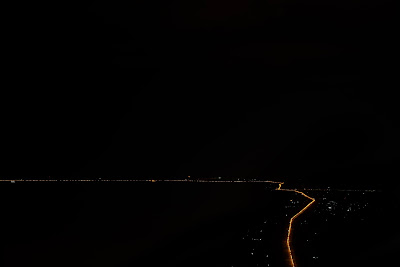
Dubai Lights At Night Aerial View

* * *

“One of man’s oldest dreams is to turn the desert green.”

In 1979, Queen Elizabeth II inaugurated the World Trade Centre with her royal scissors and majestic proclamations.

In 2005, when my father’s Toyota Camry entered Dubai, the World Trade Centre (now the Sheikh Rashid Tower) barely featured in a list of must-see places. Even if you sympathized with the former tallest building of the Middle East, what then of the others? Can you proffer your sympathy to the Emirates Towers? Deira Clocktower? Burj Nahar? Fish Roundabout? Deira City Centre? Burj Al Arab? Even if you squeezed them all in, with Dubai’s prodigious love for the Marina or Palm, can you secure a spot for the Creek today?

Where bedouins, or bedu, napped while floating on extremely salty waters to combat the heat. Pearling vessels floated out, carrying divers with noses clipped shut and weights tied to their feet. Dhows coasted in with lateen sails, bringing Persian wares, and soon the Persian merchants themselves. In 1938, it mediated the uprising of Dubai with the rulers in Bur Dubai and the rebels in Deira. The creek that built this sleepy fishing village and then divided it.

Today, if you looked at Deira across the creek, you would see a set of geometrical buildings that were once the original skyline of Dubai: the convex National Bank of Dubai, cylindrical Rolex towers, triangular Chamber of Commerce and spherical Etisalat globe. If you stood on the opposite end, you saw the influence of migrating Persians in the Bastakiya district, badgirs jutting out of the mass, abras flitting voyagers across the channel.

They say big, old cities like New York or London or Delhi or Bombay feel like they are never yours. They make you feel lost. No matter what you do, those cities have existed for centuries without you and will continue to exist for centuries more. You are nothing but a temporary speck, a petal in a field, replaced every year.

The Dubai I grew up in was neither big nor old. But it still wasn’t mine.

I was still lost.

An orchestra conductor walks on stage and climbs onto a raised platform. He dusts his tuxedo, snaps his spotless white gloves and stands up straight. A momentary pause, and then he points the baton to his left.

I hear “This city has no future” from an uncle shaking his head, arms folded in defiance. We were celebrating his 60th birthday in his gilded mansion. He had lived more than half his life in the city of no future.

The conductor snaps the baton to the right. I hear “I don’t have freedom here” from friends in a pub, irony effervescing like the froth of their beer, as iridescent spots of light sporadically light up our table.

The baton points to the middle. I hear “The market is down” from clients as they network at hotel lounges, pose for flashy awards and splurge on lunches and brunches. For two decades, I’ve never heard of the market ever being ‘up’.

The baton swirls around, and I hear “There is not much to do here, there is no culture” from people who only visit the same cafeteria every evening for karak.

The tempo rises, the loudness gets painful. I hear “This place exploits workers,” and heads nod in unison.

The tempo rises and rises. I hear “It feels fake, feels artificial,” and “We have no stability,” and “We can’t call it home.” The same routine, same tunes, same beats, repeated year after year. It gets faster and faster, building in crescendo, until I’m back under a table, ducking for cover, eyes screwed up. It gets louder and louder, with crash and clamour, and the world is ending. I stagger through the racket, ducking under vicious debris, to stop it the only way I know.

By agreeing with everything I hear. I agree, piling dust and sand back on the shine, and just like that, there is silence again.

You got me, I’m convinced. I’m eulogizing a showpiece city, foolishly inebriated by the romanticism of youth, delirious in Dubai.

I must leave.

Yet, even in my self-imposed alienation, this city has a way of creeping up on me. A moment comes, which comes rarely but comes with force when it does, when I’m standing at Bluewaters, or the Palm Crescent or Sheikh Zayed Road, dwarfed by the magnificence of Ain Dubai or Atlantis or the Museum of the Future. A moment comes when I’m cruising dreamily on Garn Al Sabkha or Al Khail road, and the columns of Dubai Marina or Downtown Dubai rise into existence. As I get closer, the shapes begin to take form with the fluidity of a dimmer switch. The edges cut across the sky at astonishing heights.

The silhouettes sharpen, and I see it.

Spires of glass, glistening like crystals in reflected sunlight, piercing through the clouds. Higher, higher and higher. Towers of sparkling diamonds, testament to human ability and spirit, built on heat and sand.

At that moment, it hits me. The magnitude of this city’s accomplishment, its audacity, its insolence. I’m struck by a single thought, one that surges through like a bolt of lightning:

What have you done?

How dare you do it? Who said you could do it? How many doubted you? How many never looked your way? Unable to come to terms with giving up their homeland to make more money, they tried to explore your darkness. They speak of history but never visit your forts, tombs, falajs or wadis. They speak of culture but never explore your art, architecture, poetry, music or theatre. They don’t try your luqaimatshassan mattars, shawarmas, Pofak chips, date milkshakes, Areej juices or porotta wraps. They don’t see the vintage Toyota or Lexus with decals all over, tinted black, still flaunted with pride. They don’t feel the lethargic Friday morning lull when Dubai sleeps while the world still works.

Despite your apparent vices, they stayed and continue staying, grumbling publicly but afraid to confront the truth of going back home.

You were the village on the Pirates Coast that a British general described as ‘enjoying the safety of being undesired’. Now, they don’t doubt, don’t question, don’t ignore. Now, they see, they marvel, they gape. Now, tourists stream in for luxury and leisure, descendants of guffawing generals stream in for tax-free havens. From barastis to the Burj, you defied the prophecy. The makers, the divine creators, locals and expats, hand in hand, creating order in strife, turning the desert green.

Once the city with no future, now the city of the future.

What have you done?

Today, I leave this city for New York. A city that is a grandfather of urbanity compared to Dubai’s infancy. I leave to be a petal in a field of the quintessential metropolis, a grain of sand in the Rub’ al Khali. At the cusp of this nation’s 50th year, a month before its biggest global event in history, I leave it. As it sheds the final scraps of reticence and steps forward on stage announcing its ambition, I slip out the back door.

I left Muscat in search of a home. Despite a decade in Dubai, I’m still bothered by a question: did I find it here?

I don’t know. All I know is that as I grew up, this city grew with me. We are entwined, this city and I, hand in hand, heart and soul. We still call it the Sana signal, but there is no Sana. The Sukh Sagar street but there is no Sukh Sagar. We still say it’s next to ‘Al Nasr Cinema’ or ‘Ramada Hotel’. Still reminisce Musalla Tower’s dragon and Lamcy Plaza’s clown.

I marked the Burj Khalifa’s ascension in my mind, like a mother notching her son’s height on his bedroom wall. As I got taller, its spires reached higher. As I moved faster, the golden lights reached out even further, swallowing the desert. A mist, a shadow, a thought spread through this city and me, in our hearts and soul. It spread through the dunes, through the heat, taking in the barren wasteland to create hope, ambition and dreams.

We were the ones born in the dark who stayed around for the sun, this city’s midnight’s children.

Can you take that away from me?

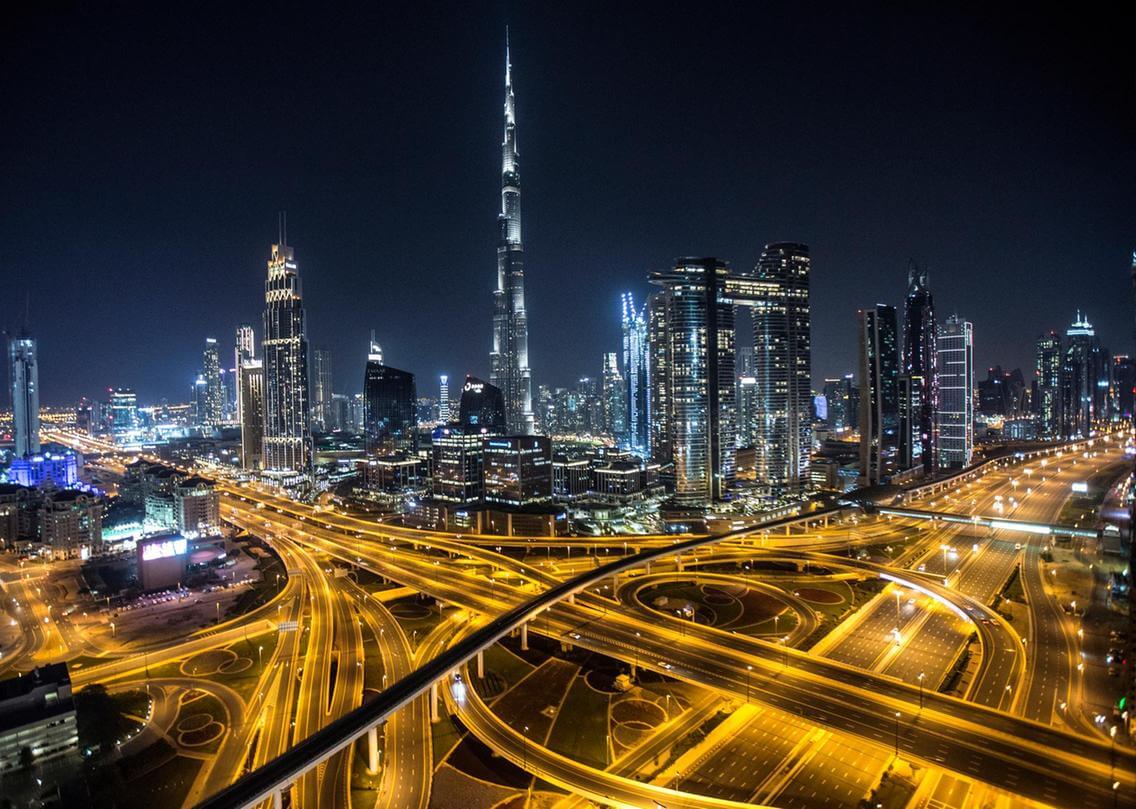
Dubai Skyline Burj Khalifa
* * *

If you liked what you just read then do help me by sharing this on social media platforms of your choice (Facebook, Twitter, Instagram, Reddit I ain’t picky). We’re all artists somewhere, in some field, and this is just my form of art that would truly find expression if more people get the inclination to read it.

Show your support corner:


– Share wherever you like (quick share buttons below for most popular social media channels) (sorry Orkut, you didn’t make the cut)
– Follow Know Time, my talk show that focuses on celebrating curiosity: YouTubeInstagramTwitter
– Know Time (Audio): SpotifyApple PodcastsAnchor
– Consider donating to support this blog and the Know Time project at Patreon
– Follow me personally on Instagram or Twitter (for frequent memes, and occasional screams)
Similar articles:
 
The Silence In The Dunes: Read More

A City’s Soul In Deira, Dubai: Read More
Master of all Nations, Citizen of None: The Life of a Gulf NRI: Read More

The Silence In The Dunes

dubai curfew during the CoVID-19 corona pandemic

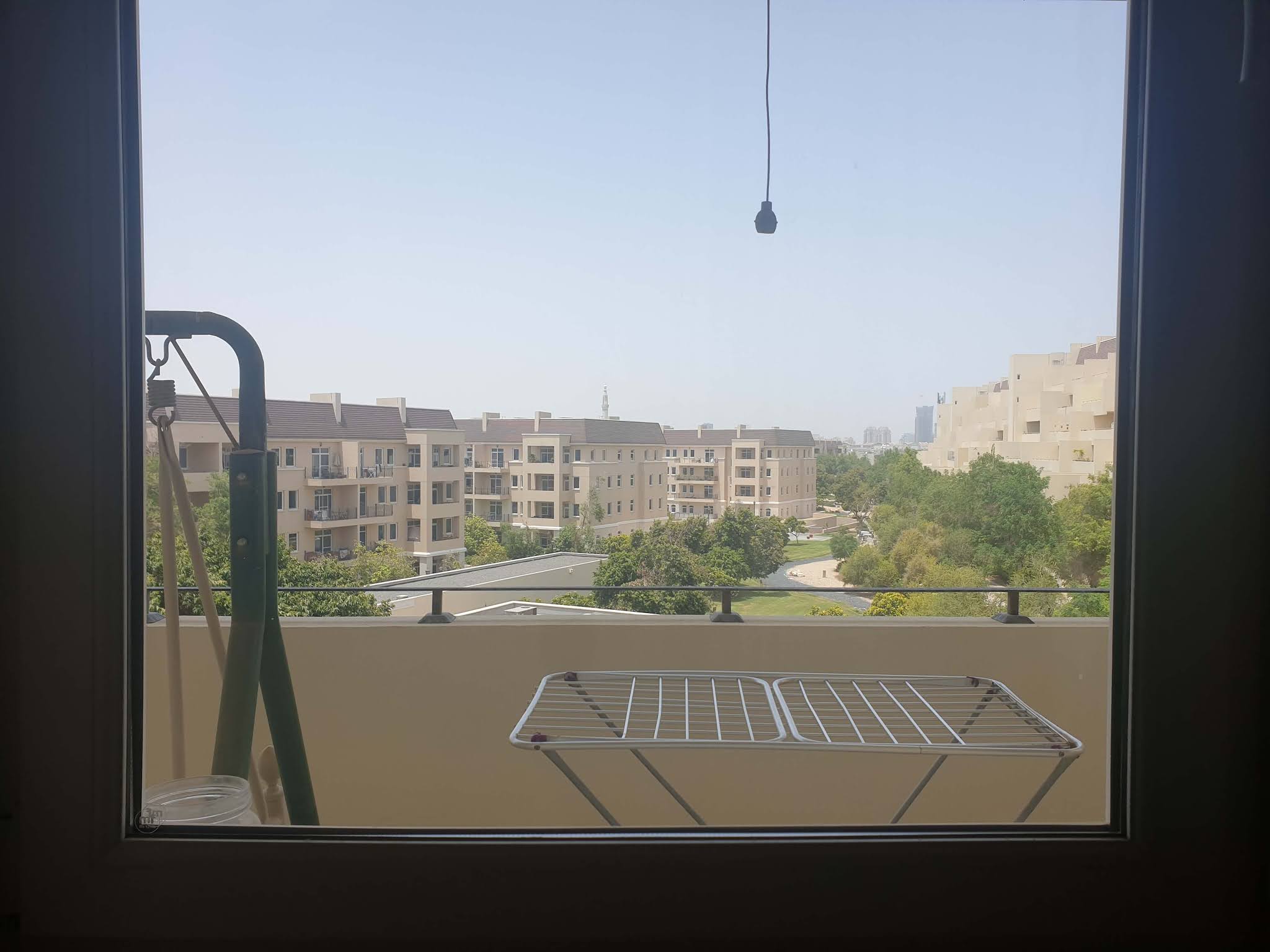
The balcony in our apartment extends to my room but doesn\’t open up to it. Instead of a door, I have to contend with a window overlooking my own balcony. I don\’t mind it as I would rather be in than out, given Dubai\’s propensity for heat and dust. But due to the strategic placement of my window, I am privy to most events in my balcony – which, we can all agree, is any young man\’s dream.

My role as the sentry of our balcony has its moments. When two birds get into a heated squabble on the railing, I am the first to find out. When our flimsy clothes drying stand tumbles over in the wind, I am the first to find out. Of course, by the time I rush outside to pick it up, our freshly washed clothes are beyond salvation from a thick layer of dust, but that doesn\’t undermine the fact that I find out first. 
Knowledge is power, after all. 
Occasional rack tumblings aside, the most significant event on our balcony occurs every morning. My parents like to begin their day sitting on our swing, sipping their daily chai in the morning chill, as they gently rock to and fro watching the sun rise over the horizon. Ironically, while I am aware of all trivial events in the balcony throughout the day, from tumbling dryers to squabbling birds, I am not privy to the only significant one in the morning. In the early hours of the day, when my parents commence their balcony routine, I am unerringly snoring away. I don\’t wake up until the sun is well and truly up (and blazing hot), and until my parents have already completed all their morning chores.
Even if I could manage to wake up at daybreak (a lost cause at this point, frankly), I wouldn\’t dream of interrupting my parents\’ daily tryst with destiny. It is their treasured time to themselves in the quiet hours of the morning, sipping chai with great relish. Their moment of solitude before the chaos of the day ensues. At that time, when the world sleeps, it\’s just them, their thoughts, confessions, supporting words and the chirping of birds. Over time, they have even developed a penchant for birdwatching, pointing out parrots, sparrows and crows with joy. Watching a flock of sparrows soar gracefully around our community adds to the poetry of the moment.
Due to the proximity of my window, at times I am abruptly woken by my father\’s loud rant on politics. My mother, on most occasions, is perceptive enough to shush him. 
\”Thoda dheere bolo, Shalaj so raha hai,\” she admonishes.
(Speak softly, Shalaj is sleeping)
Soothed by the subdued voice of my father and the caresses of motherly love, I drift back to sleep quickly. 
On other days, I am woken by an uproar, stoked by my mother scolding my father on his latest act of mischief. On these days (which my father insists come rarely), I have no one to shush my mother in turn, as no man in our house would dare think that thought. So as my father gets his (deserved) rebukes, I have to endure them passively too, with my mother\’s fury effortlessly seeping through the flimsy window pane separating the scene of crime and my room.
However, on that day, that sultry morning in April, there were no loud voices on the other end of the window pane. Yet, I woke up. As I lay in bed, trying to will myself to sleep, hoping to catch a few more hours of blissful dreaming, my mother\’s sombre voice floated through the window.
\”Kisi ne socha bhi nahi tha ki kabhi aisa hoga.\”
(No one had ever thought something like this would happen)
My father, in a rare moment, said nothing. The words sunk into a heavy silence, interrupted by their sips of chai and the setting of the teacups. Even the birds were quiet that day as if they were acknowledging our ruminations. No sparrows soared in the firmament. My mother\’s words hung with a certain heaviness, and unknown to her, seeped into our house, twirling and swirling, impeding my attempts to fall asleep again. Something about the way she said it exuded a force that I had hardly felt before. It was probably what woke me up in the first place. 
In 2020, just like that, my life had come to a standstill. 
Even my parents, just like the world around me, had gone quiet.
* * *
Life in Dubai had always been hectic. On the road, you were either speeding at 140, or being flashed out of your lane by someone who was or inching along in a logjam. The speed radars constantly flashed like paparazzi cameras. At work, you were writing an email, while on a call as you wolfed down your lunch in the pauses in between. In the malls, you were jostling crowds and standing in queues. You were guaranteed to make at least three rounds of a full parking lot before you spotted someone heading towards their car that you could tail. In the restaurants and shisha cafes, you were constantly checking your phone, setting alarms, rushing off to renew an expired parking ticket or being passive-aggressively booted out by the waiter trying to serve the customers queuing outside. At home, you barely got through your daily chores before you crashed out, ready to do it all again the next day.
At some point in the week, when two people would discover a rare moment of repose, the frenzy of this city would become apparent. Inevitably, one of them would sigh and lament: 
\”Time flies too fast here.\”
Somehow, time as a dimension, as a continuum, followed different rules in Dubai. Everything about Dubai was about speed – growth, development, economy or vision. We got things done here, and we got them done fast. For a fledgeling city, one way to stand with giants was to convince them that it was precocious. I had watched the Burj Khalifa get constructed, floor by floor, week by week, as my school bus whizzed past it in the mornings. I had seen nothing but a sandy desert where the Dubai Marina launches cruises today. I had felt nothing but infernal heat at the spot where penguins roam in Ski Dubai today. I had seen nothing but the vast and unyielding Arabian Gulf at the spot where the Palm Jumeirah sleeps today. When we moved in, there was no Downtown Dubai. The tendrils of growth snaked out with alacrity from Bur Dubai and Deira, and today pictures of the city from the early 2000s are unrecognisable.
All of this, and more, in just a decade. 
I had not known a Dubai that knew anything else. It was a child prodigy trying to impress the adults with the exuberance of his youth. Those who couldn\’t, or wouldn\’t, keep up got replaced by ones who did. Every year that I returned to Dubai for vacations from university, it felt like I was visiting a new city. New restaurants and shops replaced my old haunts and new roads had emerged while older ones had vanished. New skyscrapers, new rules and new people were to be expected every single visit. The only constant was change. 
Every day, the city moved at breakneck speed, of that there was no doubt. 
But at what cost?
In the middle of that frenzy, we first heard a murmur. A virus had started to spread in China. Yet, we shrugged it off – somehow global events never passed through the Middle East. I had often felt detached from world events in this region – to my frustration in my teenage years, nothing major of interest ever happened here. In the 2000s, there were no rock concerts, cricket matches or movie premieres. On the other end, there were no wars, tsunamis, riots or earthquakes either. The disconnect came at a price but allowed us to enjoy a rare era of peace and stability. Global catastrophes felt like problems of the world outside, of which we remained aloof. 
When the swine flu pandemic ravaged the giants, we hardly noticed it. Our school simply put a tissue box in each classroom as a gesture of goodwill, and we carried on. When ebola ravaged Africa, it got honourable mentions in off-hand discussions at get-togethers but remained largely inconsequential. 
So when we heard a murmur, we forgot about it. This was a problem of the world outside. We continued zooming about, tangled in the chaos of city life. Then the rumours got louder, and it became a conversation starter. In March, something was afoot. Something mysterious, unseen and uncontrollable. Then suddenly, the news burst through – the fortress had been compromised. JLT went under lockdown, with One JLT roped off. That evening we went to buy groceries to find the shelves half-empty, with people stuffing their trolleys with every possible item in sight.
One by one, places started closing down. First, it was my gym, then the restaurants, then the hotels, malls, parks and beaches. The cases increased daily, the graph arcing upwards with brutality, hinting that it was still only at the base of the mountain. Darkness started to spread across the city, enveloping it, and seeping into our homes and hearts. Panic and anxiety took the reins. 
In April, the first curfew was announced. No one was supposed to be out late at night in a city that had built a reputation for a thriving nightlife. Earlier, whenever we used to head home late at night, my father would usually exclaim:
\”Dekho sadak par iss waqt par bhi kitni gaadiyaan hai, kitni roshni hai.\”
(See, even at this time there are so many cars on the road and so much light)
Across two decades in Dubai, I have never seen the main roads deserted. Even at the darkest hour of the night, there was light. But in April, I saw them empty with not a soul in sight. Empty and desolate, even in broad daylight. As the cases kept increasing, the late-night curfew became a full day curfew. Pictures of a deserted Sheikh Zayed Road started circulating on WhatsApp. Daily commuters inured to its beauty were served a timely reminder. The emptiness revealed the road\’s inherent magnificence, its symmetrical majesty.
But, it was also equally haunting. It felt wrong.
As beautiful as Sheikh Zayed Road is, with its columns of skyscrapers standing guard like majestic sentinels that usher entrants into the city of the future, it deserved to be filled with cars, its curbs packed with pedestrians, the parking spaces occupied and the metro gliding past. If that road is the emblem of this city, then it needed to be perpetually in flux, with life constantly flowing down it like a stream.
That week, it was barren. Like the dunes that once rested in its place. After years of fooling time, we had started to go back. 
That was when it sunk in.
The silence hung over us like an iron curtain. For a while, experts believed that the virus might not survive in extreme heat. Ironically, very soon the sun, our eternal blaze, was blocked out by dark clouds. Thunderstorms, rare for Dubai and rarer for Dubai in April, slashed across the city. The pervasive gloom added to the curfew. We huddled at home, afraid of an unseen, unknown and unbeatable enemy. Even stepping out of my door into the building corridor felt like I was heading into the trenches of a war zone. Every person, door handle and item was treated with suspicion and paranoia. We set up a sanitisation space at the entrance of our home, to stop the virus at our doorstep whenever we stepped out. Anyone returning home had to wait for someone at home to open the main door and open all the doors on the way to the dedicated sanitising washroom. The footwear was left at the door.
Those who wished to drive in streets needed a permit, which was granted only once a week for essential tasks. My father, the sole family member to step out during the curfew, found only empty streets and barricades on the roads he once saw life and light even at the darkest hour. 
Even him, who had taken a bus through Delhi in the aftermath of the Sikh massacre in 1984, having described that as the darkest event he had ever witnessed with a scene of decadence and death trailing his wake, found himself surprised, at a loss of words even. Even for him, despite having lived in a world with Indo-Pakistani wars, communal riots and 9/11, it felt odd, felt wrong, to see his Dubai so desolate, empty and apocalyptic.
I had always associated this city with speed, activity and chaos. Not having known it to be anything else, I had taken it for granted, even vilified and complained about it. But it took the stillness, the gaping silence in the abyss, to show me that the city needed its speed. The hustle was so ingrained in the city\’s culture, that it was the culture. It needed its bright lights, large crowds and loud noises; a haven teeming with life. 
Without it, it felt wrong. 
For the first time in the millennium, Dubai had gone quiet.
* * *
Three months later, my parents\’ conversations on the swing have nearly returned to familiar territory. Once again, they swing lightly to and fro, sipping chai, while chatting merrily about their life, kids, local gossip, my father\’s job, his misbehaviours (some things never change, I guess) and to my extreme distaste, my marriage prospects.
I say nearly returned to normalcy because the virus is still with us. Refusing to be eliminated, it has become a part of our lives. It still persists as an underlying context in all those morning chai topics.
Even beyond our balcony, Dubai is nearly back on track. The roads are packed and there was a certain (albeit, short-lived) joy in seeing a traffic jam again. The parking spots are elusive again. The beaches, restaurants, malls and pubs are full again. The cases are on a decline and stringent measures are in place. 
Once again, I say nearly back on track. The mask is now a part of everyone\’s attire. Gatherings are still restricted, arenas are still shut and theatres are running at limited capacity. People largely stay distant, handshakes have thankfully been discarded (hopefully forever) and the huggers probably burst a vein every time they spot a friend.
The optimist would see the city half full. The pessimist would still see all the prevalent restrictions, covered faces and shuttered shops. Some of those shutters will never open again as we enter another recession. There will be hardships and with it copious amounts of blood, sweat and tears. Some darkness will still persist, inhibiting and oppressive. 
But this city, the only one that I can truly call home, will endure.
At this point, it is hard to predict when. But I know a day will come when the birds will fly again. When once again, as the sun rises while the world sleeps, my parents will wake to a Dubai filled with light and freedom.
Dubai Quarantine Curfew during CoVID-19 Corona Virus
* * *

If you liked what you read then do help me by sharing this on social media platforms of your choosing (Facebook, Twitter, Instagram, G+, Reddit I ain\’t picky). We\’re all artists somewhere, in some field, and this is just my form of art that would truly find expression if more people get the inclination to read it.

Show your support corner:
– Share wherever you like (quick share buttons below for most popular social media channels) (sorry Orkut, you didn\’t make the cut)

– Like the Instagram post here (and follow me personally, if you like my non-existence aesthetic)
– Follow me personally on Twitter here (for frequent memes, and occasional screams) 
– Like this blog\’s Facebook page here
– Follow the Blog Twitter feed here 
– Upvote this piece on Reddit here
Title picture credits: Naomi D\’Souza

Similar articles:

The Pursuit of Happiness in Zanzibar: Read More

A City\’s Soul In Deira, Dubai: Read More
Master of all Nations, Citizen of None: The Life of a Gulf NRI: Read More

The Pursuit of Happiness In Zanzibar

Zanzibar Tanzania

\”The number one thing in life is to be happy.\”

Joseph, my tour driver, posits with the air of an adult trying to instil wisdom into a miscreant. He looks back at me, teeth bared with the grin of a person who anticipates appreciation. Being quasi-profound is part of his itinerary, I guess.

I nodded and turned to the window, not wanting to be rude but not eagerly looking to prolong the sermon as well.

Our vehicle was trying to push and shove its way through the pandemonium of Darajani Bazaar. Regiments of pop-up vendors selling spices, meat, fish, toys, electronics or assortments on carts lined the curbs. Under their nose, another rank of vendors with their goods spread out on a bedsheet. The spectacle was engrossing enough to not ponder further on Joseph\’s insistence that life was pointless if not for the quest for happiness.

I saw him. I heard him. But I didn\’t resonate.

Not then, not there.

* * *

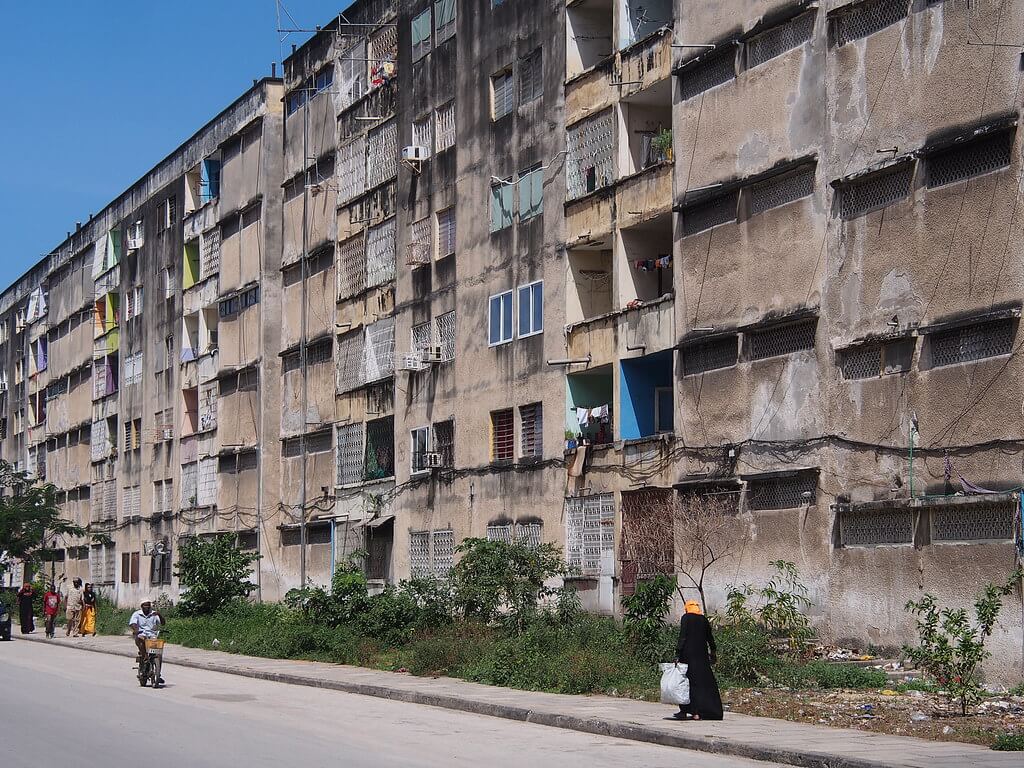
Plattenbauten Michenzani neighbourhood in Zanzibar Tanzania

We were trundling through the Michenzani neighbourhood, infamous for its sprawling, functionalist apartment blocks. The Plattenbauten, or the large-panel system buildings, once well-touted icons of Zanzibar now stood in undeniable decadence. The taxi came to a stop outside a narrow alley. The driver motioned that the journey was over, and the rest would have to be traversed on foot. A labyrinth of narrow paths nestled between coral stone buildings was at our bidding. So, stepping past the maze of shops, alleys, barazas and restaurants, we entered Stone Town.

If there is a measure for the highest density of cultural significance, Stone Town would be up there. It is possible to walk past the House of Wonders, Omani Old Fort, Christ Church, House of Freddie Mercury and Palace Museum in just under fifteen minutes. For a man grown up in wide sprawling urban spaces with broad roads, Stone Town could have easily been agonisingly claustrophobic. In a new city, country and continent, it could have been inescapably foreboding.

It probably would have been, had it not been for the Zanzibari touch.

I am not new to this – the narrow gullies, impromptu gatherings, frolicking children and crooning hum accompanying daybreak chores. All are judiciously splattered across my homeland, India. Elements that civilised societies might find archaic, we found intimate. In Zanzibar too, the proximity of the buildings reflected the intimacy of its residents. The elderly hunched together, smoking cigarettes, playing board games and watching football on a small bunny-eared television set. The children scampered around with glee, running errands and chasing cycles. At sunrise each day, the women would grace their verandahs to sing folk songs of the ages.

Each morning in Stone Town, I was awakened by the thronging resonance of folk songs, ballads and hymns. Of its words, lyrics or meaning I had not the faintest idea. But it remained alluringly comforting, like the evocative lullabies of my childhood.

Stone Town was crumbling, of that there was no doubt. But in it, Zanzibar was truly alive.

Stone Town Zanzibar

I have seen it, time and again.

Local cuisines, folk songs, familial traditions or architecture: cultural roots are often entrenched with the poor, underprivileged and proletariat. All of them, unfortunate externalities of poverty. I don\’t advocate poverty, and never will. But as countries progress, people get richer and development becomes more than a buzzword, progress inadvertently ends up cleansing their essence for homogenous luxuries.

Conflict breeds culture.

I am aware this argument teeters on the borders of heated contention, so I must confine it to subjective experience. Personally, I have found greater happiness in local street food than at a luxurious restaurant. I have been beguiled by soul of local folk songs more often than mainstream hits. I have marvelled the architecture of traditional houses more than modern residential complexes. Invariably, it has been the art created in war, famine or depression that has evoked my interest.

Why?

I would wager that we created culture to escape. Through food, music or art, we were able to elope, albeit fleetingly, into an abstraction of joy, wonder and magic. The creation endures centuries, despite the transience of our indulgence in it.

An ethereal ecstasy shines through these cultural works of art. It is so rich, so deep, so pervasive that I, a mere bystander, am able to feel it, reach within and drown in it.

In Zanzibar too, it was in the cobbled alleyways of Stone Town, around the sizzling aromas pervading the Forodhani Gardens, the inimitable daladalas or under the inescapable trance of Taraab music that I got a glimpse of their culture. In those moments, I was no longer a tourist.

I was one of them.

* * *

\”Hakuna matata.\”

My first foray into African lands brought with it the suspension of disbelief. \’Hakuna Matata\’ – a phrase the world resonates with The Lion King was found in plenty. It was uttered by waiters, vendors, hawkers, coolies and bellboys. At times, it started dialogue while in others it served as the end. It was found submerged in the waters, wafting over the plains or even brought down with the blessed rains.

The Zanzibaris intentionally overdid it. They uttered it as a \’hello\’, as a \’thank you\’, as a \’sorry\’ or as a filler for any word they deemed suitable. Why bother with the right word when you could just \’hakuna matata\’ it? They knew tourists associated Africans with this phrase – this is what they came to hear isn\’t it? So they rained \’Hakuna matata\’s all over until we were flooded with it.

Even for incidents that were undeniably and undisputedly a problem, the trembling Zanzibari could not get himself to admit it. As his lips began to shape the admission into existence, he would choke and bend over, fighting the indomitable spirit of African tranquillity. Sweat would pour down his face, and his eyes would silently plead for mercy but it was not to be. For I could have burnt down my hotel, stolen the crown jewels and burnt half the city to ruin, it was not in his nature to lament the languishing of life.

It had to be a \’hakuna matata\’.

If, by some luck, you manage to engage a Zanzibari in conversation beyond his agenda – then on a very rare instance, you might find the discourse veering towards the ordinary struggles of daily life. You are no longer conversing as local and tourist or seller and buyer. For a fleeting moment, you are conversing as humans. But alas, before you could probe further, unseen sensory nerves snap and jolt the Zanzibari from their trance. A shake of the head, a near-instant change in demeanour succeeded by an exceedingly jovial \’hakuna matata\’. A bounding injection of \’no worries\’ to compensate for a conversation that nearly got too morose.

It is not the Zanzibari way to mope over life, circumstances or problems.

But how could you not? The poverty you read about – it is true. The dilapidation, diseases and degeneracy – they are true. The children of Africa, emaciated beyond comprehension – all true.

They exist in a region beset with problems, yet they look past it daily to emulate a life of no worries and no problems.

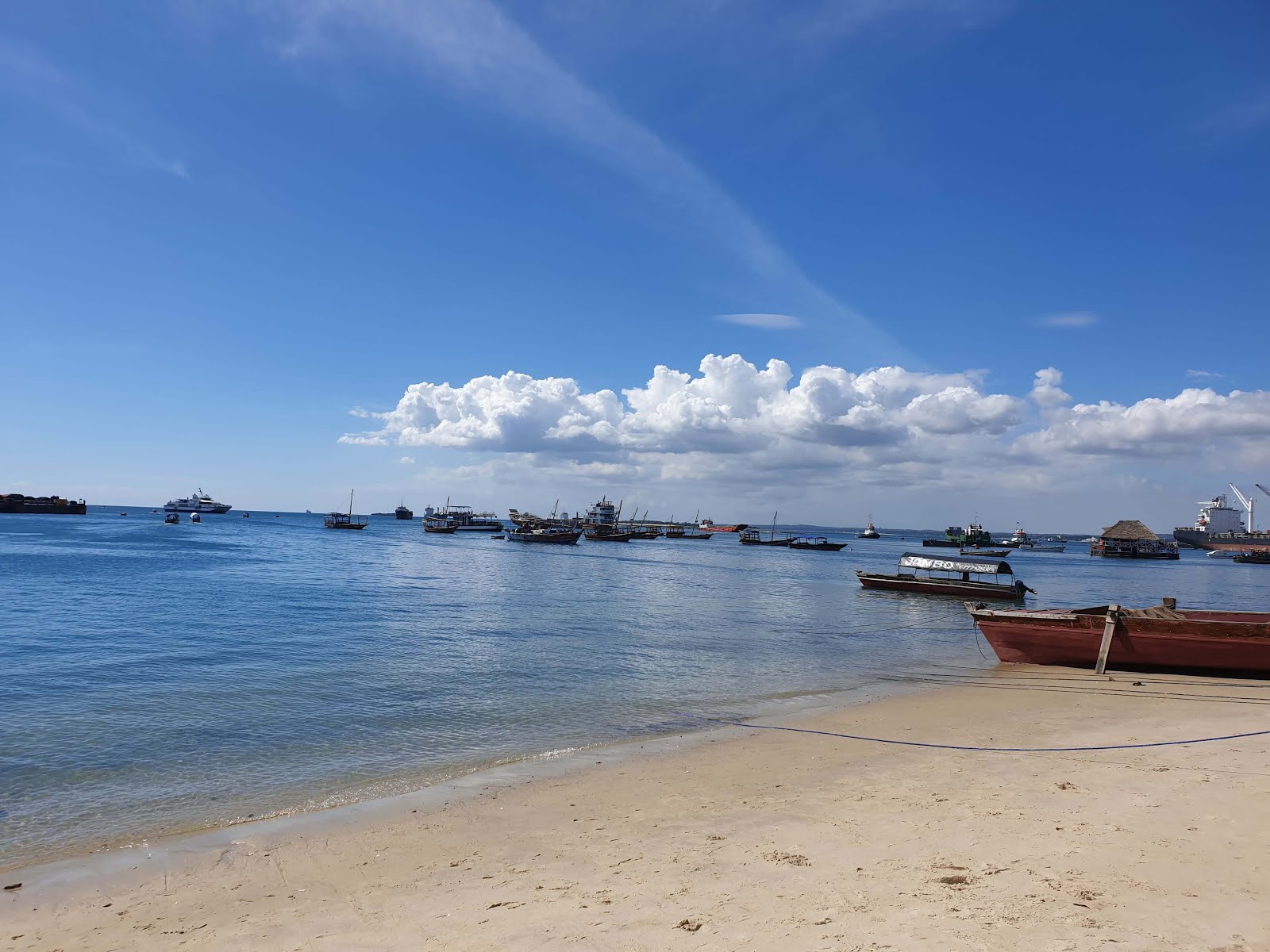
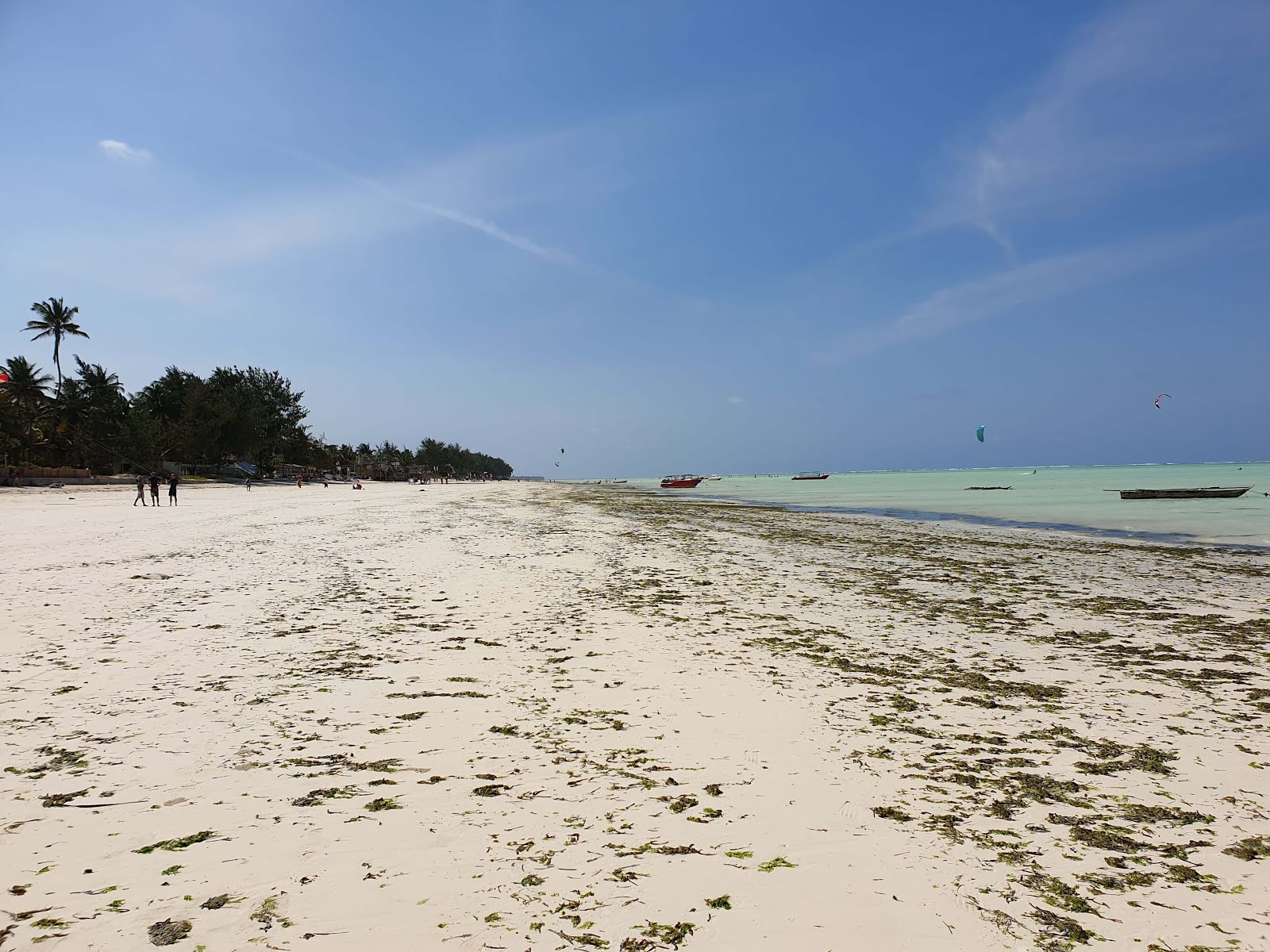
Page Beach Zanzibar

* * *

Zanzibar stands for \’the land of the blacks\’.

Sharif tears apart an achiote seed and spears his lips with the paste it exudes. He calls it the \’lipstick fruit\’, and as he flashes a wide grin with lips painted lurid orange, I have no qualms over the origin of the name.

Ali, his colleague and our tour guide at this spice farm, chuckles at our bewilderment. This must be one of his favourite parts of the tour. While Sharif beamed and pouted with orange lips, climbed coconut trees and made hats out of leaves, Ali found delight in our reactions. The spices stayed the same every tour, but the people, their stories and their reactions kept him going.

He was startled to learn that we were of the same age. Deeply layered strata of privileges assimilated to bring me to Zanzibar as a tourist on vacation, while he worked as a part-time tour guide and full-time computer science student. His dream was to create a website for tours in Zanzibar. He yearned to create a life where he could confidently propose to his lady love.

Ali or Sharif didn\’t deserve this, but they didn\’t know better.

Spice Farm Zanzibar

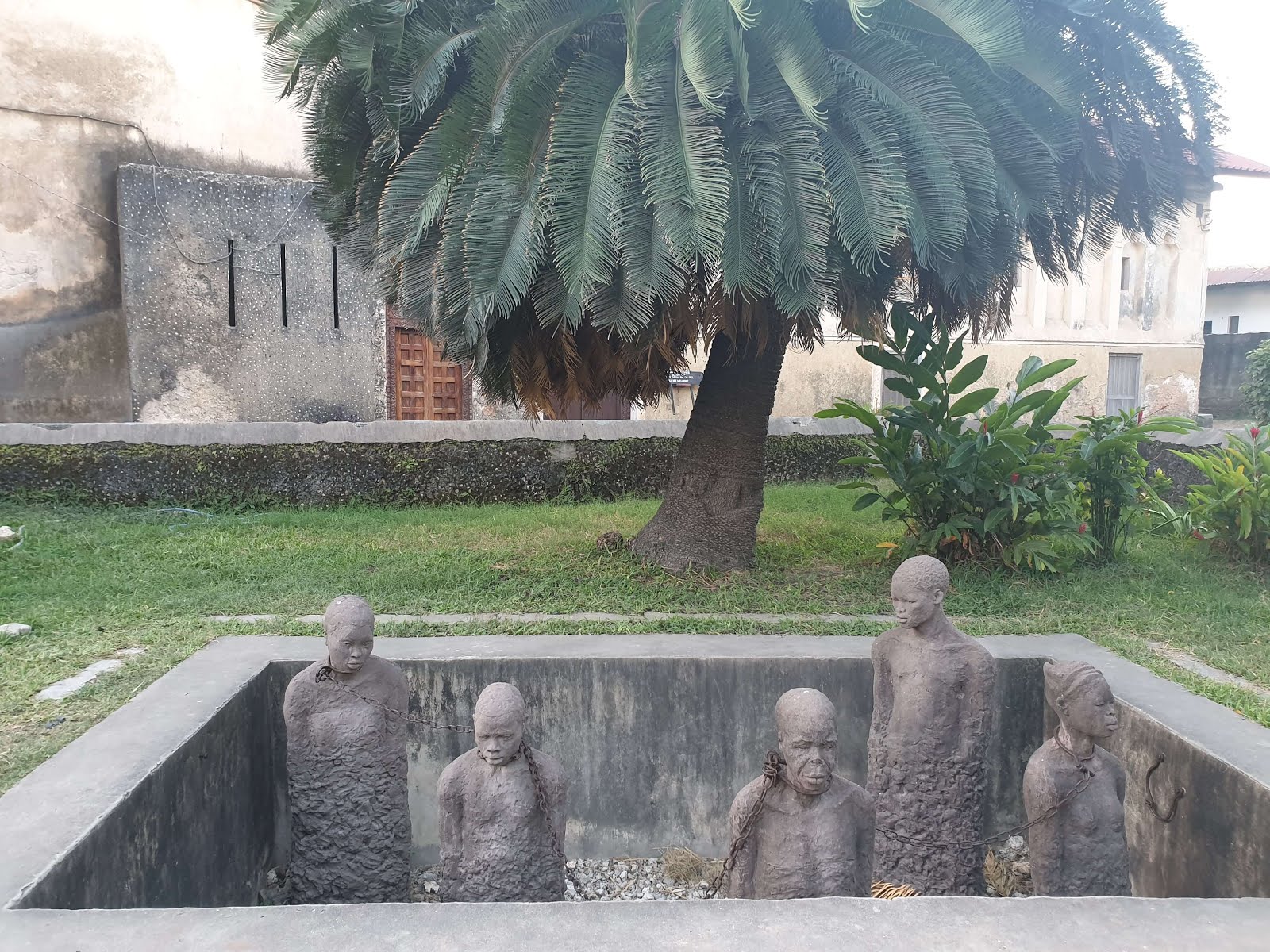
How could they not? They were doomed from birth by the colour of their skin, rather than the content of their character. The spices they proudly display to me sustain their livelihoods today. Ironically, these spices were also the primary reason they were set back in time. The abundance of resources was too hard to ignore for the world\’s colonisers, multiples at a time. A two-hundred-year Portuguese colonisation ended with the hegemony of Oman. The Sultanate of Zanzibar, central to the Arab slave trade, left a mark so indelible, so penetrative that you would still find glimpses today.

The Old Fort of Zanzibar need not be the only conspicuous reminder of erstwhile Omani dominion. The kummah, traditional Omani headgear, still adorns the heads of a large number of Zanzibari men. I found it strange that Zanzibaris would proudly flout the adornments of their oppressors. When I posed this query to Joseph, he looked to the skies with a grimace of helplessness. For a moment, the man preaching eternal happiness betrayed a profound sadness in his eyes.

\”They think it was right. They believed in the Sultanate of Zanzibar.\”

Believed in it? Believed in the devilry of slave trade? The rationale for this is lost on me, but I cannot comment on it further. Surely, the intricacies of reasoning are beyond my understanding of the Zanj region. It is true that the Sultans also ended up abolishing slave trade. Zanzibar\’s growth under their reigns is well documented. The fact that it is an ancestral home to several Omanis further complicates the dynamic. It is best I leave my judgements unuttered, knowing fully well that in my own country Hindu nationalists believe in mob-lynching. Western countries have armed activists marching the streets despite a clear correlation between freely available guns and school-shootings, so it must be a matter of perspective.

I\’m sure there must be some convolution to it all. I just couldn\’t see it, not when placed in comparison to the oppressive malevolence of slavery.

The Olduvai Gorge of Tanzania is often touted as the birthplace of homo sapiens. Nestled in the Great Rift Valley on the eastern Serengeti Plains, hominids began their evolution into hominins (ultimately into humans). In this gorge, palaeontologists discovered the first traces of stone tools along with signs of scavenging activities.

I found it ironic that Tanzania was the site of cognitive evolution along with slave trade at different periods in time.

The place that gave birth to humans was also the place where we lost our humanity.

Slave Monument Memorial Zanzibar

* * *
\”The number one thing in life is to be happy.\”

I turn back from the window to find Joseph still beaming. The wide grin is boring into me like a dagger. It is commendable he finds the happiness in little things, in a place that has much to weep about. Misery, grief and hatred have been sown into Africa. For regions that consider themselves unfortunate for not having any natural resources, Africa is prime example of why they should be glad. Treasures of the land seduced colonisers, and Africans were left worse than they would have been otherwise. Fortune and fame, rats and cheese. 

In midst of it all, tattered, bruised and anachronistically impaired, the land of Africa. 

* * *

If you liked what you read then do help me by sharing this on social media platforms of your choosing (Facebook, Twitter, Instagram, G+, Reddit I ain\’t picky). We\’re all artists somewhere, in some field, and this is just my form of art that would truly find expression if more people get the inclination to read it.

You can like this blog\’s Facebook page here, follow the Twitter feed here, follow me personally on Twitter here, like the Instagram post here or upvote this piece on Reddit here.

Similar articles:

Sleepless in Sydney: Read More

The Bizarre Contradictions Of Thailand: Read More

A Magic Trick In Cambridge, UK: Read More

A City\’s Soul In Deira, Dubai: Read More

The Cricket World Cups Of Our Lives

* * *
23rd March, 2003

We didn\’t have cable TV at home. It had always been deemed a \’distraction\’ towards our academic performance. However, as luck would have it, my granddad, a devout cricket fan, had decided to visit us a couple of months earlier and my father had to, grudgingly, get Doordarshan Sports so that my granddad could track India\’s tour of New Zealand in 2002-03.
That was the first time I watched a game of cricket. I cannot remember the first time I played it, as it was much earlier. I had been playing cricket before I even knew what the game was, who played it and whether I was any good at it. 
I had watched Sachin Tendulkar in advertisements, but not on the field. 
But now, I was watching it. Something about Virender Sehwag and Zaheer Khan stood out to me in that series, even at that age, and I decided to worship them. 
My granddad left soon after that tour, but DD Sports did not. I had at my disposal a newfound cricket watching interest, two deified heroes in Sehwag and Zaheer and a functional sports channel. Suddenly, I was in with the times – the advertisements with Sachin and Ganguly made sense, the news reports made sense and the adult chatter made sense.
The advent of DD Sports into my house had somehow altered the zeitgeist. I was sold.

So amidst this hullabaloo to a highly impressionable mind, it all began. It began with a Brian Lara and Lance Klusener special. This sport was throwing greatness at me, one match at a time. It began with India vs. Netherlands, and with it the first Sachin straight drive that will remain eternally indelible. 

It began with running home from school to check the scores. It began with protracted, desperate arguments with my parents for the day-night games, as they went well past our bedtime.

Once, I went to bed (disgruntled naturally) hoping that the English batsmen would show mercy to my team. 

I woke up to the ballads of a certain Ashish Nehra, and his miraculous 6 for 23. We mimicked his airplane celebration for years when we played.
I woke up to a Sourav Ganguly heist against Kenya. Thankfully, (since it was a day game) I was wide awake for Mohammed Kaif\’s heroics against New Zealand.
Then, the hype. India and Australia were bound to meet in the finals – surely, no one expected Kenya and Sri Lanka to defeat these behemoths? The Times Of Oman, in a bid to stand out from the crowd, ran a headline along the lines of \’Forget Australia vs. India, what about Sri Lanka vs. Kenya?\’
I guess it was destined to be. Against Kenya once again, Ganguly unleashed a barrage of sixes over midwicket, and there was a new threat to the Indian quest to the finals: rain. The clouds threatened to wash out Ganguly\’s efforts, and India would have to come back for a fresh start. India switched to spin options pretty quickly into the Kenyan innings, with Harbhajan, Sachin, Sehwag and Yuvraj all rushing through their overs at Ganguly\’s frenzied gestures. He had one eye on the clouds, one eye on the D/L (now DLS) score, and two hands frantically urging his bowlers to get to their mark quicker.
I went to sleep after India had satisfied the D/L quota of overs.
Sehwag, meanwhile, was having a bad World Cup. His mother was being interviewed on national news. She was describing the meticulousness of her prayers, and her motherly instinct told her that Sehwag would score big in the final.
On 23rd March, during our morning school prayer I decided to include an additional plea for my Indian cricket team. I was too young to calculate the importance of my little hurried wish; too young to be aware of the deluge of prayers that would emanate from India that day. The obliviousness of youth made me believe that, somewhere out there in Oman, one little kid\’s prayer would change destiny.  
I was restless in school. I was convulsing with excitement during the bus ride back home. I might have leapt out before the door was fully open and hared across to my building. I might have jammed the elevator buttons and paced around, urging it to go up faster. I might have rushed past my mother at the door, flung my schoolbag aside and switched on the TV, remote trembling in my hands.
I switched on to a disaster. 
Ricky Ponting had grabbed my little dreams and crushed them with alarming brutality.

He was a tornado; Australia, a dynasty. Every shot was like a whip crack, every boundary gesture was like a slap and every fist-bump was a puncture to my bubble of optimism. I was just sinking deeper, and deeper, and deeper.

But, we had Sachin. So we waited, clinging to our battered strands of hope. I watched Sachin and Sehwag walk out, and I had goosebumps. It was time to right the wrongs. Pay back the misery and the trauma in style. It would be the ultimate underdog story.

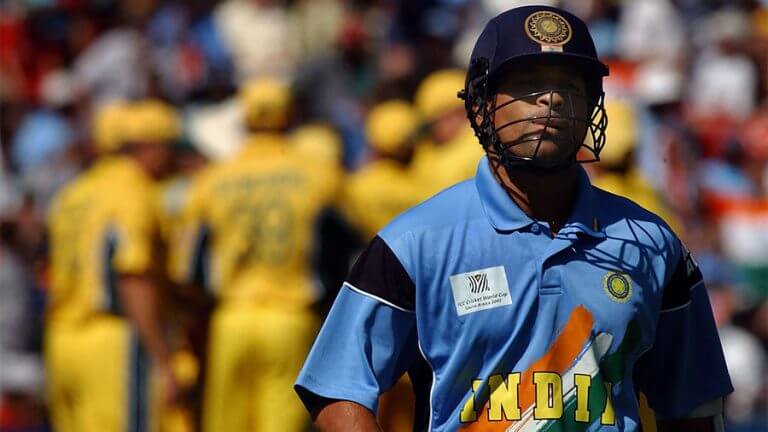
Sachin hit a boundary and then skied a pull. The ball hung in the air longer than normal. 

It came crashing down with our hopes.
So I did the only thing I knew. I switched off the TV and went down to play.

Sachin Tendulkar dismissed by Glenn McGrath, India vs Australia 2003 Cricket World Cup Final

This was the only antidote that came to my mind, the only escape mechanism. At the age of 9, going down to play was a panacea. My mother came down for a walk at some point to inform us that Sehwag had finally come good, but India hadn\’t. I didn\’t want this bargain. It was raining, and we were hoping for the match to be called off. The same rain gods I was against a match before were the ones I looked up to that day.
But alas, when I finally trudged back home, Sehwag was trudging back as well, having just been run out.  The match was back on, and so were my miseries. But a young mind is fairly optimistic, and even at 9 down when Ashish Nehra hit two consecutive boundaries I envisioned him scoring a brisk century to engender the upset of the millennium.
The chimera was shattered by Darren Lehmann. For months after that match, I would replay India vs. Australia on EA Sports cricket games on my PC, trying to avenge that match. Trying to wash away those memories. But I never could.

I was scarred.

I just didn\’t know it then. I was too young to know it.

* * *
23rd March, 2007
By 2007, I was once again alienated from cricket. Sports channels in my house had long disappeared, and this time no relative could bring them back. Indian cricket was in tatters with Greg Chappell blatantly chaperoning us off a cliff. Sehwag was struggling, on the brink of being dropped.
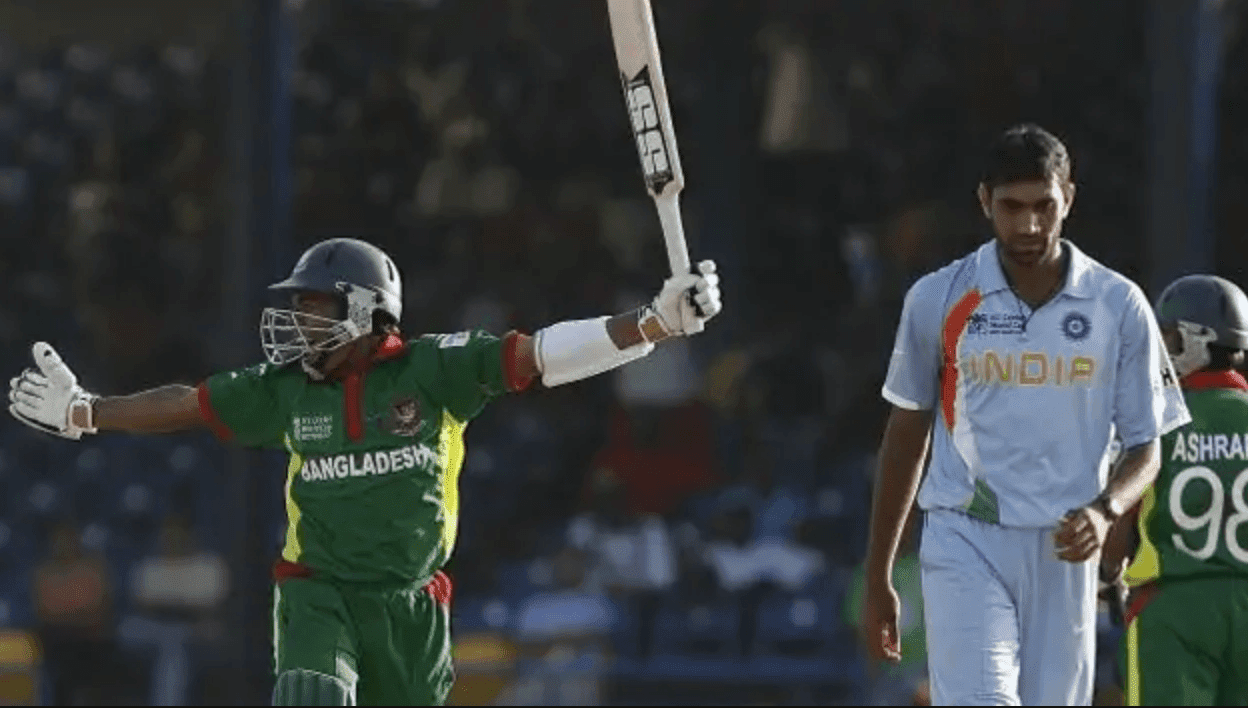
Somehow, I had managed to convince my parents to let me watch the World Cup at a neighbour\’s house. I shouldn\’t have. India crumbled to Bangladesh that day. Despite that, I went back the next match to watch a Dwayne Leverock dive and Sehwag special.

Bangladesh upsets India in 2007 Cricket World Cup

That India would crash out was never a conceivable notion. But as they collapsed to a Sri Lankan charge, it was foolish to assume otherwise. I went to bed that night in the middle of the match. Somewhere, on some floor in my building, a Sri Lankan family had organised a watch party. Their deafening cheers and music signalled the fall of every Indian wicket.
I heard them all, lying in the dark in bed, exactly four years from the day Ricky Ponting was relentless in his mauling. Tossing and turning, trying to sleep it all away. I wondered what life would be like in 2011. I would be in Grade 11, a shuddering prospect. 
At some point in that darkness, the loudest cheer broke out followed by unending music and I knew the deed was done. I don\’t know at what point I dozed off, drifting away from my misery as the Sri Lankans celebrated the night away.
* * *
2nd April, 2011

By 2011, cricket was a defining personality trait. 
My bedroom walls were peppered with posters of cricketers, wrestlers and rappers. Sports channels were still non-existent in my house, but these were the rebellious teenage years of torrents and illegal streams. 
By now, I was already a pseudo-cricket analyst. On Facebook groups, online forums, Cricinfo comments and school bus discussions. The social media age was truly upon us, and it accentuated the scrutiny, hype and criticism. I was starting to comprehend the true magnitude of humanity.
Despite my cricket fanaticism, I was, like any other teenager, extremely busy. A 17-year old often deems it offensive to sit a full day at home, and so did I. I caught snippets of matches whenever I could. I caught the ending of the India-Australia quarter-final outside a restaurant in Karama, gazing through the window display at the TV screens. As Yuvraj Singh roared into the skies, so did all the visitors at the restaurant. 
I caught the ending of India vs. Pakistan at another restaurant in Karama, this time inside it (thankfully). We ran outside at the dismissal of Misbah-ul-Haq and danced away to the music of our phones. 
The stage was set for a moment in history. Sachin Tendulkar, one knock away from a hundred international 100s, due to play his last World Cup final at his home ground in Bombay to win the coveted trophy that had eluded him his entire career. 
You couldn\’t have written a better script. Someone out there had planned it all out, detail upon detail, to create a story that would last the ages. 
Lasith Malinga tore it into pieces. 
Life isn\’t a movie, or maybe we were watching Sri Lanka\’s movie, I mused as Sachin dragged himself back to the pavilion in deafening silence at the Wankhede. Thankfully, Gambhir, Kohli and Dhoni decided to interrupt the Sri Lankan cinema reel and create their own, and we inched closer to a dream.
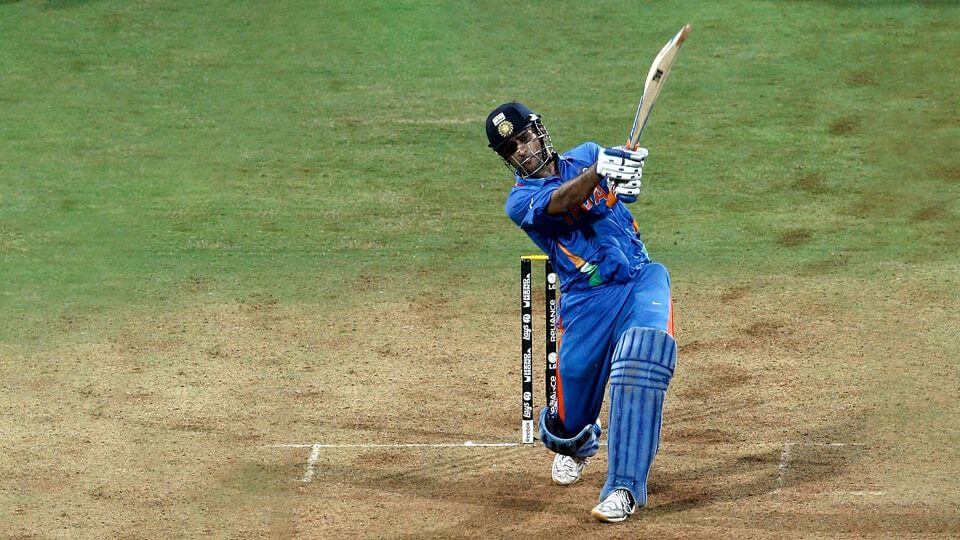
As Mahendra Singh Dhoni launched Nuwan Kulasekara into the sky, time once again stood still. It had been eight years since I watched a ball just hang in the air, defying gravity and bending time. The room erupted around me with shrieks, laughter and sobs. The scene at the corners of my eyes was a blur, as friends jumped, hugged and celebrated. 
But I just stood there, transfixed to the screen. For a rare moment, thoughtless, speechless and motionless.

MS Dhoni Hits A Six and India wins the 2011 Cricket World Cup Final Against Sri Lanka

What is it about sport? 
It is, after all, an imagined reality. Every form of sport can be fragmented into mindless running, pointless chasing of something worthless and conforming to rules that represent no tangible barriers. What is cricket if not a silly \’hit-ball-with-stick\’, football just a \’kick-ball\’ or basketball a \’throw-ball\’ game that holds no tangible value?
What is it then? What about sport drives us?
If it is just another silly little game, then it cannot explain why we ran – ran with no purpose and destination on the streets of Bur Dubai on a sultry night in April. It didn\’t matter who we were, where we came from or what we were doing. We just ran, and ran, until we couldn\’t run anymore. Some of us screaming our hearts out, others laughing and others weeping.

It cannot explain why all around us, people swarmed out of the concrete jungle, draped in flags, tooting horns and smeared with face paint. Why did cars block all the streets, with absolutely no intention of going anywhere, honking to the beats of the dhol being played in every corner?

No one had scheduled a mass congregation after the World Cup final. No invitations, no event pages, no flyers or announcements for a street after-party. Yet, here we were, denizens of the same soil, swarming in revelry. We were hugging strangers, dancing, singing and chanting. We were climbing on cars, hanging off Jeeps driven by unknowns. We escaped for a night, and it seemed the night wouldn\’t end ever. Schools, universities, offices and daily routines be damned. Alarm clocks and early mornings be damned.

This was our night, and we would decide when, and if, it would end.

What is it about sport? What is it that got us all together that night – living, breathing, singing, dancing as one? 
If it is just another silly little game, then how did it, for one night, unify a nation?
* * *

26th March, 2015

The Sydney Cricket Ground was ready for a spectacle. I was hunched over my laptop screen, in the middle of the night. It was a cold, typically rainy British night and I was pulling an all-nighter to watch the match scheduled in broad daylight in Australia.
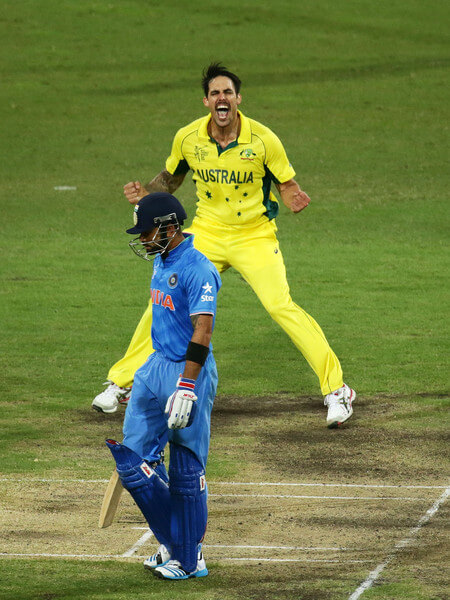
But another skied shot to an Australian pacer, and it seemed 2003 was back to haunt me. Another ball that hung in the air, this time from the blade of Virat Kohli, not Sachin. Delivered by Mitchell Johnson, not Glenn McGrath.

Virat Kohli ambled back to a silenced crowd, and I had another scar. 

By now cricket was a peripheral part of me. I was playing club cricket in picturesque college grounds that populated the meadows of Cambridgeshire. I was a part-time glorified pseudo-cricket analyst at SportsKeeda
Yet, I was lost.
For the first time, I couldn\’t foresee my life by the next World Cup. It was easier while I was in educational institutions. Easy to predict my 4-year increments in school or university years. But in 2019, I would (hopefully) be a young professional, aged a daunting 25 years old. I had no idea where I would be, what I would be doing and even who I would turn out to be.
My reliable metric of measuring life by World Cups was starting to crumble, and my future was in darkness.

Mitchell Johnson Dismisses Virat Kohli in 2015 Cricket World Cup Semi-Final
* * *
July 2019
Amidst this darkness, I now reach out to you, my reader.

I\’ve always casually measured my life with cricket World Cups. I\’ve always tried to imagine my life, age, status and circumstance by the next event.

In 2003, the first one I remember watching at the age of nine, I tried to imagine myself in 2007. I would then be 13 years old, a big number to my 9-year-old mind. Probably in 7th grade (\’probably\’ as I wasn\’t optimistic about my middle school grades) – what would life be like at the age of 13? Would I have too much homework? Would I be more serious, more studious and less playful?

In 2007, I laughed at the thought of my nine-year-old worries. At the same time, I shuddered to think of 2011. While my questions and their answers changed with every World Cup, one fact that was apparent, in fact inevitable, was that my childhood was disappearing.

In 2015, I was left stranded in my prognosis. Life became impossible to predict from thereon. Of course, if you are reading this piece today, then it means I have made it in living colour to 2019. But this pattern of unknown, of darkness, has now clung to World Cups.

Where would I be in 2023? What would I be doing? Would I be married? Kids? All shuddering prospects, but they are unavoidable. 

Yet, as I have done every single time, four years later I would look back and smile at the worries of my younger self. But would I smile at the memories itself? What would I remember July 2019 by?

I cannot help but create a lifelong memory this World Cup – it is an unavoidable circumstance at this point. Such is my love for the game, my history with it and its attachment to my life story.

I cannot choose to not have this eternal memory. It is now up to the players, luck and maybe destiny to decide whether this memory would be a good one, or whether I would etch another scar into this life story.

Whether I would go to bed that night reliving the horrors of my childhood, or dancing, singing, hugging and chanting with my people, for one night only, lost in oblivion and unified once again. 

*

10th July 2019

Naturally, I wrote that ending before the events of Tuesday and Wednesday. I guess I must leave it to 2023, when I would indeed be 29, and lost in this impenetrably dark abyss that is my future. 
For now, however, I add another scar.
* * *

If you liked what you have just read, please do consider spreading the love and sharing this on social media platforms of your choice. Additionally, also consider liking this blog on Facebook, following it on Twitter, following me personally on Twitter or upvoting this post on Reddit. We\’re all artists in our own way, and this is my art that would truly find expression if more people got a chance to read it.

If reading isn\’t your thing (and assuming you stuck around to skim to the end), then you can listen to me dissect cricket with Anurag Ram Chandran at the latest episode of the Millennial Musings Podcast here.

Similar articles:

Why I Feel Virat Kohli, And Not Sachin Tendulkar, Is Indian Cricket\’s Biggest Inspiration: Read More

Why I Stopped Loving Mahendra Singh Dhoni: Read More

India At Rio Olympics 2016: No Country For Non-Cricketers: Read More

India vs. South Africa, ICC Cricket World Cup 2019: Preview, Predictions, Key Players, Strategies, Match-Ups & Everything Else

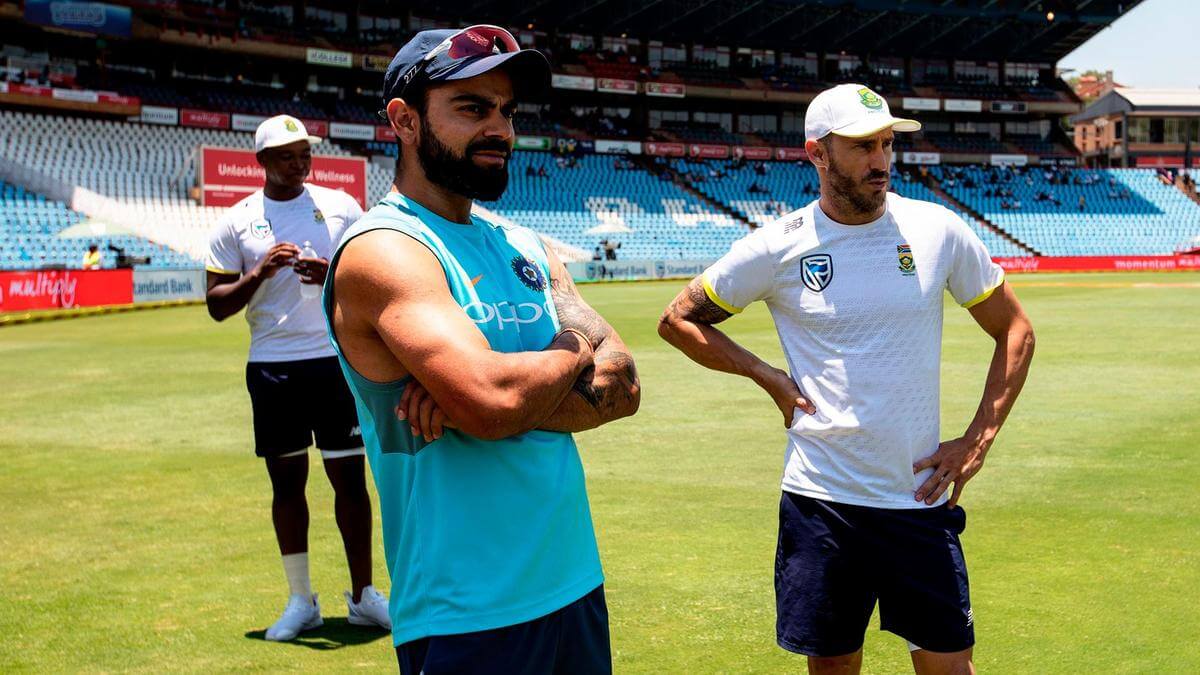
Virat Kohli and Faf Du Pless Ahead of India vs South Africa ICC Cricket World Cup 2019

Once more into the breach, dear friends?

At the onset of yet another Indian World Cup campaign (for anyone doubting where my loyalties lie), there is hope like never before. Sure, there was hope in 2011 as well but this time there is a formidable bowling line-up that doesn\’t include Sreesanth.

In the other corner is South Africa, a team that is bruised by the conspicuous void left by AB de Villiers, injuries to Dale Steyn, Hashim Amla and Lungi Ngidi and their perennial failures at major tournaments.

On paper, predictions seem easy. But it wouldn\’t hurt to inject some analysis to spice it up?

Match-Ups & Possible Strategies


Lungi Ngidi vs. Shikhar Dhawan*

    Lungi Ngidi vs Shikhar Dhawan in India vs South Africa ICC Cricket World Cup 2019
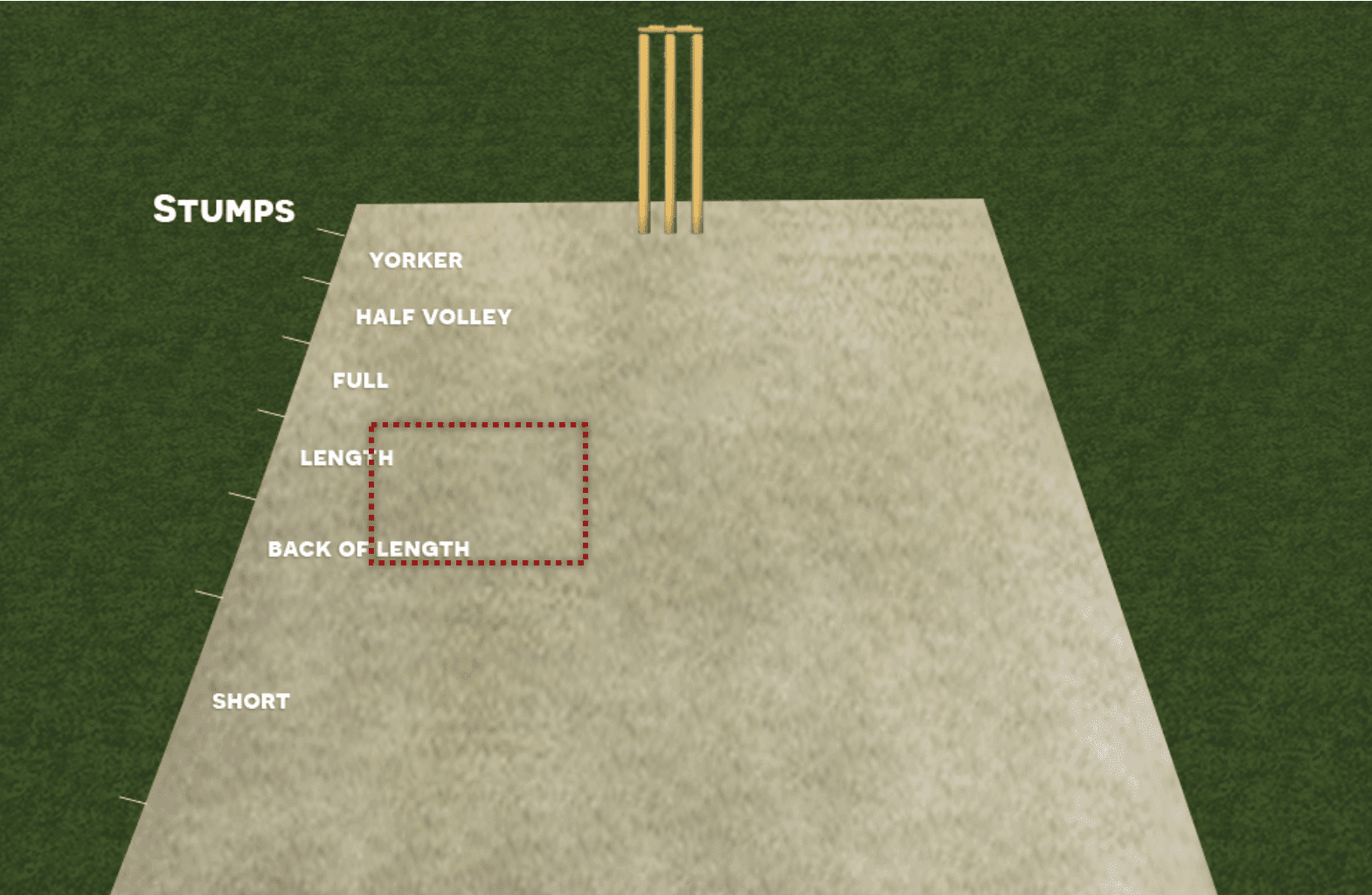
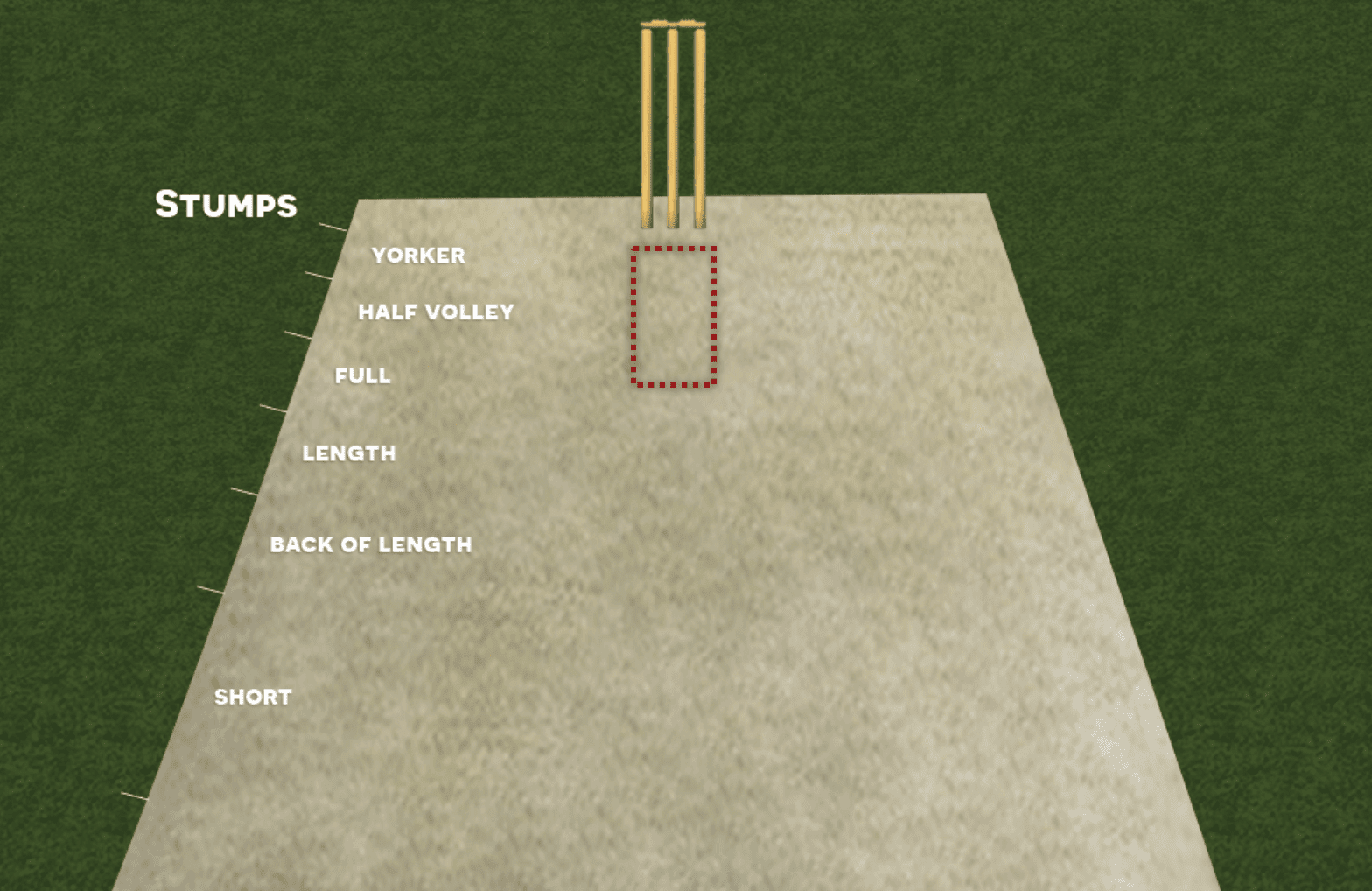
    Ngidi vs. Dhawan: Target Zone (from a right-handed batsman\’s perspective)
    Delivery type: cross-seam
    Target dismissal: caught by keeper, slip or at gully

    • Expect Ngidi to target the good-length area on the fifth stump line to Dhawan. 
    • This would play into Dhawan\’s natural instinct to dominate all deliveries on the off, but leave him cramped for room. 
    • Ngidi generates extra bounce which has often troubled Dhawan. (refer similar dismissals with Oshane Thomas)
    *This analysis was written before Lungi Ngidi got injured in the match against Bangladesh. I have left it intact as there is a slight chance that it might be implemented by Chris Morris instead, but slightly shorter (back of length & short, instead of length & back of length). 

    My gut instinct, however, is that in the absence of Ngidi it is Shikhar Dhawan\’s day to shine. 

    *cue in thigh slap*

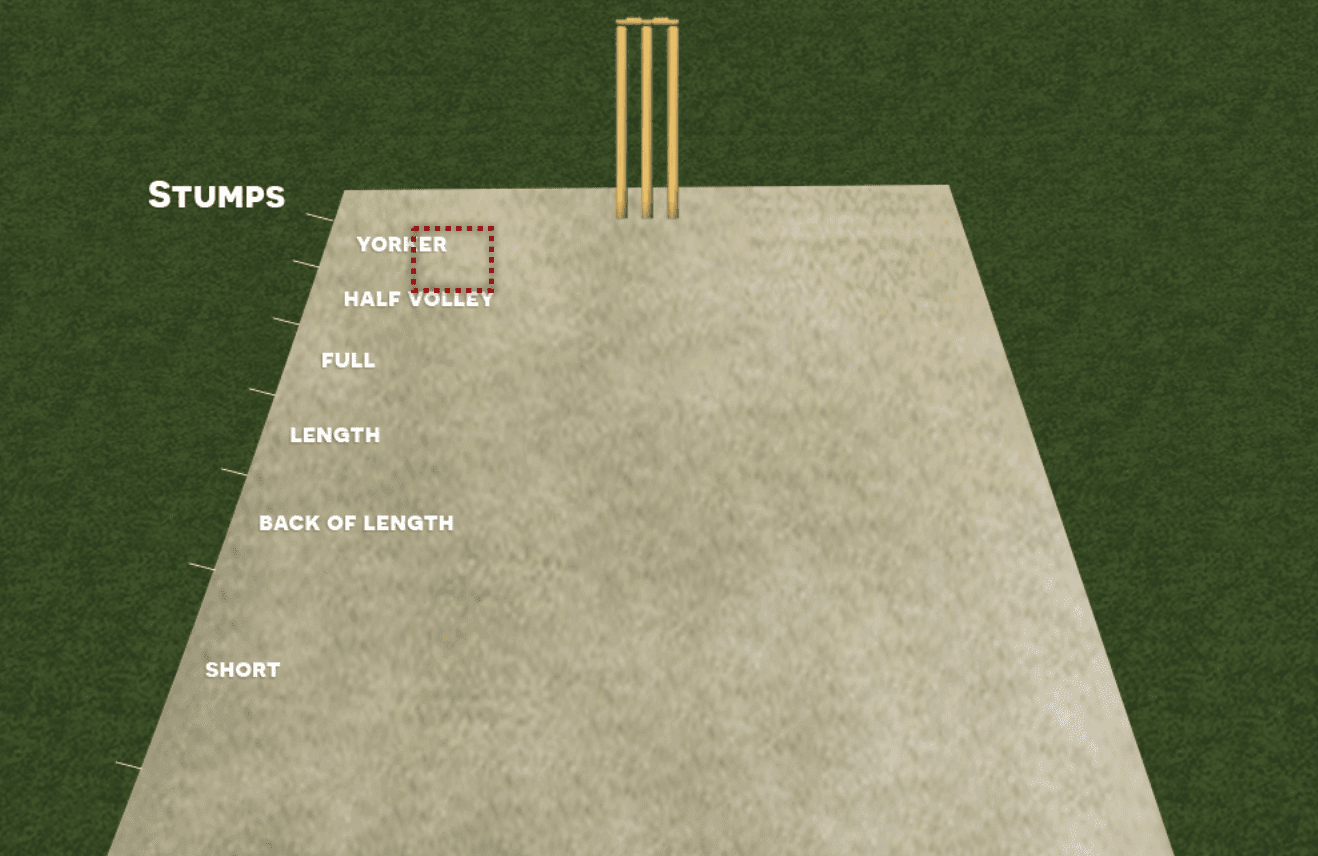
    Kagiso Rabada vs. Rohit Sharma 
    • Rabada to bowl full in-swingers to Rohit to capitalise on his chronic weakness (refer similar dismissals with Mohammad Amir).
    • Rohit extremely susceptible if India bats first under a cloud cover, slightly less but still at risk if chasing during the first five overs of the new ball. 
      Kagiso Rabada vs Rohit Sharma in India vs South Africa ICC Cricket World Cup 2019
      Rabada vs. Rohit: Target Zone
      Delivery Type: In-swingers
      Target Dismissal: LBW or bowled
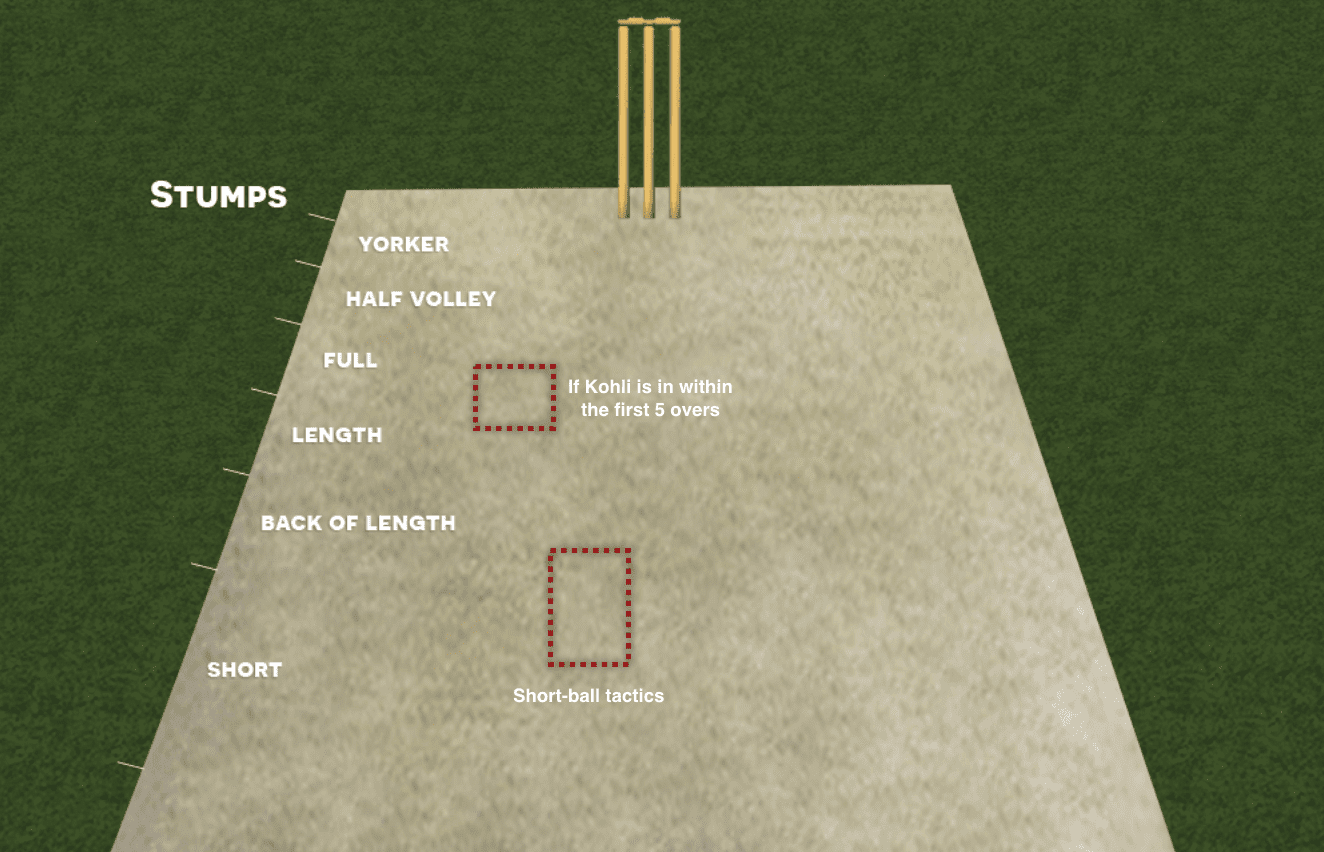
      Kagiso Rabada vs. Virat Kohli
      • Rabada to consistently bowl short to Kohli, with surprise yorkers in between (refer all matches on India\’s tour of South Africa in 2018).
      • Kohli would attempt to dominate. The execution of this plan would be an important moment (as with all things Kohli) in this match
      • The execution of this plan would also depend on the timing of Kohli\’s entry – if India\’s skipper walks out within the first 5 overs then the initial plan might be to bowl good length at the fourth & fifth stump.
      Kagiso Rabada vs Virat Kohli in India vs South Africa ICC Cricket World Cup 2019
      Rabada vs. Kohli: Target Zone
      Delivery Type: Short
      Target Dismissal: Caught (Deep Fine Leg, Long Leg, Square Leg)
      South African batsmen vs. Kuldeep & Chahal 

      • Unless the batsmen have worked out a clear plan on picking the variations, expect SA to either go very hard or very cautious against the Indian leggies. 
      • Higher chance of the cautious approach due to the weakness of the SA batting order. In this scenario, Bhuvneshwar Kumar/Mohammed Shami, Hardik Pandya and Kedar Jadhav/Ravindra Jadeja will be the bowlers they will target
      • If Chahal is targeted, expect him to bowl extremely wide on a fuller length.
      • Should the batsmen be successful in combating the wide tactic, Chahal to continue bowling wide but pull his length back slightly with some pace off for a bigger dip
      Kagiso Rabada vs Virat Kohli in India vs South Africa ICC Cricket World Cup 2019
      Chahal\’s Defensive Mechanism
      Delivery Type: Off-spin, full, wide, slow dippers
      Target Dismissal: Stumped, Caught at Long Off or Deep Extra Cover, Cover
      Note: All of these match-ups have stronger potency if India bats first, as this would pit India\’s batting against South Africa\’s bowling under slightly more favourable conditions for bowling. It would also play into SA\’s history of choking messing up chases, which would be keenly exploited by the Indian spinners under the hawk-like supervision of MS Dhoni. 
      Key Players


      1. Kedar Jadhav

      Kedar Jadhav in India vs South Africa ICC Cricket World Cup 2019
      The South African batsmen would mainly look to target the fifth bowler, the role of which should primarily be filled by Jadhav for this match as I do not expect Hardik Pandya to pose a threat. Expect Jadhav\’s unique action, delivery trajectory and MSD\’s advice to play a pivotal role. His threat would be magnified against the left-handed batsmen (QDK, Miller, JP Duminy).

      Having said that, Ravindra Jadeja will most likely take Jadhav\’s spot due to a strong showing in the warm-ups, which I personally feel might be a mistake for this match.

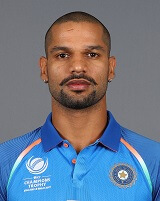
      2. Shikhar Dhawan

      Shikhar Dhawan in India vs South Africa, ICC Cricket World Cup 2019

      Should Dhawan manage to curb his instincts initially against Rabada and avoid inside edges into his stumps, the stars are aligned for a Shikhar special in yet another ICC tournament. In the absence of the real stylistic threat in Lungi Ngidi, the only person standing in Dhawan\’s way tomorrow is his own ego.

      3. Quinton de Kock

      Quinton de Kock in India vs. South Africa ICC Cricket World Cup 2019

      QDK is the biggest threat to India, as he remains the only player in the line-up who can truly take the game away. If India open with Bhuvaneshwar or Shami to QDK, expect carnage up front. Kuldeep will be the key bowler as he would turn it away from de Kock. Since Kuldeep does not bowl in the power-plays this battle would be delayed – by which point QDK might be off to a good start.

      4. Rassie van der Dussen

      Rassie van der Dussen in India vs. South Africa ICC Cricket World Cup 2019

      Prodigious talent that is relatively unheard of has been India\’s bane for the longest time. (refer: ABD, QDK, Sam Curran, Michael Clarke, Ajantha Mendis, Ashton Turner, Lendl Simmons, Heinrich Klaasen). I would expect the same from the bowling think tank, who would extensively plan for Faf du Plessis, David Miller, the mighty Hash and Quinton de Kock but underestimate the batsmen to follow.

      Bonus Mention: MS Dhoni\’s strategic consultancy during the middle overs while the Indian spinners are in action might be his most important contribution in this match, above his batting or keeping.

      Summary


      Possible Indian XI: 1. Rohit Sharma, 2. Shikhar Dhawan, 3. Virat Kohli (c), 4. KL Rahul 5. MS Dhoni (wk), 6. Hardik Pandya, 7. Ravindra Jadeja (hope it\’s Jadhav though), 8. Kuldeep Yada,. 9. Mohammed Shami, 10. Yuzvendra Chahal, 11. Jasprit Bumrah

      Possible South Africa XI: 1. Quinton de Kock, 2. Hashim Amla, 3. Aiden Markram, 4. Faf du Plessis, 5. David Miller/Rassie van der Dussen, 6. JP Duminy, 7. Chris Morris/Andile Phehlukwayo, 8. Dwaine Pretorius, 9. Kagiso Rabada 10. Imran Tahir, 11. Tabraiz Shamsi

      With a forecasted cloud cover, the toss will be crucial. Both teams would be looking to bowl first to exploit the conditions, however, South Africa has already messed up two chases which would definitely play on their minds.

      Should India bowl first, I would predict a comfortable victory for the team in blue. However, if the roles are reversed the match would get much tighter. The key players and strategies discussed above might come into play in determining the victor.

      If you found this analysis a bit too comprehensive, never forget this signboard I found outside the dressing room in an old college cricket ground in Cambridgeshire:

      * * *

      If you liked what you have just read, please do consider spreading the love and sharing this on social media platforms of your choice. Additionally, also consider liking this blog on Facebook, following it on Twitter or following me personally on Twitter. We\’re all artists in our own way, and this is my art that would truly find expression if more people got a chance to read it.

      Similar articles:

      Why I Feel Virat Kohli, And Not Sachin Tendulkar, Is Indian Cricket\’s Biggest Inspiration: Read More

      Why I Stopped Loving Mahendra Singh Dhoni: Read More

      India At Rio Olympics 2016: No Country For Non-Cricketers: Read More

      An Overview Of The Wonders Of Space & Our Universe In A Single Blog Post, By A Rookie

      \”Somewhere, something incredible is waiting to be known.\”

      First Ever Black Hole Picture Katie Bouman

      Once again, in this increasingly infrequent series of overviews, I aim to provide a one-stop-shop for all your cosmological queries. As always, this should be treated as another zealot\’s opportunity to promote discussion about the miraculous wonders of our Universe (of which there are many), and not a scientific paper by an astrophysicist with a litany of qualifications (of which there are none).

      So, without further ado, I present to you: a blogger\’s guide to the galaxy.

      Earth & The Solar System

      Jumping away from the obvious facts that even 5th graders could tell you (actually I\’m no longer sure what 5th graders could tell you these days): what makes the Earth unique? Why does life exist on Earth and not anywhere else to our knowledge? These are some reasons:

      • All stars have a habitable zone or Goldilocks zone, which is the ideal distance a planet should be located from it. It was named after the eponymous fairy tale character that found one soup too cold, one soup too hot and one soup \’just right\’. Similarly, planets in the Goldilocks zones are neither too hot or cold, but just right. 
      • This zone is conducive to life due to moderate levels of radiant energy and atmospheric pressure, which consequently support the presence of liquid water. 
      • Earth is in the Goldilocks zone of our Sun. Before we feel special, we should note that so is Mars.
      • Our solar system is conveniently positioned at a considerable distance from other apocalyptic hazards like rogue stars, black holes or supernovas.
      • Earth\’s dynamic core creates a strong magnetic field that protects us from solar flares.
      • Jupiter\’s immense size and proximity to Earth attracts most asteroids away from colliding with us. Remember, it took just one asteroid to wipe out dinosaurs.
      • We have been very lucky with climate changes, the current huge gap between ice ages and geological hazards like supervolcanoes to allow a civilisation to thrive for a couple of hundred thousand years.
      Habitable Zones Of Stars Goldilocks Zones
      Additional Reading: 
      • Warm Welcome: Finding Habitable Planets: Read Here
      The Great Filter

      Clearly, multiple miracles worked in our favour to sustain life. Let\’s say we find a new planet tomorrow, then these factors would help determine whether we might find life on it:

      • The probability of that planet being placed in the habitable zone of its solar system
      • The probability of that planet developing a strong magnetic field
      • The probability of the birth of microbes under favourable weather conditions
      • The probability of the birth of oxygen-producing bacteria
      • The probability of the evolution of multi-cellular organisms into animals, and then into intelligent ones
      • The probability of those animals enduring common cyclic hazards of mass extinction like Ice Ages or asteroids
      • The probability of that civilisation not wiping itself out upon reaching super-intelligence.
      • The probability of the star in that solar system lasting long enough for life to sustain on that planet
      • The probability that planet is close to a giant body that can seduce asteroids away
      Of course, there are a lot more probabilities that come into play but let us stick with these. It would be easier to imagine this barrier of conjunctive probabilities as a Great Filter. A filter that determines where life would exist on a given planet.

      Let\’s say a reasonable assumption is that the probability of all these factors clicking together is one in 20 million (1/20,000,000).

      Taking the billions and billions of solar systems into account, it is estimated that our Universe contains 40 billion Earth-like planets in Goldilocks zones of their respective stars. (that\’s 40,000,000,000 Earths). Assuming that one planet in every 20 million planets has the probability of creating life, that still leaves us with 2,000 planets that definitely have life?

      Solar Flares Solar Storms
      Solar Storms

      Cheeky note: We haven\’t taken into contention forms of life that don\’t require the same living conditions that we do. So it is entirely possible that there exists a separate permutation, probability and estimation for lifeforms that survive on elements other than water or oxygen within this Universe.

      Earth-like Planets

      Planets Like Earth Kepler 452b
      Earth-like Planets

      Listing below some popular Earth-like planets that currently meet most prerequisites for sustaining life:

      Kepler-62e: Read More
      Kepler 62e
      Image Source: Kepler-62e
      Kepler-452b: Read More
      Kepler 452b
      Image Source: Kepler-452b
      Kepler-62f: Read More
      Kepler 62f
      Additional Reading:
      • The Six Most Earth-Like Planets, E. Howell: Click Here
      Planet Nine

      Beyond Neptune, our last recognised planet (my sincere condolences to Plutonians), lie multiple celestial bodies imaginatively named trans-Neptunian objects (TNOs). As more of these celestial bodies started getting discovered, cosmologists were able to perceive a pattern in their orbits. Their orbits approached the Sun from a common angle and were all tilted in a similar pattern.

      These observations can be explained if there is a giant mysterious Planet Nine lurking beyond Neptune in our Solar System. The orbit would be opposite to those of the TNOs, hence balancing out the forces.

      Estimated to be around 5-10 times the mass of Earth, its immense distance from the sun results in minimal reflection of light. Things are still murky, however, with increasing improvement in our surveillance technology, we should have an answer soon.

      So I guess it might be time to rewrite school textbooks, again.

      (my sincere condolences to upcoming elementary school students, as well)

      Additional Reading:

      • Evidence For A Distant Giant Planet In The Solar System, K. Batygin, M. Brown: Read Here
      • TED Talk: The Search For Planet Nine: Watch Here
      Black Holes


      Black Hole From Interstellar

      This is where the fun truly begins.

      When stars way bigger than our Sun die, they leave behind a mass with a gravitational force but no repulsive forces keeping it stable. As a result, the star collapses upon itself, creating a small region of very high density and very high gravitational force.

      The gravitational force is so high, that even light cannot escape it. Which means that if you were to point a torch at a black hole, you would not see any light reflect back. If you were to enter a black hole and switch on a torch you would still not see anything in front of you – even if you held the torch right next to your face.

      Supermassive Black Hole

      Black holes are hard to detect and hard to theorise upon. At the boundary of a black hole (called the event horizon), all our current scientific theories cease to exist and physics does not make sense any more. Once you cross the event horizon, you need to be travelling faster than the speed of light to escape out, which is currently impossible.

      The centre of the black hole is generally termed a point of singularity since theoretically, gravity and density are infinite within an infinitesimally tiny space at the centre.

      Since physics as we know it ceases to exist beyond the event horizon, people have the liberty to hypothesise anything they wish – including the time tesseract from Interstellar, parallel universes inside black holes and the black hole information paradox.

      Time Tesseract From Interstellar
      Image Source: Tesseract

      Dark Matter

      Dark Matter Universe
      Image Source: Is Dark Matter Fuzzy
      Everything that we can see, around us, is matter. Anyone who has lived a moderately long life can attest to the fact that there is a lot of matter on Earth alone, and we haven\’t even completely explored our solar system or the universe. Yet, matter only makes up 5% of our universe. The rest is divided into 27% dark matter and 68% dark energy, which effectively means that we don\’t know, understand, see or interact with 95% of our own universe. 
      Dark matter is matter we cannot see, as it does not reflect light or any form of electromagnetic radiation. It is completely undetectable by all measuring instruments we have invented so far. But we know that it exists, or something exists, that exerts a strong gravitational force. That is because visible matter simply does not account for all the gravitational forces we have measured so far. In fact, it falls alarmingly short.
      Although far-fetched, one theory suggests that there are parallel solar systems composed entirely of dark matter (like ours is of matter), that we just cannot see yet. 

      Dark Energy


      Dark Energy Universe

      Things get even murkier when we consider dark energy. Dark energy was born out of the discrepancy in common logic: We can all agree that the universe is made up of matter (dark or otherwise). We are also in unanimous agreement that all matter exerts a gravitational force. All a result, we would constantly be pulled towards a bigger mass (the Moon towards the Earth, the Earth towards the Sun, the Sun towards the supermassive black hole at the centre or our galaxy).

      This should mean that either

      1) The Universe is shrinking, or

      2) It is in a state of equilibrium, but a minute quantum fluctuation would send everything spiralling into one another and it would start shrinking like the first scenario

      It was then hypothesised that there exists a strong, repulsive force that opposes gravity. We can neither see it, nor measure it at this point but we know it exists simply from the fact that something is pushing galaxies away from each other, in this expanding Universe. That something also happens to constitute 68% of the Universe, and alarmingly, does not weaken the further it pushes objects away from each other.

      Some theories claim that dark energy is getting stronger the further it pulls us apart. Aliens are zooming away from us exponentially as we speak.

      Einstein\’s Biggest Blunder

      Einstein originally included a \’cosmological constant\’ in his equations to account for a stable universe. Back then, it was only known that gravity existed as an attractive force. To account for a stable Universe, Einstein assumed a constant negative value for the cosmological constant to oppose gravity. However, when Edwin Hubble discovered that the Universe was expanding, Einstein was forced to discard this constant, as it was clear the Universe was not stable.

      He went on record to call it the biggest blunder of his life. His equations still worked – the value of the cosmological constant was just assumed to be zero.

      Albert Einstein Cosmological Constant Biggest Blunder

      Decades later, astrophysicists made the discovery that the universe is not just expanding, it\’s also accelerating. When they applied Einstein\’s equations, they found that they still worked but now the cosmological constant was back in play. Only this time it was supposed to have a positive non-zero value. Somehow, his equations still worked, just the value assumed for the constant was different.

      Einstein\’s brilliance exceeded his own awareness.

      Additional Reading:

      • Dark Matter & Dark Energy: Read More
      • The Great Mysteries of Dark Matter And Dark Energy, Z. Tomlinson: Read Here
      • Brian Cox on Joe Rogan Experience: Watch Here
      Aliens & The Fermi Paradox


      \”Where are they?\”


      Named after Enrico Fermi\’s lunchtime discussion with his colleagues, the Fermi Paradox questions the existence of extra-terrestrial life by the simple fact that we haven\’t been contacted by anyone yet. Having already noted the existence of habitable zones, Earth-like planets and the possibility of advanced civilizations that merely began a millennia before ours, we should have been contacted or have seen some trace of their existence.

      But we haven\’t, which creates a very chilling paradox.

      Some plausible theories are:

      • Aliens have already found us and either oversee our lives in ostensibly unnoticeable ways or are simply too advanced to bother with a civilisation with our (low) level of intelligence. Looking at the indifference with which we treat our closest intelligent animals like chimpanzees or dolphins, to aliens out there this could just be an insignificant planet of chimpanzees.
      • We are already in a simulation created by an advanced civilization, or in a Matrioshka brain
      • They visit us from time to time, during Comic-Cons (a theory by Neil deGrasse Tyson, before you throw shoes at me)
      • They have transcended conventional intelligence so far, that mundane and physical manifestations of life no longer interest them. This was also alluded to in the fantastically terrifying Stanley Kubrick film 2001: A Space Odyssey
      • We might actually be the only living creatures in the entire Universe. Casual.
      Star Child 2001 A Space Odyssey Stanley Kubrick
      Star Child From 2001: A Space Odyssey
      Why We Shouldn\’t Find Life On Mars

      Nick Bostrom has gone on record to state that he sincerely wishes we don\’t find any form on life on Mars, for the following reasons:

      • If the probability barrier or the Great Filter theory for the factors that sustain life is to be believed, then either it has occurred before Earth or will occur in the future. 
      • If the Great Filter has already occurred, then we should have been contacted by other civilizations similar to ours by now, unless we\’re the only ones. It throws into light the incredibly low probability of life developing under favourable conditions, undeterred by hazards of all forms.
      • If the Great Filter is yet to come, it basically means that all over the Universe life can easily thrive to the levels we have achieved. At some point, their intelligence causes them to self-destruct with mass extinction – either through a bad invention (nuclear missiles anyone?), bad ideologies (any guesses?) or another unforeseen threat. (fatal epidemic?)
      The Great Filter
      It follows that if we were to discover life on Mars, it would shoot the statistics on the discovery of life to two planets out of eight in just our Solar System. This would severely change the numbers from 1 in 20,000,000+ planets as currently believed to 1 in 4. It would imply that the Great Filter is yet to come since life is much easier to sustain than previously believed.
      This would also mean that humanity might come to a premature end in the foreseeable future, since the Great Filter is ahead of us, and not behind us.
      Didn\’t that escalate quickly?

      Additional Reading:

      • Neil deGrasse Tyson Thinks Humans Might Be Too Stupid For Aliens To Contact: Read More
      • Why I Hope The Search For Extra-Terrestrial Life Finds Nothing, N. Bolstrom: Read More
      • Supervolcanoes 101: Read Here
      Inter-Stellar Probes


      The Pioneer Program
      was one of our first forays into inter-galactic communication. Multiple probes were sent out into space around the Sun, Moon, other planets, for the purpose of creating a weather network and also for exploring the world beyond our solar system.  Pioneer 10 and Pioneer 11 are two notable probes that successfully exited our solar system. They are currently hurtling through space towards the nearest galaxies.

      We have now lost contact with both probes, so the only hope of getting them back is if aliens find them and decide to come looking.

      Pioneer 10 Probe
      Image Source: The Pioneer Missions

      The Voyager probes were initially designed to explore the planets in our Universe. However, they soon received unforeseen promotions and are also currently on an interstellar journey. In fact, much of what we know about Saturn, Jupiter, Uranus and Neptune is due to the Voyager twins. Europa, one of Jupiter\’s moons, was discovered to one an extremely smooth surface which lead to speculations of an ice-water crust. Combine that with an atmosphere comprising of oxygen, and we actually have the possibility of extra-terrestrial life not too far from us.

      Voyager 1 is currently the furthest object we have ever sent in space, at around 21.7 billion kilometres away from home. This should throw things into perspective the next time you can\’t be bothered to walk to the nearest grocery store.

      The New Horizons probe set out to explore the only unexplored planet in our Solar System at the time. I\’m pretty sure it must\’ve suffered from some form of existential crisis when midway through its mission it was informed that the planet was no longer, well, a planet. Having conducted its original mission, the probe is now headed towards the Kuiper Belt.

      Paths & Trajectories of Voyager, Pioneer & New Horizon Probes
      Naturally, if we did take the effort to send probes out to the Universe, we would need to account for the fact that someone might find them? So we decided to put some things onboard:
      The Pioneer Plaque

      Let\’s do a simple exercise: what messages can you infer from the picture below?

      Pioneer Plaque by Carl Sagan
      Image Source: Pioneer Plaque

      If you are reading this without performing the mental exercise – how dare you, please go back. If you did, keep a mental or written note to compare with later. Now, it\’s my duty to inform you that you just tried to decipher a message that might discover aliens, save humanity or be lost in spacetime for eons. The Pioneer plaque was put on board the Pioneer probes, as an eternal, literally universal message to the aliens that might eventually find it.

      For the ones who did diligently do this task (and for the renegades) the answers are below:

      – The circles on the top left represent the atoms of hydrogen
      – The pattern below it denotes the distance of neutron stars from our sun
      – The orbs at the bottom denote our solar system, and the paths taken by Pioneer 10 & 11*
      – The shape behind the man and woman denotes the Pioneer spacecraft, to provide a size reference for the humans
      – If you don\’t identify the man and the woman, then you might be the alien.**

      *Pioneer 11 ended up deviating from its original trajectory, so the alien that finds that plaque will learn an additional tidbit about inherent human traits: deceit

      **The man has opposing hand gestures and the woman rests her weight on one foot to indicate the flexibility of our limbs. Carl Sagan had initially (and romantically) intended them to hold hands, but the idea was rebuffed over the possibility of aliens considering man and woman one single conjoined entity. I guess we\’ll just have to send another plaque for all the soulmates.

      Voyager Golden Record

      Voyager Golden Record Pioneer Plaque
      The Voyager probes carry the Voyager Golden Records, two phonographs that convey the essence of our existence in audio form. The contents include greetings in over 50 languages, sounds of animals, locomotives, sounds of nature, music from all over the globe, over 100 images and an hour-long recording of the brainwaves of Ann Druyan.*
      The back of the record includes instructions to use them, along with elements from the original Pioneer Plaque sans the man and woman because some people didn\’t like the nudity. (not sure if it was the Indian film censor board)
      *If you wish to dissent the exclusion of Beatles\’ music in these records, take it up with Carl Sagan.

      Additional Reading:

      • A Message From Earth, C. Sagan, L. Sagan, F. Drake: Read Here
      Multiverse


      Our Universe doesn\’t necessarily have a physical boundary, just a limit to the distance we can see. The oldest radiation that we can track dates back to our Big Bang. However, there is unanimous agreement that space doesn\’t just end beyond our visibility. 
      There is a possibility that there are multiple Universes out there, each within their own spacetime sphere of visibility that we probably have no chance of visiting. 
      There are a lot of fun possibilities to explore, and I hope this introduction is just the beginning. We have already established the factors necessary to sustain life, and also the elements that created matter. It is very probable to assume that given an infinite multiverse, there would be a Universe just like ours (a parallel universe) where you would\’ve opted for the roads not taken in your life.

      Big Bangs From Black Holes


      One of the running theories on the Big Bang is that it was nothing but a conventional black hole that exploded. The Universe is expanding at an alarming rate, and matter as we know it is gradually spiralling into supermassive black holes at the centre of each universe. There might come a point where the Universe has expanded so much, that there are only black holes and they are all placed trillions of light years away from each other.

      Since space would have expanded so far ahead, the black holes would be the warmest objects to be found. As a result, due to their immense density, temperature and inherent instability they would explode with a Big Bang, expunge all the accumulated quarks and bosons and a new Universe would be born.

      This cycle would go on, and probably has, for eternity.

      Sir Roger Penrose has speculated that it might be possible for super-intelligent civilisations from a previous eon to have sent us a message. Just before they got sucked into our black hole, they might\’ve coded a message in the only particle that would survive the black hole & the corollary Big Bang: photons.

      If only we could read photons.

      * * *

      If you liked what you read, then do help me by sharing this on social media platforms of your choosing. Posts like these are the summed product of weeks, months (or even years) of research and accumulated information, so if it helped you in any way do spread the joy.

      You can like this blog\’s Facebook page here, follow the Twitter feed here, follow me personally on Twitter here, or upvote this piece on Reddit here.

      Similar articles:

      An Overview Of Bitcoin, Blockchains & Cryptocurrencies In The UAE By A Rookie: Read More

      The Voice Of The Voiceless

      rural-development-education-ngo-india

      The eyes never lie.

      When I decided to volunteer for Impact On The Ground, I expected it to be anything but \’eye-opening\’. It was a phrase often associated with volunteering in rural communities. But I was sure, to the point of predetermination, that I wouldn\’t walk the path of cliches. How could it have been eye-opening when illiteracy, poverty, child marriage, discrimination and squalor were evils I was openly expecting in my travels? By tagging along on Project Svara, I was knowingly immersing myself in the vices that exist.

      Yet my foreordained awareness was quite asynchronous with the thoughts that arose at that moment, in the middle of a cool November evening amidst the children of Dhargaon. The children, to their credit, didn\’t do or say much.

      They just stared with a wide, unbreakable stare.

      Afraid to blink – to miss any move. Their mouths spoke a language we didn\’t, and their ears heard a language they didn\’t understand. The eyes were the only sensory channel they had in this discourse, and they were ravenously trying to glean all they could. Trying to satiate their boundless curiosity of the world outside their village with unflinching stares at these outsiders. Often humanity has speculated the existence of life in other galaxies and how they would look and behave. Galaxies that are presently unreachable in a lifetime, across a universe that is impossible to traverse.

      Gauging the intensity in their stares, it seemed we too were denizens of another planet, another solar system, a parallel universe. A universe they might never be able to breach in their entire lifetime.

      So they stared.

      Afraid to blink.

      We were the aliens in their presence. The men who dressed differently, talked differently and walked differently. Yet, these differences arose not congenitally. Deep down, if you foraged through the perceived discrepancies, we were undeniably one of them.

      Much like them, we were the spawns of India. We spoke regional Indian dialects, ate Indian delicacies, worshipped deities with Indian origins and grew up in, and endorsing, a warped but predominantly Indian culture. We did, naturally, differ in certain traits given India\’s rich cultural diversity. But if you set our regional discrepancies aside, we were still bound by the omnipresent and unifying Indian spirit.

      Yet, we were aliens.

      From a parallel universe. There was no denying it, and neither did we try. They knew it and so did we. They felt it and so did we. It wasn\’t caste, ethnicity, colour, nationality, religion or culture that separated us.

      It was privilege.

      * * *
      Stephen Hawking spent a lifetime trying to decipher a Theory of Everything. To quantify this teeming, varied, mottled and unquantifiable conglomeration of life. A near impossible task given the intricacy of our existence, yet scientific excavations were undeterred. Having not achieved substantial prowess in science, it would inappropriate for me to comment on a grand unified theory (and I\’m pretty sure you wouldn\’t read it as well) (call it a writer\’s cynicism). I can, however, take the liberty to comment on a universal theory that binds us: not scientifically, but emotionally.

      A theory of relativity, but not in a way Albert Einstein intended it to be.

      We are all in our bubbles, our own domes of oblivion, coasting through life. Our successes, failures, efforts and struggles are all measured in relation to the benchmarks of our oblivion.

      At a time when I was groaning about waking up early for school, there were others crying themselves to sleep wishing they could go to one. 

      When I would celebrate above average marks in exams, there are others who internally rejoiced at having passed after studying under street lights. 
      I would complain of the slightest of noises distracting my concentration, while there were street children who lived on highways and under bridges, trying to build a future surrounded by the unrelenting cacophony of cars and toxicity of smoke.
      It is not in me to disregard struggle, be it of any form. Struggles are relative, and because someone else has different and harsher circumstances does not debilitate the reality of your own struggles. But, if my struggles were to get me a house, a car and a family while someone else struggled to ensure they saw another day… surely we have gone wrong somewhere?
      At what point of privilege do we stop trying chug forward and look back? At what point do we stop trying to expand our privilege? When do we look back to help someone else come up to ours?

      Where is the tipping point?

      * * *

      \”Aap aaj inn baccho ke liye sattar saal peeche aaye hai. Hum aapke liye do kadam aage nahi aaye toh humari bhool hogi.\”

      (You have come back seventy years in time to help these children. It would be a mistake if we didn\’t try to come two steps forward for you today.)

      I am running.

      I haven\’t stopped for a while. I don\’t think I have stopped for the last ten years. I can\’t remember when I started. Yet my feats in physical or mental endurance are commonplace – I am running in a mob of similar runners. In this race I am still considered youthful, inexperienced and raw. As I run along, vacuous shouts of encouragement reverberate from from an unseen source above. It is obviously to the benefit of a strata of powerful beings that we keep running.

      So I ran.

      There was no sky, just vast emptiness stretching endlessly above. If there were any horizontal boundaries to this racetrack I couldn\’t see them, as runners like me thronged from one end to another, mile to mile, horizon to horizon.

      There were incentives, of course. For every mile we traversed, we were compensated. For those who demanded a purpose beyond mileage renumeration, the omnipresent voices from the heavens above droned mellifluously about our contribution to a greater good.

      We were the ones creating the power, or so they said.

      Our compensation could be used for materialistic or temporary indulgences. Flashy personalised advertisements littered our path, asking us to buy something we didn\’t want, eat something we didn\’t need and own something we would never use. But we wanted it all, so we kept running forward. The greater good was pushed to the back, as we ran incessantly towards small superficial, unimportant and permanently unfulfilling indulgences.

      This was the only thing I knew and remembered knowing. A planet full of people stuck in the eternal continuity of ploughing forward. Collectively stuck in an abstruse race towards a \’future\’ with no noticeable finish line.

      When do we stop and look around to question our purpose? Why are we doing this? Going where? Powering what?

      We are a decade away from smart cities with electric cars, bullet trains, courier drones, humanoid policemen, re-usable space shuttles, a Martian colony and artificial intelligence.

      Yet for all our advancement in the unthinkable, unforeseen and unprecedented, why do we have no solutions for the fundamental issues that plague our existence?

      How is it that despite our colossal advancements in intellect, technology and ambition, we are still completely nonplussed and, rather morbidly, uninterested in combating the longstanding issues of poverty, starvation, disease, pollution and discrimination?

      When human life, or rather its survival, is prioritised. Isn\’t that privilege?

      A race that my ancestors started running, from the very dregs of poverty, towards an unseen finish line. They kept running, keeping passion and their true calling at bay, just so that when they faltered they would\’ve come a distance that their posterity could carry on from. So my lineage moved from a village to a town, and then from a town to a city, and then from lower class to luxury.

      A race run across 100 years or more, across generations until it produced me, now at the point of total privilege, where I was born into a stable home, given a comprehensive education and catapulted into a job. I too was urged to keep moving in the throng. In the faceless, nameless mob, I started trying to enhance my privilege even further.

      I am mindlessly moving along with no thought or question of purpose. But for a moment I start to falter. I feel like I\’m being watched. Someone behind me penetrating with a gaze so deep, so vibrant, so rich, so pure that I could feel it within me. But I try to dismiss wayward thoughts – they would only hold me back after all. I cannot afford to lag behind in this race, to lose out on my next little incentive that would serve me no lasting good.

      The throng pushes past me, shoves me in its desperation to inch ahead. Their faces impassive to my growing discomfort, easily dismissive of any possible impedance in their quest. To earn more, to live richer and to feel validated.

      I see myself in them and start to come to a halt.

      There are neon signboards around me urging me to plod on. Winking encouragements at me to go nowhere and to power nothing. Personalised flashing advertisements that needle me to seek something I don\’t want, to desire something I don\’t need. Authoritative warning signs that highlight the penalty of looking back, or god forbid, taking a couple of steps back.

      But a trance is starting to lift and I see the futility in the warnings. The feeling of being watched has grown even further, and I succumb.

      So I turn around.

      I look back to see a young girl staring at me, eyes wide open. Dressed in a tattered rural school uniform, because that was the only piece of clothing she owned; her parents preferring to while away the misery of their existence and their measly savings with alcohol. She hails from a community that still considers a girl child a misfortune. Education is considered a trinket, as it produces no noticeable value in the family\’s income. The little boys would produce more output in the farms while the girls would at home.

      What good would education do? A mindset that harbours skepticism in education if the children don\’t get a job after passing 8th grade. Girls are then married off and boys are forced to get to the field.

      Today while we are chugging along at alarming alacrity, these villages are blatantly left behind. Not just left behind in education, development and well-being. But left behind in time. Time travel today is as easy as going from a city to a town, from urban to primeval lifestyles.

      She is from the past. From my past. A past that my ancestors ran a hundred years ahead to avoid ever seeing again.

      A meeting of two centuries, as I crouch down in front of the little girl in the midst of this impassive crowd.

      She looks at me, pleading with her eyes. Her arms, even at her young age, scarred. Her feet blistered and bruised. Yet despite her blemishes, there is a certain beauty in her existence. Despite her squalor, she seems to radiate a purity that I couldn\’t fathom, couldn\’t sustain. A certain purity that would get squashed by the reality of her existence by the time she reached the age of reason and awareness. When she started to fully comprehend the hand that life dealt her.

      I would hate to be there the day she would die inside.

      The throng is openly ignoring her, shoving right past. She cannot go ahead on her own, and taking her with them would just hinder progress. Her eyes plead while she involuntarily resonates the incoming, crushing disappointment of another rejection.

      She holds out a hand beseechingly, hoping I take it.

      We had reached the tipping point. A hundred years and multiple generations in the making. The point of singularity.

      I look down, staring at the calluses, prominent in her outstretched palm.

      I look up to see a tear on her face.

      * * *

      A special thank you to Anurag Ram Chandran and Impact On The Ground Foundation for giving me the opportunity to tag along on Project Svara, a media awareness initiative that highlights problems in rural development and sustainable education. 

      With phase one of Project Svara currently underway, if you wish to donate funds to help tackle the issues highlighted in the videos, you can do so at this link: Project Svara Fundraiser

      Project Svara Episode 1: Education In Rural India: Watch Here
      Project Svara Episode 2: Teachers In Rural India: Watch Here
      Project Svara Episode 3: Street Children of Mumbai: Coming Soon

      If you wish to know more IOTG\’s work, please visit the following links:


      Website: Click Here
      Facebook: Click Here
      Instagram: Click Here
      Youtube: Click Here

      Sleepless In Sydney

      I first spotted them on my way to Darling Harbour.

      Bullets. Four of them, seven metres high, imposing in absolute rigidity. Full metal jackets. A sculpture that didn\’t toy around with ambiguity; it was clear what the bullets implied. They exuded a plaintive sentience which, while inescapable, was only a part of the full message.

      At their feet, lying in haunting finality of the aftermath, were three bullet shells.

      The shells lay scattered at the base of the sculpture, eternally evocative of the horrors of war and the absoluteness of death. An indigenous tribute to the sacrifices of the Aboriginals of Australia, the Yininmadyemi Memorial is placed on a pathway shaped like a boomerang. It is shaped so to symbolise the boomerangs handed to departing soldiers by their families. Much like the ANZAC Memorial that stood a few hundred yards away, it asked you to question the significance of our debates in the light of its consequences.

      It is hard to argue politics or religion when the rich wage war and the poor die.

      Does the prudence of War or the benevolence of God matter to those families who handed soldiers a boomerang? A symbolic token of the hope that much like a departing boomerang, these soldiers would soon return home

      But they never did.

      * * *

      The history of Australia originating as a British penal territory is just subterfuge for the real criminals it harbours: the seagulls at Circular Quay. I know you didn\’t expect to pocket such contentious inside scoops so early into a blog post but if you didn\’t want controversy you shouldn\’t have invited the king, eh?

      The bluntness and inherent hostility that I was forewarned to expect from the Aussies were fulfilled instead by the birds and animals. Kangaroos, koalas, cockatoos and crabs. Corrupt critters that cattily created convulsions. For the sake of posterity, reflections of this trip would be remiss without recounting the story of my last ever act of kindness, so let us all settle in for the incoming trauma.

      It was a fine day in Sydney and it seemed nothing could go wrong. On the itinerary for the day was a maiden tour of the Sydney Opera House – a building I had seen on countless NYEs on the news as the first landmark to welcome in the new year. It was a big day for my sightseeing portfolio. After all, such days are rare in which you get to visit an iconic landmark for the first time in your life.

      No stone was left unturned in my preparations. Groomed to the boot in your typical #influencer attire, I was out to rack some pictures for the ages. One of those \’that\’s me at the Sydney Opera House\’ polaroids that be a momentous addition to my fridge magnet memorabilia display.

      It was a fine, fine day. Nothing could go wrong.

      In the bustle and vibrancy of Circular Quays, a decision was made to taste a Hungry Jack\’s burger because I was, after all, in the land down under (can\’t you hear, can\’t you hear the thunder?). So we were to be found perched on a bench overlooking the Harbour Bridge, paper bags of coveted burgers in hand to satisfy our quotidian cravings. This was a moment to savour. A memory to sink in the soothing effects of a vacation, as I brought out a pack of fries from my bag.

      I should\’ve known then it was too good to be true.

      I heard an unctuous coo and found myself staring at a most charming little seagull. It looked at me, then at the fries and back at me. While I harbour no linguistic expertise in seagull communication, I got the message. I tossed some fries for this angelic cherub sent straight from heaven to ingratiate at my feet, glancing around to see if the media had snapped my noble act of kindness.

      Of course, at this point resident Australians, former veterans of Circular Quay or gurus in seagull psychology must be shaking their heads (if not point-blank banging them into a wall) at the apparent blunders of my youth. But with great hubris, I must inform you that it was not even my biggest blunder that day.

      Hey, when I\’m out in the field it\’s all or nothing hombre.

      So I continued to feed fries to my newly adopted pet up till a point where it felt like my altruism was being pushed a bit too far. With current currency conversion rates in mind, I was tossing a significant amount of my negligible wealth down the throat of this archangel. To top it off, there didn\’t seem to be any media around to create viral \’kind tourist feeds cute bird\’ videos so my return on investment was pretty minimal, if not non-existent.

      At this point, any normal person would\’ve had a heart-to-heart with the beneficiary. You know, just casually highlighting the fact that the bird was overstaying its welcome. No hurt feelings, just some \’no offence\’s and \’just FYI\’s. A most mature, sensible understanding between man and bird.

      That\’s the right way – the wrong way would be (in a completely hypothetical scenario, of course) to point a giant piece of the burger at the seagull twitching in unbelieving excitement. It would let out a rapturous caw and flutter its wings like any human would flutter eyelashes. The wrong way would involve miming a giant toss of the burger right at the bird for it to devour, and at the last moment pull out and laugh at its hurt indignation.

      I must be stupid for even considering it, forget actually doing it.

      I guess I am stupid because I did do it.

      (you better run, you better take cover!)

      As I guffawed at my chicanery, the seagull glowered at me and I gradually lost all my mirth. We were now locked in an eternal staring match and I had no idea how to break it. So I decided to ignore my irate, watchful sentry and raised the burger to, at long last, take a bite of the hyped delicacy I was waiting to feast upon.

      A most deafening caw was heard and the bird lunged at me, knocking the burger onto the ground. Mayonnaise and ketchup were sprayed over my white trousers, ones I had been saving for that one eternal picture at Opera House, mind you. A chorus of caws was heard, and a mob of seagulls lunged from the heavens above, where they had been circling in wait for their charming bait to secure the coveted Hungry Jack\’s burger.

      All I glimpsed was a flash of white, as fifty beaks tore apart my beautiful burger. Vanished in three seconds. But it clearly wasn\’t enough, as the mob turned to look at us with longing, eying the paper bag that held more tasty treats.

      We didn\’t need linguistic expertise to get this message. We fled for our lives.

      As we scampered from the scene of crime more birds lunged at our hands, knocking the bag to the ground. By the time I registered the mugging and looked back, the fries had already been completely ingested and now they started to circle us, cawing incessantly and baying for blood.

      That day I learnt the meaning of true loss.

      We ran for more than a mile, before cooping ourselves shut in the closed, airtight confines of (you guessed it) a Hungry Jack\’s restaurant.

      Ever since that day, while it may not be an albatross, I carry the haunted memories of my brutally assaulted burger around my neck. I\’m not sure if scientific etymology has a moniker for the \’constant fear of being seduced and instantly mobbed by a flock of seagulls\’ but I have it. My travels and experiences have engendered a phobia that never existed.

      Now, I share with you this gruesome encounter in hopes that no young man, once full of spirit and vitality, is ever subjected to the trauma of having his heart broken and smile stolen by a bunch of seagulls. Along with the British inmates, I\’m pretty sure the first ships that set sail for Australia had locked in their cellars (usually reserved for the nastiest criminals) the ancestors of these very devilish and delinquent birds.
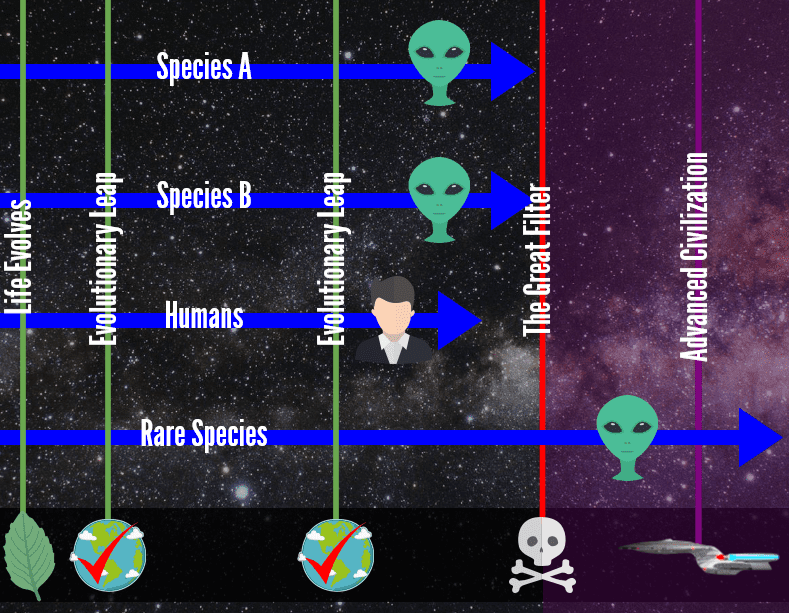
      * * *

      In a small, dark theatre at the Waradah Centre in Katoomba amidst the Blue Mountains, smoke piled up on the stage as a prelude to a short drama on the Aboriginals of Australia.
      While the smoke built up to hype the first scene, the mind, being a notoriously fickle beast, started to replay the events of my travels Down Under up till then. I had flown into Australia with a similar smoky opaque haze over my knowledge of the country\’s culture, history and people. Having spent a considerable amount of time in the UK, I envisioned it to be a warped extension of the culture I experienced back there. In a quest for exoticism and distinctive cultures, my limited knowledge of Australia was quite a deterrent. This was not a trip driven by the creeping and probing pangs of wanderlust.

      But by the tail end of my travels, the follies in my assumptions had been highlighted, ridiculed and ruthlessly eliminated as I sat in the small, dark theatre watching the smoke unfurl the first act.

      A man smeared with body paint walked onto the stage and picked up a didgeridoo. He put it to his lips and a staccato drone soon started to echo around the theatre. The drone reverberated in my mind as I walked up to the Sydney Opera House, nervously flinching at any sound of a bird. A design of multiple shells swayed by the era of Expressionism, born out of architectural conflict and tensions. Marvelling at the fact that something so huge, so well documented and so frequent in pop culture is quite protective of its grandeur and wealth in intricacy up to the point of close vicinity.

      The drone of the didgeridoo now started to change notes as I walked across the imperious Harbour Bridge. The iconic Coathanger, the \’Iron Lung\’, that was prematurely inaugurated by a mutinous soldier on the day of its opening while the Premier of New South Wales watched in incredulity. An accompanying set of drum beats now matched my steps as I walked into the Sydney Cricket Ground, gaping at the statue of Steve Waugh celebrating his heroic century in the face of months of widespread criticism and apocalyptic tabloid articles. An eternal bronze imprint of an emblematic moment of national triumph.

      On a day when Steve Waugh\’s own brother, Mark Waugh, gave up on watching the match to head down to the Randwick racecourse instead. While he bet on a horse that didn\’t win, his brother, on whom the stakes were high to fail yet again in a period of poor form, and who would possibly be forced into retirement with another failure, came out on top.

      The rich cricket history was on full display, and I was a ravenous, incoherent babbling toddler once again. With a rhythmic pattern of drum strokes, I was introduced to elements that would utterly fascinate any avid fan of cricket folklore. As the drum picked up tempo, so did the flashes in my memory.

      A resounding beat and I was walking past memorabilia for the legendary Richie Benaud. Another, and I was gaping across the fence at the indoor nets at Stuart MacGill coaching the future of cricket. A walk from the dressing rooms down to the field which was being prepared for the upcoming Ashes test. A nascent bass now joined the other percussions. A bass that penetrated my heart as I passed a plaque in memory of Phil Hughes, and another for Sir Donald Bradman – whose bronze nose incoming batsman often rubbed for good luck and avoidance of the ominous, unlucky number 87.

      A final flourish of the cymbals, as I rubbed the Don\’s nose and looked up to find myself staring out at the infamous SCG.

      Another Aboriginal descendant, smeared from head to toe in body paint, now emerged amidst the lingering smoke and broke into a traditional dance. While his legs twirled and twisted to the beat, grotesque expressions flitted through his visage. Funnily enough, I saw similar expressions of delight, fear and disappoint at the Star casino where thousands thronged daily to try their fortunes. Their faces twirled together like the sinuous feet of the dancer and now I was amidst the serenity of Wendy\’s Secret Garden. Four elderly women perched on a bench right in front of a sign that poeticised the eternity of youth. Another twirl and I was on the Bondi-Coogee walk, gazing at scores of tombstones at the Waverley Cemetery.

      The man with the body paint now introduced a burning piece of wood. The aroma wafted down to the crowd. The didgeridoo started to mellow, and the men in paint started disappear in the rapidly emerging smoke. The act was now coming to an end, and smoke was released one final time to fade out the performers. They left behind the burning wood, and it\’s gradually permeating aroma. While the tendrils of incense wrapped around me in the theatre, in my mind I was back where it started.

      Back at Hyde Park, inexplicably attracted to the Yininmadyemi Memorial. I was pulling myself away from its magnetic aura to walk past a group of people indulging in some impromptu salsa. Buskers, street dancers and pedestrians celebrating life in the shadow of the ANZAC Memorial remembering the grief of sacrifice. The soul of the city, of Sydney, in teasing glimpses. In the distance, the gothic spires of the St. Mary\’s Cathedral created a most picturesque backdrop.

      The benevolence of God and the prudence of War.

      I am now led away from the anguish, pain and grief in these war memorials by her. Led away from the memories of the soldiers who never returned. Past the Archibald Fountain, up the steps of the St. Mary\’s Cathedral, in the shadows of its twin spires. A shining light that guides me through the high arches and sits me down at the pews.

      The permanency of the incense is now starting to fade, and so is the smoke. My mind, hitherto plagued with multitudes of thoughts and emotions, now starts to unwind. A church choir stands at the altar, and with the gesture of the bishop starts to sing in utmost harmony.

      Just like that, there was light.

      At that point, isolated from all the chaos that plagues the world and rages the mind, I was alleviated. There and then, with the mellifluous chorus of voices that ached of love, spirit and pain.

      With them, with their spirit, with the transient harmony, with the unspoken unity and with her, I had for a moment found God.

      * * *

      If you liked what you read then do help me by sharing this on social media platforms of your choosing (Facebook, Twitter, Instagram, G+, Reddit I ain\’t picky). We\’re all artists somewhere, in some field, and this is just my form of art that would truly find expression if more people get the inclination to read it.

      You can like this blog\’s Facebook page here, follow the Twitter feed here, follow me personally on Twitter here, like the Instagram post here or upvote this piece on Reddit here.

      Similar articles:

      The Bizarre Contradictions Of Thailand: Read More

      A Magic Trick In Cambridge, UK: Read More

      A City\’s Soul In Deira, Dubai: Read More

      The Unheard Voices Of Tehran: Read More

      In The Alleys & Valleys Of East India: Read More

      A Tale Of Two Songs & Two Broken Hearts

      Love Story In The Rain Short Story Fiction

      In a little black cab ride two passengers. Two lovers. It\’s one of those quiet Sundays where the ominous overcast clouds resign denizens to the comforts of their homes. As this little black cab trundles along, so must we as this is where our story lies. Within, the radio emanates the voice of a certain Elton John crooning about a tiny dancer, but to the couple it is rendered incoherent by their thoughts.

      While they are present, physically, in flesh and blood in that little taxi taking them towards uncertain yet definitely divergent futures, their mind and soul are entwined in a journey through the past.

      You see, it is now time for her to leave. To head off into the sunset for good. This ride would be their last together on a long, treasured journey of love. The last ride, yet they are abnormally awkward and incapable of stringing together any reasonable form of communication. Between the sparse, inconsequential snippets of small talk there is mostly silence.

      Incredible how two people who had so much to talk about on a daily basis now cannot sustain a conversation in their last discourse.

      But the little cab carried more than the couple. Of course, there is the driver – a blissfully unaware driver he may be, as his thoughts were stubbornly fixated on the steak dinner he would be feasting on that night. Blissfully oblivious to the apparent tragedy he is now an unintentional perpetrator of.

      As the song on the radio shifts to Axl Rose singing about the stinging November rain, the driver nonchalantly tapped his knuckles along on the wheel. His only analysis of his passengers was that they were there, and they seemed to be together. Beyond that, he neither knew or cared.

      So he continued to ruminate on the delectable wonders of his dinner to come while stealing furtive, unfocused glances at his patrons. Furtive glances that looked but saw nothing. There seemed to be a world of contrast in context between the front and back seat of this vehicle, but we don\’t get to choose our side.

      We just play our parts.

      At what cost?

      But even apart from the internally salivating driver and the inwardly despondent couple, there seemed to be another passenger in that vehicle. Unseen and unheard, but there was something there that was adding considerable gravitas to the imminent tragedy. It seemed that invisible fumes were emanating from the couple, and coagulating into a tenacious nebula of abstractions. So dense was its existence, that it could almost be felt, be touched. A near tangible cloud of emotions hovers between him and her.

      Who said emotions are abstract inventions of the mind?

      Don\’t you feel the physicality in the extremes? The lightness of pure joy and the heaviness in unending sorrow?

      The toxicity of these fumes must have gotten to him and her. With each passing second, it seemed she was headed for a destination she didn\’t want to go. Even though he often admired her composure and self-conviction when confronted with any adversity, today it seemed she was mentally deflating by the second.

      At that point he felt a need to lighten the mood. She was always the more expressive one – the one who wore her heart on her sleeve. Her heart, however, was not something he wanted to see or discuss right then, for it would\’ve surely pierced him. In contrast, he had always been the restrained one – a miser of expressions. Emotionally unavailable and stingy to the point of disbelief, that often his impassiveness was treated as indifference.

      He couldn\’t even remember the last time he had openly wept for something or someone.

      But he was certain to make this one last memory a happy one, rather than a weepy one. So he quipped a feeble joke reminiscing one of their silly adventures. She gave a short laugh that ended with a sudden abruptness. He wasn\’t looking at her – his reminisces were directed towards the fogging window. For some reason, he couldn\’t bring himself to look into her eyes.

      If he had, he would have seen why she stopped.

      \”Don\’t leave her and go.\”

      But someone had noticed why. The driver, now rudely distracted from reveries of his dinner, had chanced a stare through the rear-view mirror. What he saw succumbed him, and he couldn\’t help blurting out in instinct.

      He looked at the back of the driver\’s head in incredulousness.

      \”What?\”

      \”I said, don\’t leave her and go.\”

      He found no appropriate retort, so the driver plunged on.

      \”I have no idea who you guys are and what you have between you. But I saw the way she looked at you, and the look she had when she turned away. If there\’s one thing I can tell you – don\’t leave her. Don\’t leave this.\”

      The unflinching reflection of the driver in the rear-view mirror was staring, point-blank, at him. But, taken by the unexpected sermon coupled with his internal helplessness, he just stared back. Probably his helplessness showed in his eyes, as the driver\’s piercing stare softened to one of empathy. Apparently, this was stemming from more than just instinct, as he decided to continue.

      \”These are special moments of your life and they will never come again. I once had the privilege of conjuring a similar look in a woman.\”

      \”Where is she now?\”

      The driver gazed into the distance, and sighed.

      \”Married. Two kids. Married to someone else. You see, I too had the choice you do today. But I chose to leave.\”

      In the back, he insensitively laughed it off, as he knows no other escape. Her response was equally anomalistic.  On any normal day, she would\’ve pounced on this little love story, interrogated the driver on all the finer details until she had another solid, irrefutable story to add to her scrapbook. Another solid, irrefutable testament of true love.

      But today she said nothing. No \’how did you two meet?\’, \’what did you like about her?\’ – nothing. Today, her little scrapbook was lying tattered. She couldn\’t bring herself to pick it – her talisman for love.

      Today, she didn\’t believe in it.

      When I look into your eyes, I can see love restrained
      But darlin\’ when I hold you – don\’t you know I feel the same?

      Gentle drops now start to fall from a vanilla sky. He looked at the droplets racing across his window and couldn\’t help musing at the timing. He had always felt authors and directors overdid rain as a plot device. How convenient that it would start raining when the story required a gloomy emphasis?

      Yet, the dismal irony of his life was such that none of his own saddest memories ever played out in bright sunshine. Whoever held the strings to his destiny was definitely playing by the book.

      As the cab drew closer to the railway station, and as the clock ticked closer towards that final goodbye so did the rain get harder. It was now a steady drizzle, and all the world was gloom.

      The cab squelched to a halt, and it was time to get done with it. The driver got out to remove the luggage, and he tried to assist. As he handed over the fare, and the driver grasped his hand and gave him a stare as if to say he expected better. As the driver sat back into the driving seat, he wistfully exclaimed,

      \”You\’ve opened some old wounds today.\”

      The driver started to rummage in his glove compartment. From behind stacks of receipts an old mixtape CD was unearthed. He slotted it in, and closed his eyes as love ballads started to swoon his mind.

      She reminded him of a west side story.

      He had to leave the driver there, shipwrecked in his brainstorm, as he had some wounds of his own to create. He turned to look at her, but she was fixedly looking at the station. Looking, but not seeing. He could trace raindrops running down her cheek. They could have been tears – he never knew because he never asked.

      He just didn\’t want to know.

      They make their way to the platform. The train was already there. But there was time, so they waited in silence. This deliberately prolonged sense of togetherness that could not, and would not, be broken with words. Anyway, what could they have said at that moment?

      They looked at each other, and he marvelled at the journey they had travelled; the little transient world they had created in between the first and last time he looked into those eyes. The journey from the first song to the one today. He was now lost in reflection of their first encounter. Oh, what a night! A song that prophesied and encapsulated their bond, played in the background, as they created their own special time. Back then, egged on by Four Seasons, it had seemed so easy, so inconsequential. To approach her, strike up a conversation and get to know someone new.

      What\’s the worst that could\’ve happened? A conversation, an encounter and a dismissive thought?

      At what cost?

      So with nothing to lose, they sweetly surrendered to a certain bewitchment. A rush like a rollin\’ ball of thunder, spinning their heads around and taking their bodies under.

      Oh, what a night
      Why\’d it take so long to see the light?
      Seemed so wrong, but now it seems so right

      It was now time.

      In popular media, airports are often recurring motifs for farewell. But airports didn\’t do for him – the final visual of someone who was once something special to you, now heading walking past the check-in counters. Just walking through another door.

      It failed to nail in the finality, you understand.

      The real deal, for him anyway, was a railway station. Amidst your immense grief, sorrow or even hidden delight at the good riddance (you never know), there is poetry in departure. Now you weren\’t waving to your past as it walked through a door – you waved it onto a train. Of course, that was in normal circumstances. He might as well be waving at the station master, because she was resolutely walking away from him to find an empty coach. Not once did she turn back.

      But these are the sadistic traits of railway stations.

      The train waited, and so did he. Driving in him the finality – the physical barrier that now existed where once there was unshackled intimacy. At that point, he felt it must be easier for the one boarding, as they had a purpose, a destination. He, however, now thrust into sudden isolation on this platform, was heading nowhere.

      The pain of leaving is well documented, but he refuted that. Everyone understands the anguish in leaving – it is an accepted corollary of our decisions. If the pain was that unbearable, if it was indeed agony, she wouldn\’t leave, would she?

      No one talks about the larger, inconsolable and incurable pain. The pain, the scorching, isolating agony that succumbs the one who stays.

      The train started to move.

      How happy is the blameless vestal\’s lot?
      The world forgetting, by the world forgot
      Eternal sunshine of the spotless mind
      Each prayer accepted, and each wish resigned

      A conversation, an encounter and a dismissive thought.

      What was the cost, the ultimate price, of it all?

      As the train turned a bend and disappeared out of sight, he turned around to walk back. But he seemed disoriented. It seemed a part of him was rooted to the spot – a part of him was being left behind. As he walked his feet were peculiarly off-direction, his fingers peculiarly jittery.

      On his face, one solitary tear.

      Grief is the price we pay for love.

      * * *

      This is a work of fiction. All characters and incidents depicted in this short story are by-products of the author\’s imagination and any resemblance to actual events or people, whether living or dead, is purely coincidental. 


      * * *

      If you liked what you read then do help me by sharing this on social media platforms of your choosing (Facebook, Twitter, Instagram, G+, Reddit I ain\’t picky). We\’re all artists somewhere, in some field, and this is just my form of art that would truly find expression if more people get the inclination to read it.

      You can like this blog\’s Facebook page here, follow the Twitter feed here, follow me personally on Twitter here, like the Instagram post here or upvote this piece on Reddit here.

      Similar articles:

      The Not Bad Tale Of My Driving Instructor: Read More

      Adding Some Sadness To The Life Of Shyam Prasad: Read More
      How To Ace Your Job Interview By Venkataraman Sundaraman: Read More

      The Bizarre Contradictions of Thailand

      Chao Le Moken Tribe Child At Nui Beach Ko Lanta Thailand

      A young Buddhist monk, an oblivious Moken child and the inescapable Eye of the King.

      Within these three, I was presented a Thailand of bizarre contradictions.
      * * *

      In the heart of Bangkok, you will find Wat Pho, the Temple of the Reclining Buddha. Sprawling nearly fifty metres in length, the figure that rests in this temple portrays Buddha\’s final stance as he declared all composites perishable and entered into a state of nirvana.

      While the gigantic likeness in itself is arresting, it is the countenance of Gautama Buddha that gets to you. Many things in Thailand, especially Bangkok, (which I shall get to in a minute) left me rather disconcerted. Certain oddities, certain discrepancies that I, to date, cannot get my head around. But there was no indelible ambiguity about what I saw on the face of Buddha at Wat Pho.

      He was at peace.

      There is a distinctive absence of pain, fear or anger on the visage. Adorned with a certain unmatched tranquillity that is so contagious, that it even puts the viewer at ease.  At the Temple of the Reclining Buddha, which is also incidentally hailed as the birthplace of the traditional Thai massage, you will be given an opportunity, literally and figuratively, to seek reprieve from what lies outside those walls.

      With nothing but your best interests at heart, I would suggest you go there and seek it.

      You see, unlike the permeating aura of Buddha\’s serenity in the temple, Bangkok, in contrast, is in absolute chaos.

      Roughly 35 times larger than Thailand\’s second biggest city, Bangkok encompasses a world of its own. But I just cannot leave it at that – too mild a description for you to truly envision the urban spectacle. Instead, I would like to ask you to picture a colossal circus where all acts are being performed at the same time. The trapeze artists soar over you while a lion roars at your side. A hysterical clown prances around pulling faces while gymnasts contort themselves into spectacular formations. The jugglers, stilt walkers, acrobats, knife-throwers and fire dancers.

      But in this figment of your imagination where are you?

      You? Why, you are the ringmaster.

      Grand Palace In Bangkok Thailand

      In Bangkok, one of the largest primate cities in the world, there is a conspicuous proclivity to tourism. But it didn\’t stop there. It seems, as a consequence of years of ingestion of spurious hyperbole, this disposition for tourists has now transcended into ceaseless freneticism.  

      It\’s omnipresent. As you walk on a curb, tuk-tuk drivers honk at your left while waiters holler from the right. Street vendors squawk incessantly while displaying their fanciest and least useful contraptions.

      The sights, sounds and smells. Deliberately induced, to deliberately inundate.

      You cannot fight because Bangkok will win. It has seen tourists like you, equipped with their belief in internet research and trusted opinions. It will take those in its grip, crush them and ask you to give up.

      So you should. It is a battle you won\’t win; a lost cause. The tuk-tuk driver is looking at you expectantly, hoping you\’ll agree to his proposal. For a moment, all the sights, sounds and smells seem to recede and you are on a little stage in an empty theatre. Two little spotlights shine on you, and the tuk-tuk you need to board.

      Choice is an illusion, really, I reflect as I helplessly climb onboard. A little rev of the engine, and we\’re off.

      As we zoom past districts, it seems you would need time to truly understand Bangkok – to tap into the essence of the city and connect with its soul. But such luxuries cannot be afforded by tourists with an agenda, hence the corollary confusion that this city cannily feasts on.

      However, one aspect stands out with acute clarity – there is no mistaking the king.

      One picture of Maha Vajiralongkorn, the tenth monarch of the Chakri dynasty, can be found all over Bangkok. Draped in gold, standing against an opulent backdrop, the king is unflinching in his gaze. This image follows you every mile in the city – on billboards, building facades, digital signage and even at the back of tuk-tuks. A short biopic plays in the theatres before every movie, to an audience that is compelled to stand for its duration.

      It seems that every corner is under the Eye of the King.

      Under his gaze, we\’re being whisked from one overpriced attraction to another by a community of drivers and hawkers. All of them seem to be in cahoots over our unfamiliarity with this teeming metropolis and the intrinsic monetary value of its products and services.

      The blatant obviousness of the circus is not lost on the traveller yet we still do it. We grab the cheese. We do everything they say we should do, in hopes of finding those treasured travel memories in the labyrinths of manipulation.

      In the house of Jim Thompson, the champion of the Thai Silk industry, you will find a peculiar apparatus in his bedroom. On a desk lies a box shaped like a television set, complete with a transparent glass panel. Behind the glass is a convoluted miniature mansion with scores of little doors and windows.
      In the 1960s, Thompson preferred this as a form of entertainment over a television set. A mouse would be put in the glass box and it would go through the multiple inlets and emerge from another. A maze of tunnels connected each hole, so no one but the mouse knew where it would emerge next.

      The children would stay glued, hands splayed against the glass panel, watching in utter fascination as the mouse seemingly appeared from thin air. The adults indulged in their own form of entertainment – gambling high stakes on the hole that would produce the next mouse.

      In present day, I feel like I\’m in a giant mouse house myself.

      As I\’m whisked from one tourist attraction to another, I must confess I must be the most clueless ringmaster of any circus. Yet, I am integral to the show. Without me, none of these acts, gimmicks and cheap tricks have meaning. I give them purpose and hyperbole.

      Without me, there is no show.

      Street Grafitti In Bangkok Thailand

      The tuk-tuk has started to slow down. We are approaching a large fluttering veil, behind which it seems lies the culmination of this performance and its unabashed obviousness. As I step over the shards of another broken fourth wall and pull aside this veil, I find myself at Khao San road – the centre of the backpacking universe.

      A street that in the past was a market for selling rice, hence the name which literally translates to \’milled rice\’. Yet today, I\’m buffeted by a platoon of lights, music, barbecued insects and hawkers trying to intoxicate my sobriety with consumables of multiple forms – whether solid, liquid or gas.

      The short road with the longest dream, or so they say.

      Probably because everyone here is under some sort of influence? That would explain another sobriquet for this street – a place to disappear.

      I, however, am in no mood to disappear or lose complete control of my senses. But it seems I\’m doing Khao San a disservice – affronting the sentiments of these pedlars as I exasperatedly turn down their provocative offers. My rejections only fuel their frenzy. I\’m copping verbal blows to the head and knees to the gut, engaged in my own little Muay Thai skirmish with salesmen, at the centre of the backpacking universe.

      A lost cause, a battle I will lose.

      Constantly and parasitically badgered by insidious hawkers of seductive practices. Goading and probing, urging us to indulge in vices – to revel in the carnal notoriety of Bangkok. They know, like all tourists before us, that we will relent at some point.

      They will get to us, shatter that fragile glass wall of resilience, but they just don\’t know which lucky one will be our breaking point.

      So they leech and suck the fortitude out of you so you can fund their daily wage. There is a certain crudeness to their practices – the niceties are plainly fraudulent, almost mocking the way we are attracted to gimmicks. Early this year, I witnessed a similar anarchy in tourist expenditure in Agra, which resulted in a highly fragmented distribution of money into multiple hands. Hands that would have to keep hounding new preys every day to scrape through life.

      Anarchy, it seems, has been deliberately introduced and sustained. But it doesn\’t seem unintentional.

      It seems Bangkok thrives on chaos.

      Wat Arun In Bangkok Thailand

      * * *

      The ocean is hostile today.

      I\’m reclining at the isolated Nui Beach in Ko Lanta, but I cannot rest easy. Incoming thunderstorms have enraged the ocean, resulting in yawning waves that only seem to get larger with each minute. One of my companions is blissfully snoring at my side, but the waves keep me restless. The might of the ocean is often lost to us city-dwellers. Mightier powers have succumbed to the maw of the brine beast, so if these waves were to creep up to us (which they were doing second by second), it would be foolish to challenge my luck any further by attempting to relax on this beach.

      Yet in the Krabi province, the ocean\’s vicissitudes notwithstanding, we found some peace. Here, on this secluded little island, there was a distinctive lack of hawkers. Even the Eye of the King had intermittent outposts. Not the most popular tourist destination in Thailand, yet the people seem happier and more affable to tourists. Despite not being able to match the standards in Bangkok, Patong or Phi Phi, they are still more content with the virtue of their services.

      I\’m pulled away from my thoughts by a most unexpected sound.

      The rumble and crash of the ocean\’s rage almost deafens the sudden sound of uninhibited laughter. From the village behind me, where the houses are all on stilts in preparation for the imminent floods, runs a little boy. In his palm is clenched a little yellow toy truck. He spots me, flashes a toothless grin, and runs straight ahead towards the sea.

      I think he is from the Chao Le tribe, the sea gypsies.

      The people of the sea.

      There is no flicker of fear on his young face. The fury of the ocean excites him, teases him. For months he has played at this beach alone, with calm waters for company. In its current state of agitation, the boy has found in the ocean a wild side that he approves.

      He rummages through the debris on the beach and breaks a little stick from flotsam. The water has brought him gifts today. He goes about creating more toys for himself, only looking up to serve me his widest, most toothless grin every few minutes.

      For a moment, it\’s just us. Me and him. Worlds and lives apart. On this secluded little beach, in our little bubble. Another set of spotlights, one on me and one on him. Yet in this instance the context is vastly dissimilar to the previous. I\’m incredibly boring to him – just another human. Another human apprehensive and unwilling to test the ocean\’s fury, reposing in the mundane. The boy, however, has mightier tasks at hand, as he creates a little shovel and starts digging with purpose.

      The innocence and blissful obliviousness of youth.

      Unaware of the vast destruction of the tsunami, spawn of the very ocean they worship, in 2004. Unaware of the politics and bigotry that shuns his kin from living a normal life. Unaware that he belongs to a tribe that fears extinction?

      Does extinction really scare people who feel they are already culturally dead?

      Intriguing that the propaganda that promotes Bangkok as a culturally diverse hot spot is unmindful of the cultural intolerance in the rest of the country, especially South Thailand.

      Our bubble is burst as another young man jogs from the periphery. He is heading for the sizeable fishnet washed ashore. The boy looks up, gathers his walking stick, and rushes to give company. The man is now hacking at the net, trying to rummage for valuables he can sell at the market.

      The boy jumps around him, poking his stick through the net. A mighty wave hits his feet. He screams with joy and runs back to the beach. Yet, as the wave retreats so does he into the water.

      There is no fear, just the blissful obliviousness of youth.

      He is one of the Moken tribe, the Chao Le.

      He is a child of the sea.

      Chao Le Moken Tribe Child At Nui Beach Ko Lanta Thailand

      * * *

      \”What do I need money for?\”

      Across the table, grinning ear to ear, sits a Buddhist monk my age. I am sitting on a wooden stool next to Wat Chedi Luang in Chiang Mai, under a large canvas banner that spells \’Monk Chat Programme\’. Visitors can opt to converse with Buddhist monks in order to learn more about their lives and practices. In turn, the monastic would be able to practice his English.

      Within a few minutes into our discourse, conditioned by the socially-ingrained requisites of life, we were quick to bring up the apparent absurdity of a life without money. But the monk was unconcerned, rather unhesitatingly dismissive.

      \”What do I need money for?\”

      Really, what do you need money for in life? The immediate requirements that come to mind would be for a house and food. Traditional Thai culture denotes that all you need for a happy life is a house with a kitchen garden next to any body of water. It seems self-sustainability, and not money, is conventionally on higher priority.

      As we walked through a little farm in Chiang Mai, smelling the flowers, fruits and leaves that our guide handed to us, we soaked in her infectious fondness for Thai food. As we sat there, grinding our curry paste in a little pestle and mortar, we came to appreciate the little spices and ingredients that added flavour to their simple, organic stews and soups. It would be hard to find a restaurant in Thailand that serves you delectable Pad Thai, Khao Soi or Tom Yum in extreme quantities.

      It is neither too much, or too less. It is just the right amount. A trickle-down effect of the Sufficiency Economy or New Theory of Agriculture philosophies introduced by the previous monarch, King Bhumibol Adulyadej.

      Anyway, I digress. What else do you need money for?

      Or rather, what else do you need money for to sustain life? Amongst the plethora of requirements pouring into your head now, how many can you classify as a \’distraction\’? How many of them can you classify as absolutely essential?

      A composite that is not perishable?

      I looked at the Buddhist monk and I saw a man with no artificially induced cravings, societal pressures or self-doubt. A meditative life that aims to eliminate passion, aversion and ignorance. He openly admitted he had no idea about his future, yet seemed curiously unruffled by that thought.

      I wonder what it feels like to not live for the future? We study volumes and work exhaustive jobs to build for an idyllic future. In hopes that all these decades of effort and stress would lead to a calm, peaceful and happy life down the line. In hopes of attaining our own corrupted and artificially-induced interpretation of nirvana.

      But it seems the race begins to define us – as we grow so do our goals, our greed. We outstrip our stop line – that once-sought idyllic moment of ultimate happiness now collects dust in the past because we are now chasing something bigger and flashier.

      A cycle of rebirths, a chronic brawl between passion, hate and delusion. The race to ultimately, somehow, attain a happy life.

      On one hand, at Khao San, Patpong, Patong or Phi Phi, Thailand was hellbent on convincing me that in order to be happy I needed to splurge money to consume food I don\’t need, drink liquor I don\’t drink, inhale gas that would take me on a false reprieve, watch a contorted show that would teach me nothing, buy contraptions for which I have no use and seek validation that has no end. Yet, their fundamental beliefs stand in stark contrast.

      It is incredible that the land that shelters simple ideologies for happiness is as eager to exploit a visitor\’s penchant for the convoluted, senseless and pretentious. The distractions that the Buddhist monk shuns are the same that the hawkers shove in your face.

      It seems they are living life their way by capitalising on you not living it their way.

      They count on you to do everything they would never do, and you do it. Like rats chasing some cheese, we are coerced by our self-imposed impetus to complete this race to attain a happy life. But as the years roll past, taking with them milestones we have now crossed that no longer placate the hunger, it seems evident that it was just chicanery for the mind. The race was never to attain a happy life.

      The race is our life.

      Nui Beach Ko Lanta Thailand

      * * *

      If you liked what you read then do help me by sharing this on social media platforms of your choosing (Facebook, Twitter, Instagram, G+, Reddit I ain\’t picky). We\’re all artists somewhere, in some field, and this is just my form of art that would truly find expression if more people get the inclination to read it.

      You can like this blog\’s Facebook page here, follow the Twitter feed here, follow me personally on Twitter here, like the Instagram post here or upvote this piece on Reddit here.

      Similar articles:

      A Magic Trick In Cambridge, UK: Read More

      A City\’s Soul In Deira, Dubai: Read More

      The Unheard Voices Of Tehran: Read More

      In The Alleys & Valleys Of East India: Read More