A Magic Trick In Cambridge, UK

Are you watching closely?

It is a misty Sunday morning in the year 2014, but as with all affairs pertaining to Cambridge – does it really matter?

At the fringes of Market Hill, a street magician is summoning the middling early morning crowd. The air is rife with summons interspersed with limericks, quips and some impromptu songs. Under the shadow of the antediluvian Church of St. Mary the Great, a motley of seduction techniques are being used to lure the mildly interested mob.

Of course, in addition to the little bag of tricks, it is vital that every showman exudes some charm, some allure to captivate the audience. But street artists, in particular, perform for an audience that has neither prematurely paid for the performance nor set out of their homes with the intention of watching a show that day. An audience that is waiting, hoping rather, for a lull in captivation to walk away.

It is imperative the artist vociferously snatches their evanescent attention away from their premeditated agenda for the day. Imperative that they desperately fetter it, incarcerate it within the permeating aura of their showmanship. Yet, the nature of this business dictates that even if they managed to suspend the audience on tenterhooks till the final act, the top hat that would get passed around would only jingle if the audience had change to spare.

It is the law of the jungle where the strong survive.

Having finished his summons for an audience, the busker has now put on his top hat. The show is ready to begin.

In line with Christopher Priest\’s prestidigitation maxims, the magician holds up an ordinary object – his hands in this instance. In a bid to provide substance to this act, your undying belief in the normalcy of his hands is crucial. He turns them to reveal the apparent emptiness of his palms to further solidify this belief. With a final tug at his cuffs, he reveals his wrists to cement the bond of trust we have just created. The audience is now bound with conviction – his hands hold no secrets.

He then proceeds to drape a black cloth over one hand.

A little count to three and the cloth is unveiled.

A fluttering white dove perched on the tip of his finger.

\”If you could fool them, even for a second, then you can make them wonder. Then you… then you got to see something really special. You really don\’t know? It was… it was the looks on their faces.\”

The looks on their faces.

It is time to reveal to you, the reader of this piece, a little parallelism. This little anecdote of the busker under the shadow of the Great St. Mary was not just arbitrary literary theatrics. There is more to this street magician that concerns Cambridge, why because, and I must insist you believe me, this street magician and the town of Cambridge are one and the same.

Unaware of my participation in wizardry of unimaginable proportions, I was subject to a year-long magic trick.

Initially, the town too came at me with fingers splayed, asking me to inspect the quasi-ordinary elements of its serenity.

With a turn of its hands and twinkling smile, it prodded me to view it from all facets to further solidify my belief that there is nothing more to it.

With a final tweak of its cuffs and a fleeting wink, it seemingly bared down to its roots, deceptively goading me into confirmation that all that I saw was unaltered, normal and ultimately, real.

But it wasn\’t.
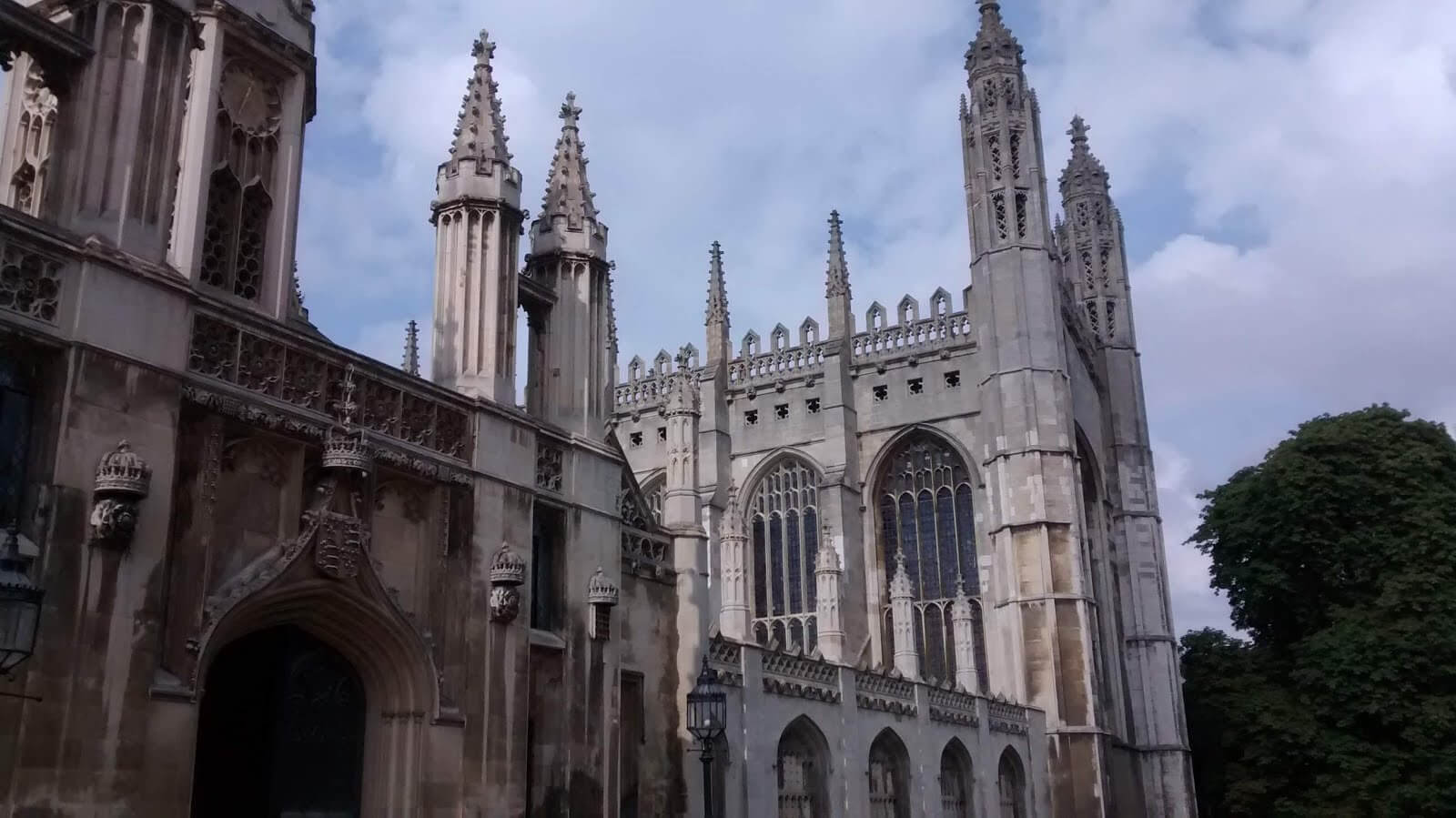
King\'s College At University of Cambridge In UK Travel Blog

* * *

\”We are in King\’s Cross station, you say? I think that if you decided not to go back, you would be able to… let\’s say… board a train.\”
Allow me now, as I do, to infuse a bit of context to this wistful panegyric. 
Despite the prevalent theme of this piece, I must confess I first stepped out of Cambridge railway station with the resolute intention of hating the town. 
How could I not? Despite consciously deciding to uproot my student life after sophomore year in Manchester, I tried to evade accountability for my own, well-reasoned decisions. So I channelled that energy into my personification of this town. This was aided and abetted by my unfamiliarity with residency in a small, county town, having spent my adolescence in the bustling metropolis of Dubai and late teens in the vibrancy of Manchester.
I was fuelled by a belief that after having experienced the most cherished year of my life surrounded by friendship, fame, love, happiness and success there was no way it could be outdone. 
So I decided to visit the other side. 
Cambridge had taken life, as I knew it, away from me. I chose to give up comfort and happiness and boarded my train at King\’s Cross – a train that would take me on.

I feel it is important to provide you with the right context – this piece, after all, is my personal account of Cambridge. Not the Cambridge you know from the Internet, on celluloid or from hearsay. The town that I saw and lived in. 

The Cambridge that I whole-heartedly resented with my very first step.

And, more than all, a strangeness in the mind,
A feeling that I was not for that hour,
Not for that place. 
But wherefore be cast down?

* * *

Bridge of Sighs At University of Cambridge In UK Travel Blog

The Bridge of Sighs at St. John\’s College was often visited by Queen Victoria, who loved it more than anything else in the town. It was there when twice in history students dangled cars from its arches. When Stephen Hawking swayed with Jane Wilde on a May Ball, it was there. It is alleged to have gotten its name from the countless, weighted sighs of all the students grudgingly traipsing towards exams, lectures or meetings with their tutors.

I, however, did not add to that ghoulish collection of academic despair as I never got a chance to walk through the Bridge of Sighs.

In fact, my first sighting of it was on my last day in C town, a year from the day I first stepped through the archway at the railway station. You see, unlike most accounts of this magical place, mine isn\’t one of the infamous university it houses. While the confines of living in a university town ensure that you are never really cut off from its ominous presence, I was still an outsider to this renowned echelon of academia. 

An echelon of academia that could be viewed in all its glory at The Backs, which featured the rear of many prominent colleges including the infamous King\’s College and Trinity College. Here, punters, anglers and picnickers are subject to the emblematic Gothic English architecture that drives the summer tourism.

At the Great Gate of Trinity College, you will find an endangered Flower of Kent cultivar that is named \’Newton\’s Apple Tree\’. Touted to be grafted from the very same tree that purportedly stemmed the birth of the universal laws of gravitation. A spawn of the original at Woolsthorpe Manor in Lincolnshire, now serving as a reticent gatekeeper of Trinity College – in the rooms of which Isaac Newton once resided.
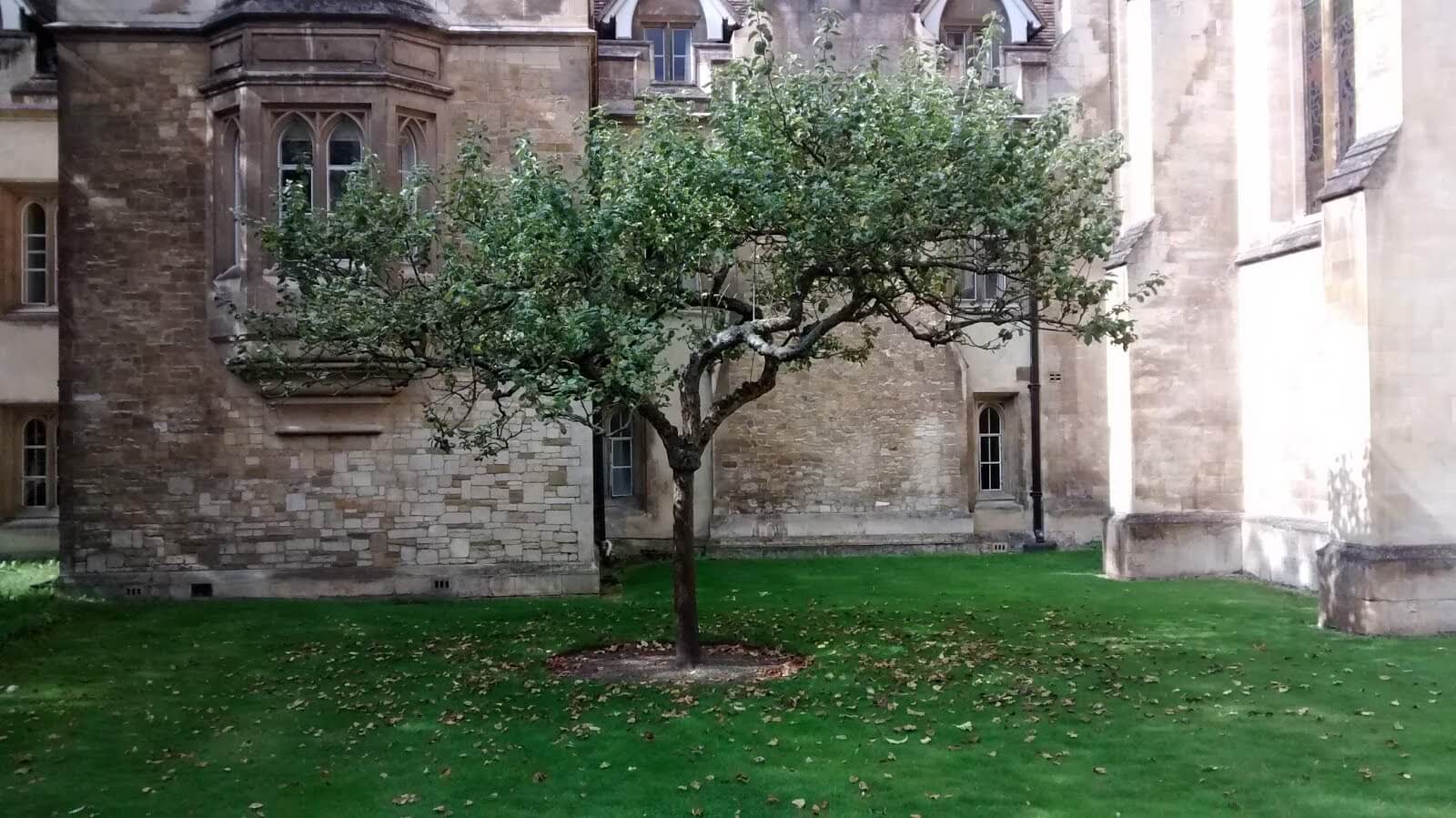
Newton\'s Apple Tree At University Of Cambridge At Trinity College In UK Travel Blog

Before I moved to my permanent residence overlooking Cambridge Railway station, where every morning I was woken by the rumble of trains taking the daily workers into the heart of London, I first hung my hat at the front of the \’The Backs\’, not too far from Newton\’s Apple Tree at the oldest college in the university.

Around Peterhouse, as with most things in Cambridge, there hung a heavy weight of history. Of students, mentors, treaties, bishops, religion, discord and nobility. Of honour and customs, of chivalry and principles.

The hands of the magician, splayed for the world to see.

It seemed that the creeping ivies, rusted plaques, peeling coat of arms and creaking staircases were just by-products of a legacy that dated back to 1284.

1284!

Once again, does it really matter?

No other place could be more befitting for Professor Stephen Hawking to explore his thesis on time. A few minutes north from Peterhouse, he had inaugurated the Corpus Clock. With no clock hands or numerals, the clock tracks time with a metal creature named the Chronophage turning concentric gold plates to count down. The Chronopage, which translates to Time Eater in Greek, seems to sadistically revel in its ingestion of each second, its eyes lit with the arrogance of its gluttony.

The clock, however, is only accurate every fifth minute. The phases in between are mingled with functional aberrations that seemingly represent the irregularity of life.

Yet, despite time being eaten up, consumed whole second by second to never return, Cambridge doesn\’t seem perturbed.

For men would come and men would go, but this town will live on forever, eternal in the inescapable continuity of time.

Cambridge Railway Station In UK Travel Blog

* * *

It is well documented that Parker\’s Piece bore witness to a feast of grand proportions. In 1838, over 15,000 guests gathered at the 25-acre green common to celebrate the coronation of Queen Victoria. Yet, as I dawdle along one of the only two diagonal paths that dissect this ground, I could easily be back in 1838, adrift in the continuity of time. Back there amongst the revelry and grandiosity of the nineteenth century, drinking away to the merriment of a new monarch. Save for the trundling traffic on the roads at the perimeter, the sight I see with my eyes could well be a portrait from a previous century. 

Parker\’s Piece has two diagonal footpaths connecting opposite corners. At the centre, the only point where the two paths intersect, lies one large solitary cast-iron lamppost. The only major source of light on this colossal ground. 
I approach it bemusedly while questioning the anomaly. As I step closer, certain inscriptions and murals start to get coherent. The base of this solitary lamppost seems to be cyphered with graffiti.

Another masterpiece, by the creatures of the night. 
There seems to be a line of text, right at the base around which the rest of graffiti seems to circle. I\’m now close enough to decipher the words that seem to have influenced the nightcrawlers to express their creativity. What I read makes me stop dead, at the centre of Parker\’s Piece. 
Painted in white, in crude and hurried longhand, at the point where the only two paths connect at the base of the solitary lamppost, are the words \’Reality Checkpoint\’.
Are you watching closely?
A little turn of the magician\’s hands.
Stubbornly repainted over the years whenever the city council attempted to expunge it, the real meaning remains contentious. The most popular one is that it serves as a checkpoint of the real world for all the students living in the fantasy of their university campus. Beyond this point, reality would poke the bubble of obliviousness that engulfs these students, for they were to venture into the moors of Cambridgeshire, no longer under the protective shield of their alma mater.

All of this a trance, an illusion.

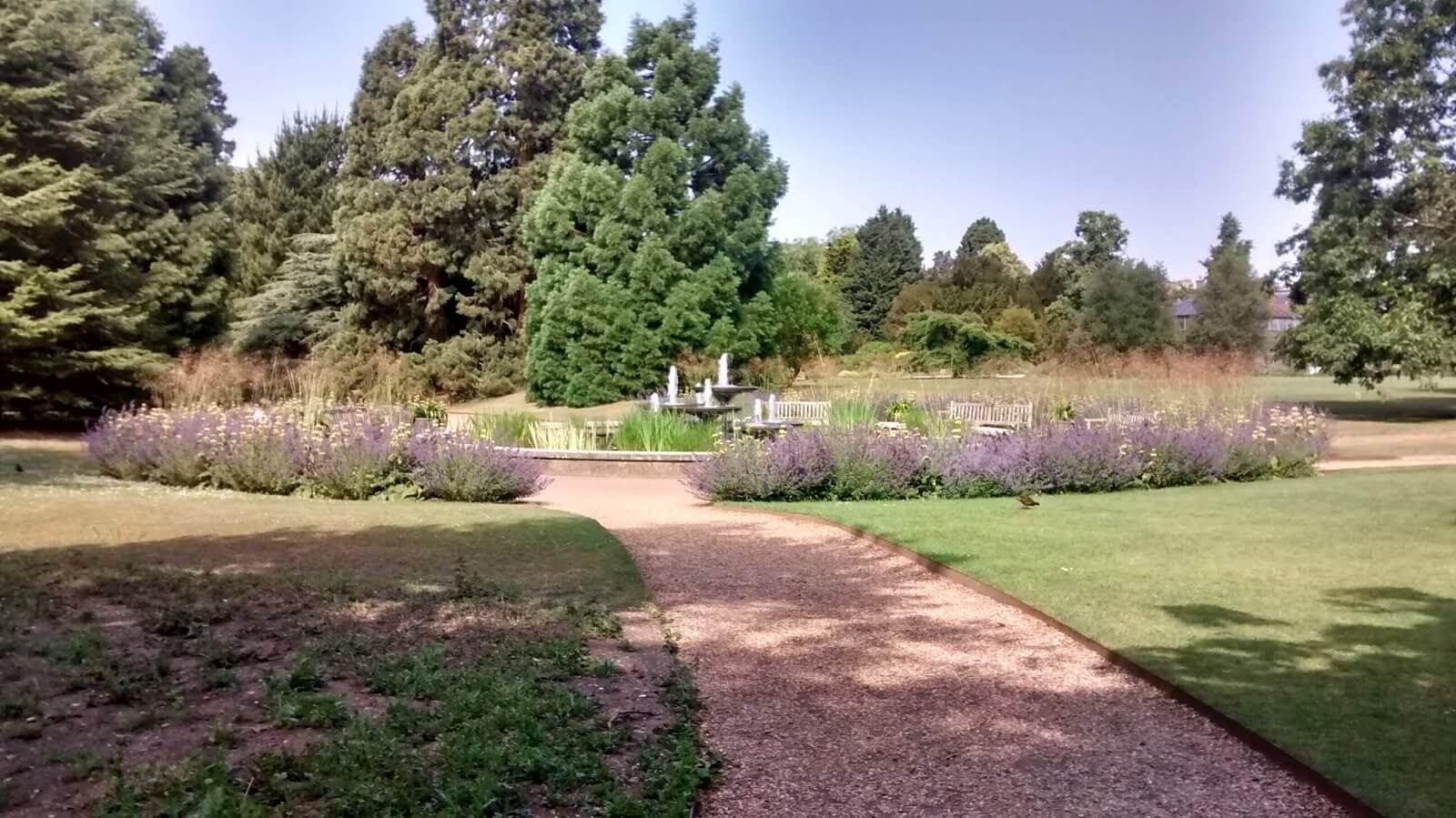
Cambridge Botanic Garden In UK Travel Blog
* * *

The Lombardy Poplar trees are an incredible sight.

I\’m pretty sure you would have come across them in some capacity in your adventures, and if you haven\’t I would insist you try and see them for yourself. They seem haughtily impervious to the world around them, and immensely disinterested in this young man staring at them over a fence, silently astray in intrigue at the sight of Coe Fen, a sprawling meadowland to the east of River Cam.

But I am not here to mislead you – the world harbours multiple spectacular natural reserves that effortlessly eclipse this unimportant, and in all honesty – quite an ordinary fen. For a botany aficionado, even the Cambridge Botanic Gardens would easily be a greater outing than a visit to the Coe Fen.

But I like what I see.

Easily surpassing 50 feet in height (a four-storey building?), the noble Poplars stand as mute, unflinching sentinels guarding the beauty of this fen. Apart from the rustle of leaves and the sporadic rumble of a lone car on the Fen Causeway, there are only whispers in the wind. Even though I\’m aware I\’m hardly a mile from the city centre, the Coe Fen is an abstract gateway into my childhood idea of a British countryside.

As if awakened, summoned, roused, constrained, 
I looked for universal things; perused 
the common countenance of earth and sky

This is the countryside I used to read about in books, nestled in the cement cocoons of my urban cities. From delving through volumes of literature by Enid Blyton and Ruskin Bond that asked me to embrace the rustic fantasy to here and now, helplessly beset by the inescapability of its entrancing actuality.

A final tweak of the cuffs and a fleeting wink.

It is tempting to lose yourself in this enchantment, to never worry about those mundane, unimportant problems of daily city life. The whispers in the wind have now taken the shape of a hand. It seems to shimmer with mischief, and with a beckon, it asks you to step forth into the foliage. Step forth, and let it caress your soul. 

The distant rumble of a car and the trance is lifted.

I\’m aware that this newfound bucolic lust will not last. As a man bred in towering metropolises, this was just a fling, a hiatus, a discontinuity. Yet, the actuality of my roots could not take away the circumstances that led me to this fence, overlooking the silent sentinels of nature.

Somehow, I had made it to the imaginary countrysides of my childhood.  
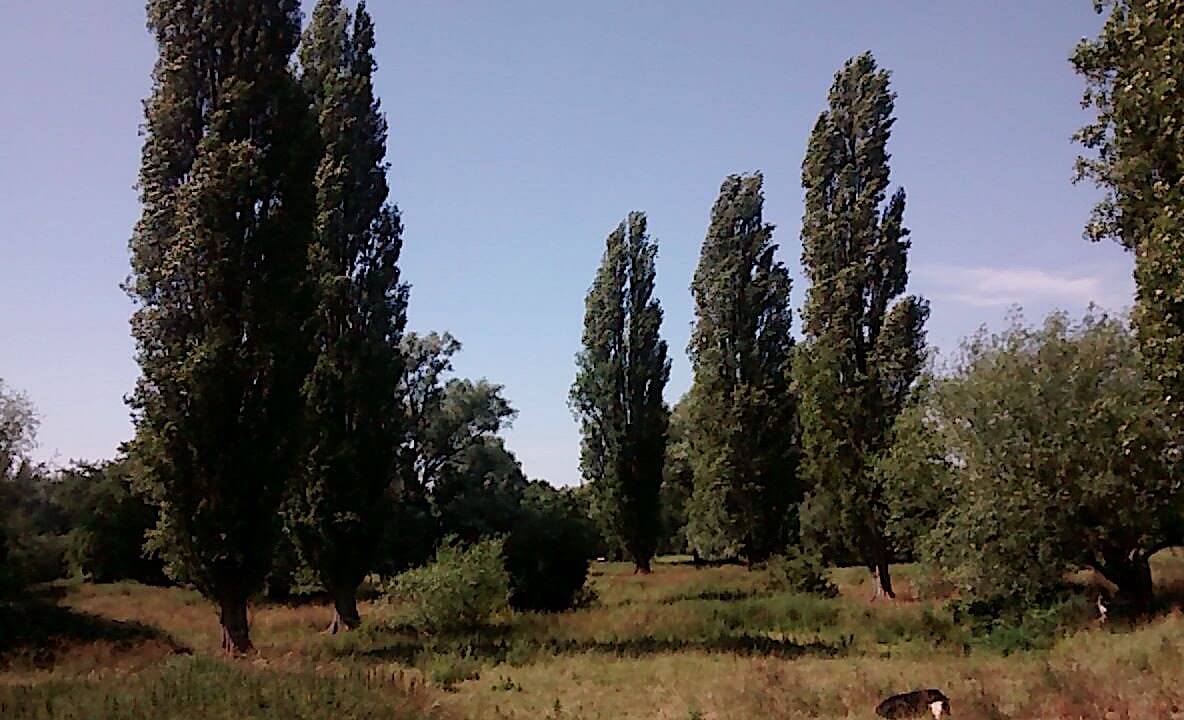
Somehow, I was here, alone, on this fairy work of Earth.

Coe\'s Fen & Lombardy Poplar Trees In Cambridge In Cambridgeshire In UK Travel Blog

* * *

The stream mysterious glides beneath

Green as a dream and deep as death


Of the River Cam, which incidentally borrowed its name from the town (and not the other way round), I will not say much as it is omnipresent in everything I have talked of so far. It has serenely carried the punters along the Backs, trickled with impish merriment under the Bridge of Sighs and flowed in subdued reverence at the Coe Fen. The river has been with us, right from the start.

\”See, sacrifice, that\’s the price of a good trick.\”

Despite my determination to detest this town, Cambridge never fought back. It seemed happy to goad me further. Happy to throw me further into the discomfort of lifestyle extremities. It wanted me to feel out of place. Me, a child of the skyscrapers, a stickler for the grind, prodigal son of the future against the might of the past. 

In making me believe everything I thought it was and how it raged against my style was absolutely true. That I didn\’t belong on those cobbled paths, on the vacant emptiness of Castle Hill and in the serenity of a country town that had been there since the Iron Age.

That it was an illusion against the reality of my life. A draped black cloth, and a fluttering white dove.

Now you\’re looking for the secret.

In hindsight, years later, a seedling thought. A thought that starts to congeal, take shape in the vestiges of nostalgia. Having returned to my metropolises, I have come back to my supposed actuality but I am accosted with a certain restlessness. It probes me to look deep into my preferred world and see the cracks that start to appear. The fraudulence of urban societies is starting to come to the fore.

Driven by the omnipresent wizardry in the Cambridge, that in the process of seducing me with caressing hands, seems to have surreptitiously embedded an abstraction, a thought.

A thought latched onto my soul that this, around me, is the discontinuity. 
There, my reality.
I was the Dreamer, they the Dream.

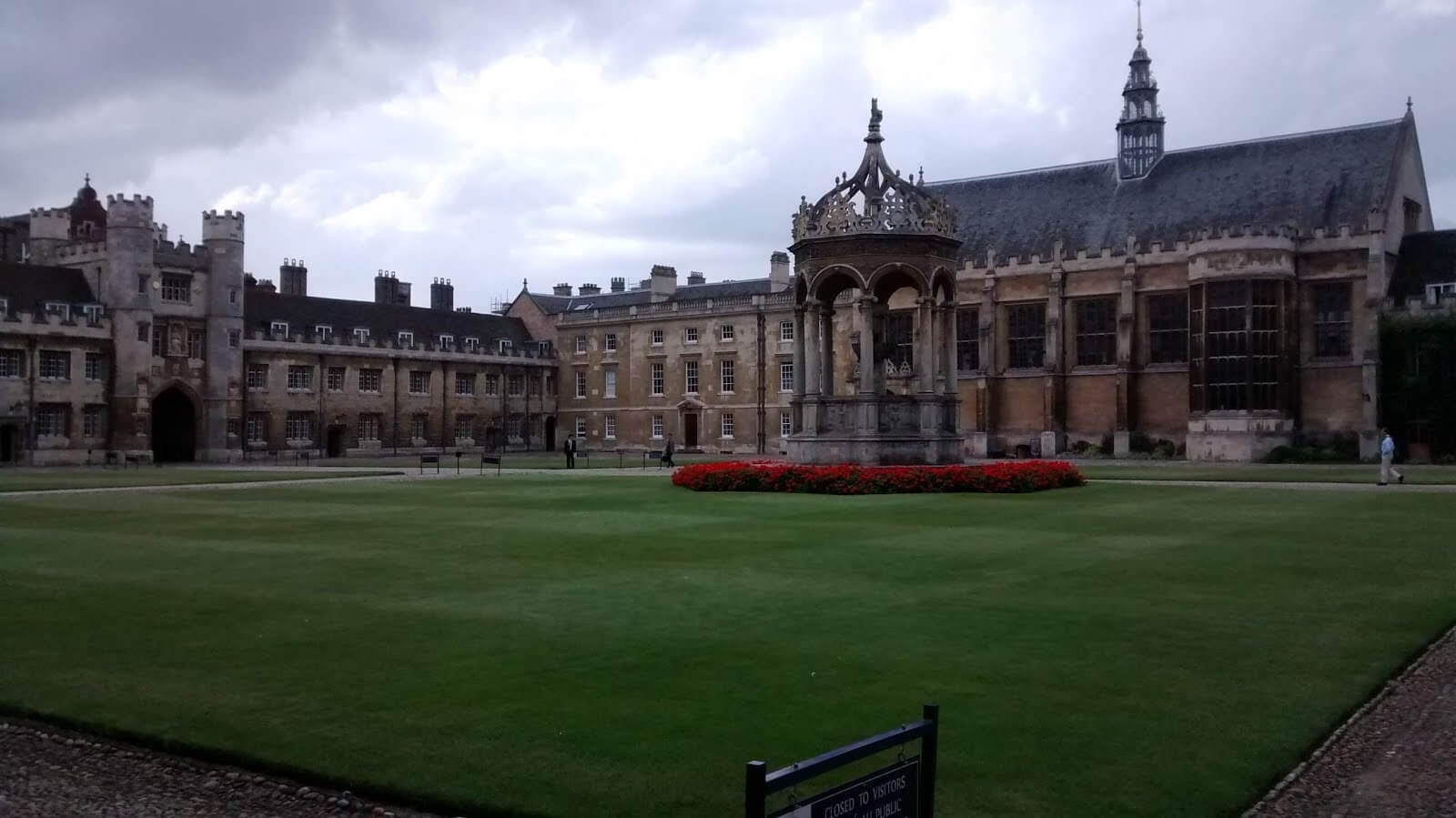
King\'s College At University Of Cambridge In UK Travel Blog


* * *

If you liked what you read then do help me by sharing this on social media platforms of your choosing (Facebook, Twitter, Instagram, G+, Reddit I ain\’t picky). We\’re all artists somewhere, in some field, and this is just my form of art that would truly find expression if more people get the inclination to read it. (not too dissimilar to the street magician whose top hat goes around empty even if his act was appreciated with claps)

You can like this blog\’s Facebook page here, follow the Twitter feed here, follow me personally on Twitter here, like the Instagram post here or upvote this piece on Reddit here.

Similar articles:

A City\’s Soul In Deira, Dubai: Read More

The Unheard Voices Of Tehran: Read More

In The Alleys & Valleys Of East India: Read More
Agra: A Teardrop On The Cheek Of Time: Read More
*Poetry excerpts taken from The Prelude by William Wordsworth and The Old Vicarage by Rupert Brookes

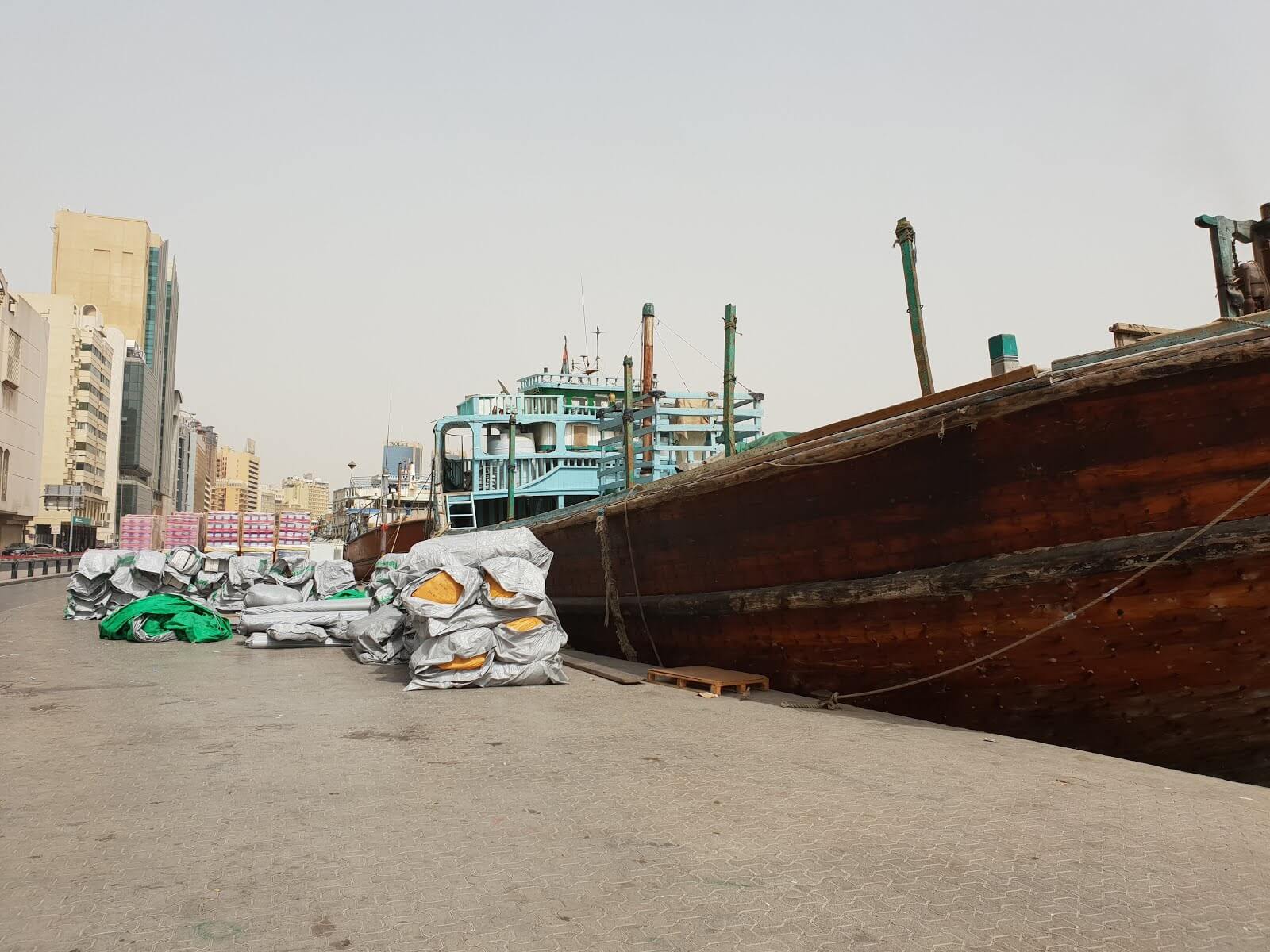
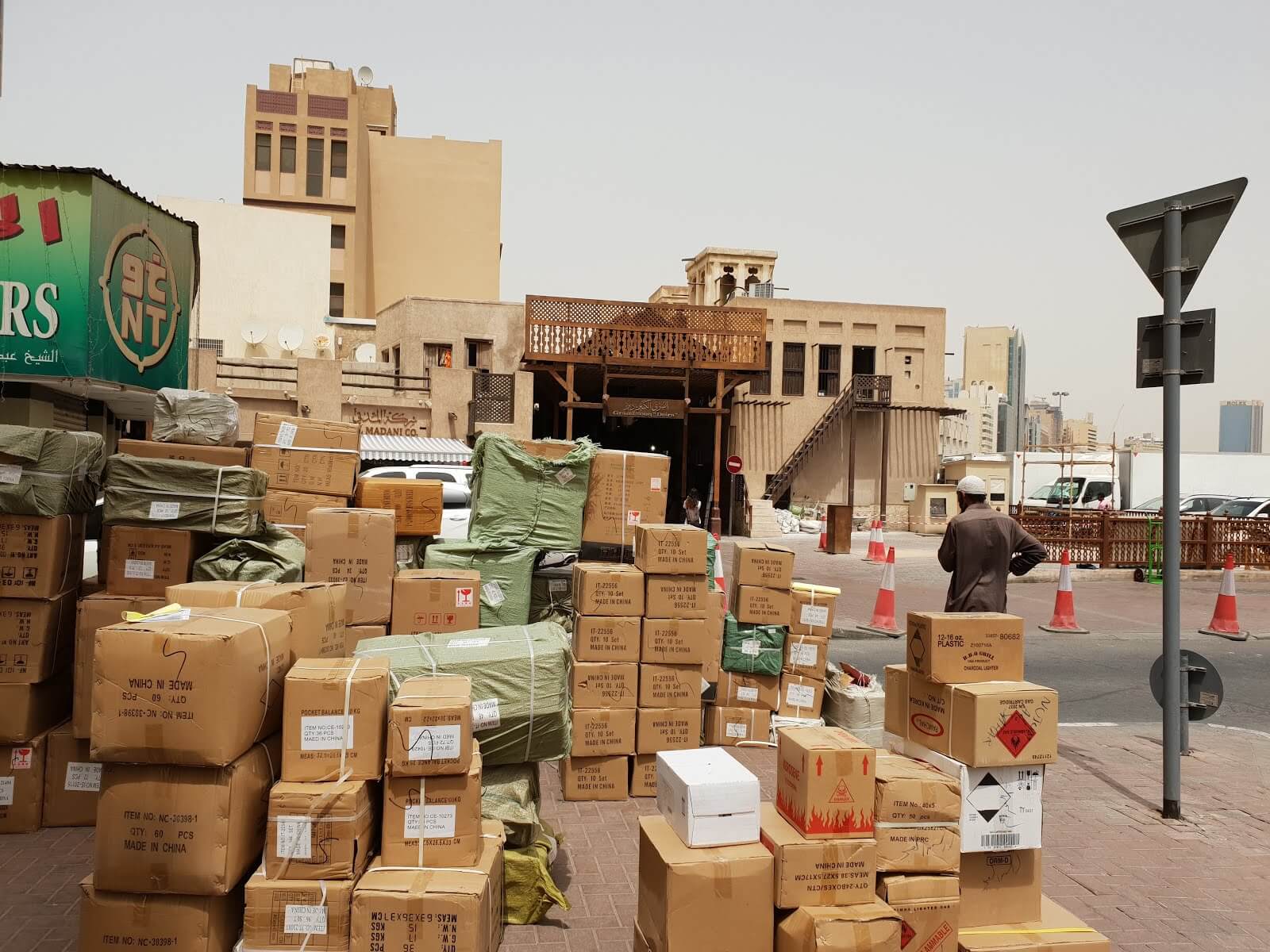
A City\’s Soul In Deira, Dubai

Deira Dubai Creek Dhow Cruise Travel Blog

\”If you can\’t find it in Deira, you will never find it.\”

So impregnable was the belief of the merchants of Deira, at the booming hub of trade in the Gulf that dissecting its legitimacy would have been deemed purely absurd, if not sacrilegious.

Even today, in 2018, it is nearly impossible to not find your goal in the hustling souqs of Deira. It was only natural then to finally succumb to the tenets of trading yore. I had to immerse myself in the frenzy to involuntarily seek answers to questions I\’ve had for Dubai since time immemorial.

Involuntarily since these answers could not simply be found with just one vendor in the souq – no goal-driven odyssey into Deira would ever yield what I sought. That was the blinkered blunder of my past; an unfortunate fallibility of my youth, and I was bound to correct it. In hindsight, as I finally type this out to you, it must\’ve been the reckless abandon of a result to this quest that ironically did the trick.

They say if you can\’t find it in Deira, you will never find it.

It took some time, and I can\’t point exactly when, but I found it.

Having grown up in and with Dubai in my adolescence, I often struggled with a sense of detachment with \’my city\’, if I could take the privilege of calling it my own. But I didn\’t know why. It was an adolescent\’s want for something he couldn\’t understand, additionally disconcerting because couldn\’t put a finger to it. Dubai in the late 2000s was the place to be: the pearl of the United Arab Emirates, led by a prescient dynasty that had a vision to truly make it a globally significant city.

You were living the expat\’s dream.

With it came the perks of being in a technologically progressive and increasingly diversified environment that would be ideal for easily impressionable adolescents. However, the \’would\’s and the \’could\’s remained elusive and ephemeral. In stark contrast thrived this aforementioned sense of detachment which, while vague and perplexingly untraceable, was still undeniably and irrefutably real.

I found it hard to appreciate things that I watched grow, step by step, in gradual transitions (I\’m pretty sure erudite psychologists would have some research material that would be able to justify the reasoning in these sentiments). As my school bus whizzed past the under-construction Burj Khalifa (then known as Burj Dubai), I watched it ascend towards the skies, storey on storey, week by week, so much so that the emphatic impression that world\’s tallest building should leave in a child\’s mind was lost by the time it was unveiled to the rest of the world.

I was there when the Dubai Mall, Jumeirah Beach Residence and even Downtown Dubai were just ambitious projects on erstwhile barren land. As an unfortunate aficionado of stories, context and history, it seemed that I was growing in a city that was growing with me and there was not much history to explore. There was not much history to read.

I was a part of the history being written.

* * *

Deira Spice Souk Dubai UAE Travel Blog Tourism

The origin of Deira can be traced to 1841 when a smallpox epidemic coerced inhabitants out of Bur Dubai (represent!) and across the Creek. The geographical advantages of Dubai coupled with the lowering of trade tax brackets by the Emir resulted in the development of a community of merchants, primarily from Persia (now Iran). Religious and fiscal disputes in Bastak resulted in a mass exodus of traders migrating to the Arabian Gulf, and they took with them not just their skills but also multiple facets of the Persian culture, language and architecture.

Today, the badgirs or \’windcatchers\’ of Persia loom over the streets in Deira, heirlooms of a significant transposition of cultures. The migrants would later model their own little neighbourhood aptly named after their hometown in the heart of Bur Dubai: Al Bastakiya.

The origin of the name \’Deira\’, however, is under contention. While some believe it stems from \’دار\’ (dar) which means \’house\’, others dispute it refers to the contour of the land around the Creek, having taken its roots from \’استدارة\’ (aistidara) or \’roundness\’.

Even amongst the proponents of the \’roundness\’ radix are some that believe the roundness refers instead to the circular nature of the trading business, of which Deira was a frenzied hub in the Gulf. It seems that bona fide facts on this matter shall now never be found, having been set irrevocably adrift in the streets of the souqs.


But Deira itself is not yet adrift. Despite having plunged significantly in importance in the last two decades, it is still here. As I aimlessly amble into the Spice Souk, Asif Khan from Afghanistan lures me and tries to ensconce me in a world where life without any of his products would be unbearable. Yet I\’m not the only one – he is seen greeting tourists in Mandarin, Japanese, Hindi, Urdu, Arabic, Pashto and Dari.

It\’s not often you meet men who speak so many languages, but none too well (apart from their local dialect).

Deira Spice Souk Dubai UAE Travel Blog Tourism

His linguistic skills were sufficient to do the job I must admit, as I feign interest in his kaleidoscopic sacks of multi-hued spices. It takes him a while to open up beyond his practised sales monologue, but I manage to crack into the subterfuge with one of my fondest and only icebreakers: cricket (the other being Bollywood)

(embarrassing, I know)

It took a mutual admiration for Rashid Khan and Mujeeb Rehman\’s hypnotic bowling for him to break into his first genuine smile in our discourse, the beauty of which was undeterred by a decade of plastic smiles. He is eager, almost insistent, to show me his learnings in writing the Arabic alphabets. I let him scribble the words \’Sulphur – Skin Allergy\’ into my notebook, which seems to give him blatant joy and a suppressed sense of achievement.

Asif rues the months of heat, where he would have to sweat more and still earn less due to the seasonality of low business. In fact from his experience of twelve years of hollering in the souq, he feels the crowds have surprisingly started to thin. I find this slightly incredulous, as in my estimations the markets are quite crowded for a blazing, stifling Sunday morning, which happens to be the first day of the week in the UAE.

But Asif doesn\’t agree.

It\’s not that Dubai is no more a tourism haven, it\’s just that people now have more places to go.

As the metropolis moves further down south along the sheltered opulence of the Sheikh Zayed road, Deira settles itself into oblivion. Despite the alleged depleting volume of buyers, life still goes on and the curtains on the circus of trade are never drawn. As the spotlight shifts to the future, a certain darkness has started to descend in Deira, but yet it stays stubbornly mired in interminability, covertly watchful of its relics of the past.

Museum Of Poet Al Oqaili Deira Dubai UAE Travel Blog

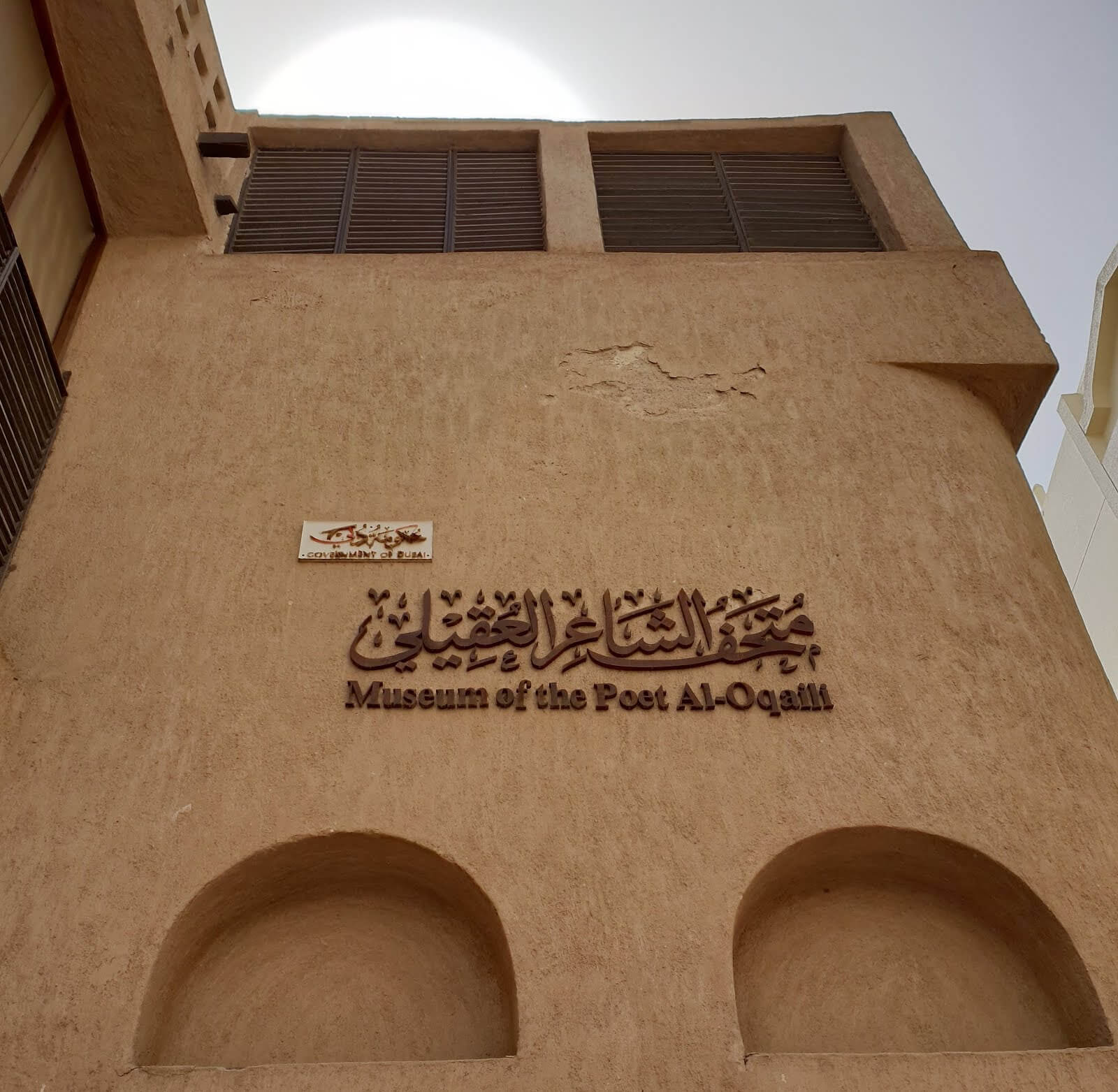
One of these relics, nestled in midst of the crooked streets in close proximity to Heritage House, is the museum of the late poet Mubarak bin Al Oqaili. In the walls that housed a \’majlis\’ frequented by people of thought, science, literature and nobility can also be found excerpts from his poetry, amongst which are these lines from the poem \’Ask The Night\’:

I complain my grief to God, as I have no supporter for my sadness except my tears and unhappiness
Ask the night whether I have slept and whether my body got rest after your abandonment

I\’m starting to see the light at the end of the tunnel. It seems that Deira does hide some stories from the past.

Do you see it?

One of the reasons I was transfixed by my explorations in London and Manchester was the inherent and inescapable depth. There was context in the alleys – murmurs of ballads of the past that if you looked hard enough and strained your ears hard enough you would see it and hear it.

You would start to feel it.

The fresh garlands at the memorials to fallen warriors, the vitriolic graffiti by the creatures of the night, the impromptu acts of busking, the embellishments of the present and the scars of the past.

These things to me, I must confess, gave a city its soul.

Deira Clock Tower Dubai UAE Travel Blog

In the chaotic electronics bazaar of Naif, you will find a homage to the sales practices of yesteryear. In an age of technology, limited and preferably avoidable human communication and virtual advertisements, in Deira you would still sell and seek things the old-fashioned way.

But not all areas are entirely outmoded. Of all things, the Gold Souk stands as the one bizarre juxtaposition of antiquated and modern selling styles. The wooden arches that screen the aisle don\’t complement the elegantly furnished and minimalistic interiors of several showrooms where all that glitters is indeed gold. It seems the archaic arches in this market shield it not just from the relentless sun, but also the seasonal plagues of low business.

I guess gold never goes out of fashion.

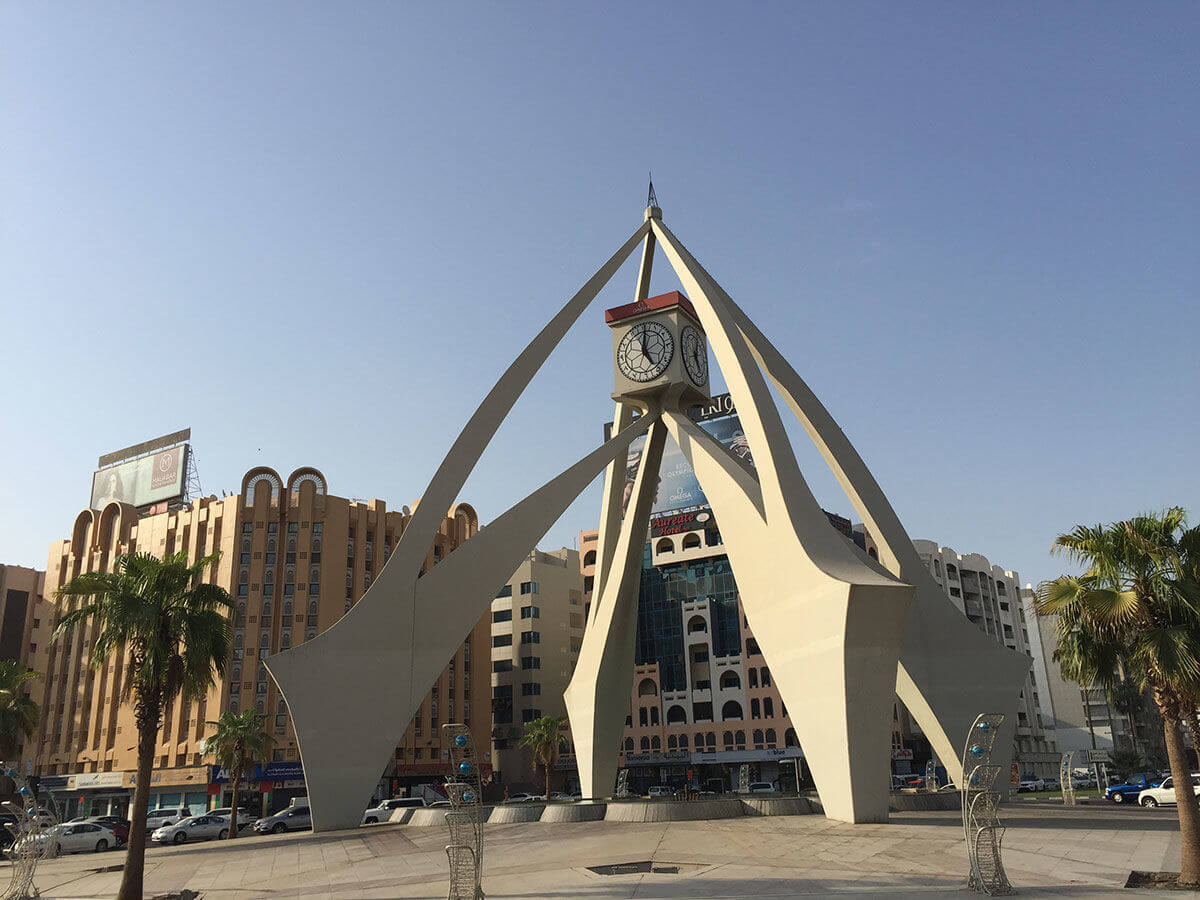
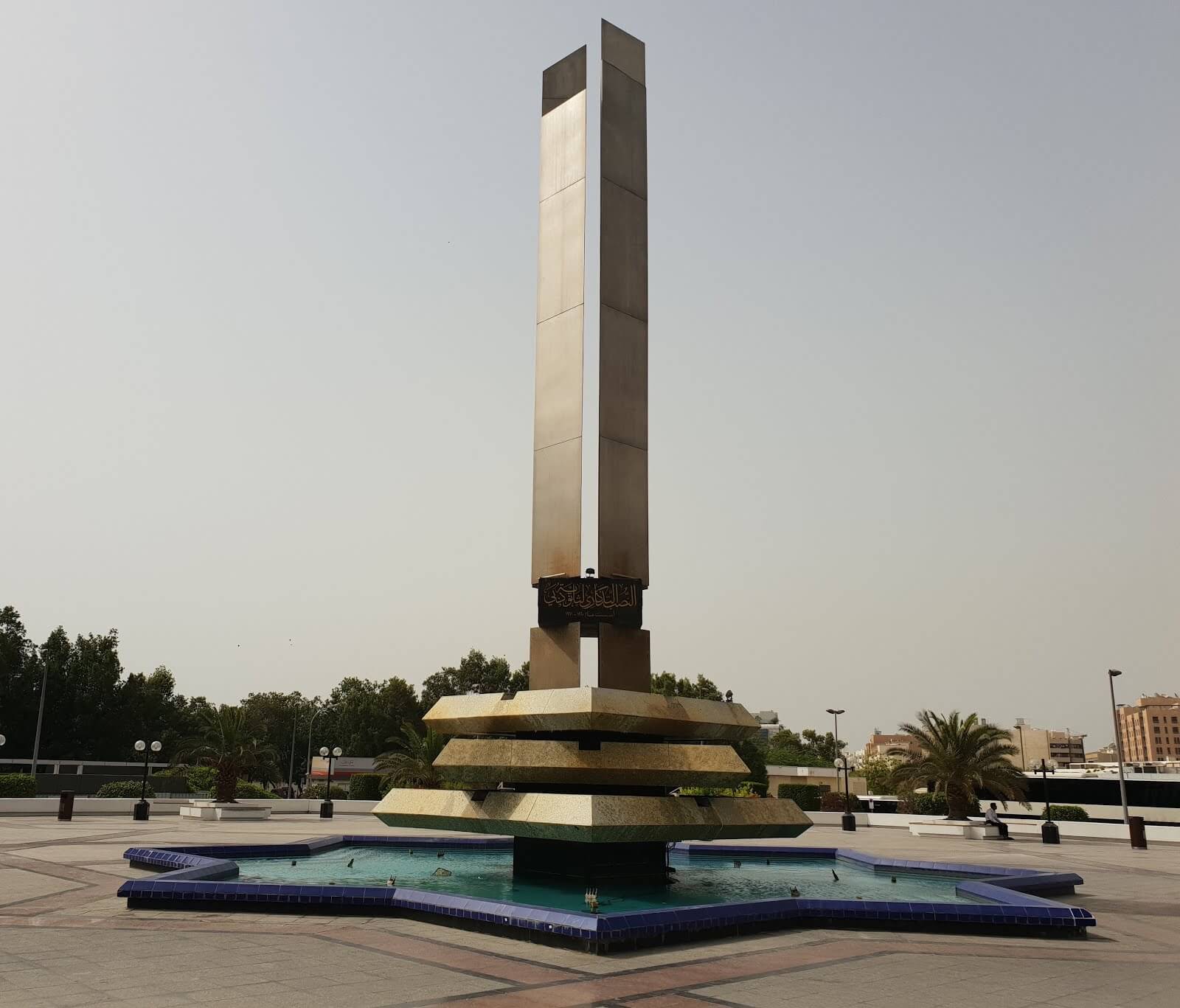
In contrast further east, bereft of attention, resides the Dubai Clocktower. Rebuilt and restored on a couple of occasions, it once served as an emblem of Dubai, a marker of its entry point on road. In commensurate deficit of attention a few miles away lies the Memorial Fountain, an obelisk-like guardian of Union metro station.

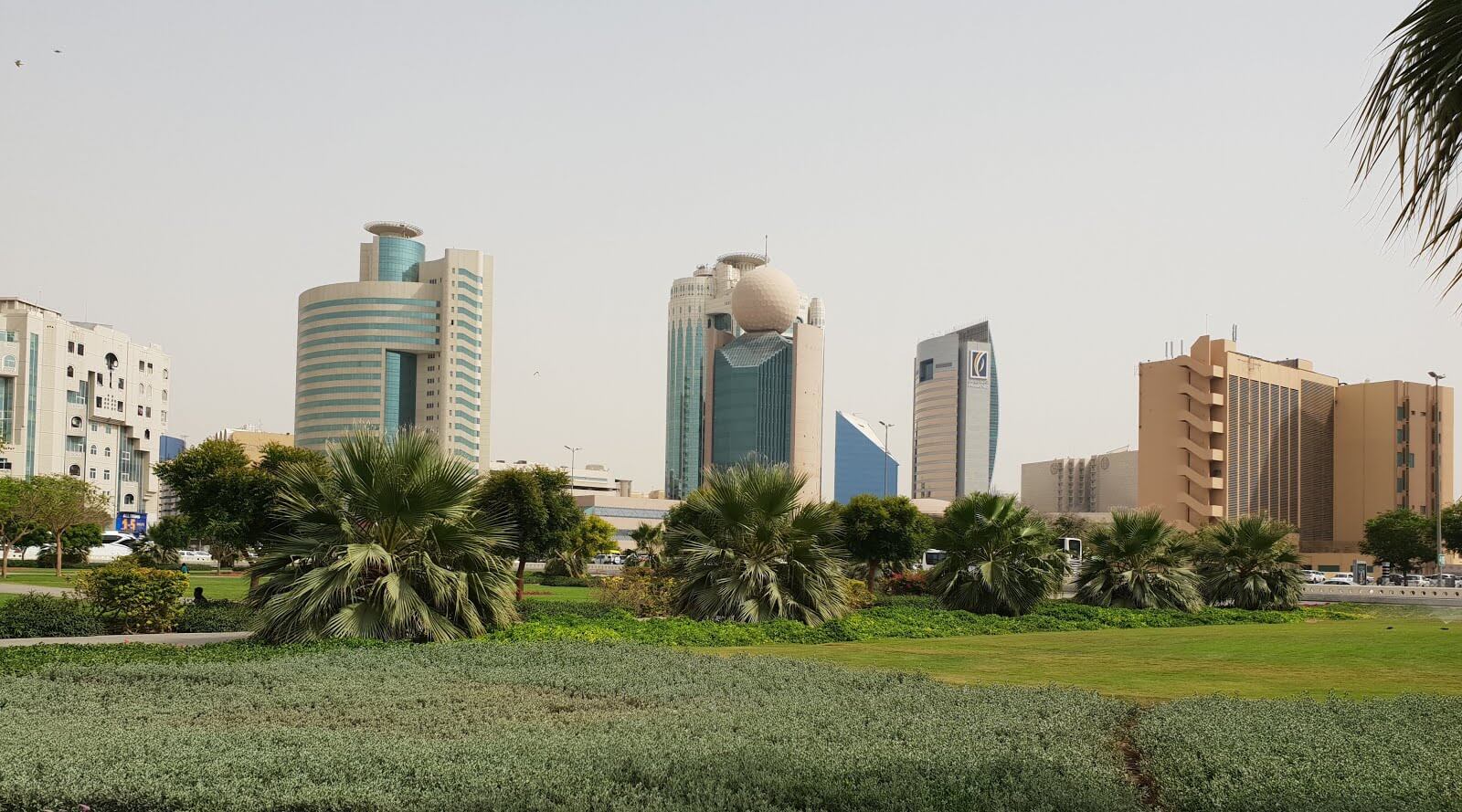
Sitting at Union Park, you can spot all iconic buildings along the Deira side of the Creek that were once glorious monuments. The convex National Bank of Dubai, the globe adorned Etisalat tower, the triangular Dubai Chamber of Commerce and the cylindrical Rolex towers. A contorted assortment of geometrical shapes that were once the original Dubai skyline.

Now relics of a forgotten era.

A gust of wind, and a swirl of leaves.

Deira Creek Skyline Dubai UAE Travel Blog

Even though it has remained stoic amidst the flurry of development, Deira too will one day have to change. It would need to keep up with the pace of a global city. I turn back to squint at the Memorial Fountain, serene in its oblivious stupor. Daily, thousands of commuters throng past it with a cursory glance at best, lost in the vicissitudes and transience of daily life and their fate.

Even though I doubt it will, for the sake of this city\’s lineage, Deira must endure.

The droplets at the fountain now glisten with reflected sunlight. The sun has start to set in, and on, Deira. I don\’t think the beauty, relevance and historical significance of Deira could\’ve been highlighted earlier. My revelations are not the by-products of a decade of blissful ignorance. Deira needed the glass spires of Downtown, sprawling beaches of JBR, gastronomic delicacies of City Walk and the monstrous scale of the Dubai Mall to carve its own individuality. To distinctly establish a preserved vestige of history.

Without them it would have no legacy.

I was out there trying to find the essence of my city, somewhere in the midst of the crowd where for long traders have found what they were looking for. At last, I had found it – a culmination of an adolescent\’s want for something he couldn\’t understand and an adult\’s search for something he couldn\’t have.

I had finally found my city\’s soul, right there, in heart of Deira.

Memorial Fountain Union Square Deira Dubai UAE Travel Blog

* * *

If you liked what you read then do help me by sharing this on social media platforms of your choosing (Facebook, Twitter, Instagram, G+, Reddit I ain\’t picky). We\’re all artists somewhere, in some field, and this is just my form of art that would truly find expression if more people get the inclination to read it.

You can like this blog\’s Facebook page here, follow the Twitter feed here, follow me personally on Twitter here or upvote this piece on Reddit here.

Similar articles:

Master Of All Nations, Citizen Of None: Read More

The Unheard Voices Of Tehran: Read More

In The Alleys & Valleys Of East India: Read More

Agra: A Teardrop On The Cheek Of Time: Read More

Sandpaper Gate 2018: Playing Cricket The Contemptible Australian Way

Steve Smith & David Warner Caught Ball Tampering With Sandpaper Cricket Australia

These are the kind of events that stick with people. Not Steve Smith\’s purported Bradman-esque Ashes season, not David Warner\’s scintillating knocks, not Nathan Lyon\’s deceptive flights and dips.

These are the kind of events that will stick with these people and their legacies, interminably label them, and parasitically besmirch the highlights of their careers. A small asterisk hinged to their career graph. 
An asterisk that spells out \’calculative cheats\’.
Asterisks that can be testified by Mohammed Azharuddin and the late Hansie Kronje, who are not regarded in modern times as highly successful captains of their era. Vilified into oblivion by national ignominy, even a couple of decades later history is now indifferent, if not slightly disapproving of them but never reverential. 
These are the kind of labels that define teams, their styles and tactics for the years to come. South Africa, to date, have struggled with the sobriquets of \’chokers\’ despite the origins firmly rooted in the late 90s. High-profile teams often struggle to shed their monikers, Pakistan and India have consistently lived with the labels of bowling and batting heavy teams despite the influx of players with opposing skills.
However, whether this incident will truly define Australian cricket a decade later is hard to foretell, as their lineage, and that of the game of cricket itself, is much deeper than one colossal blunder. They will have to ride out the taunts for now, endure the implications that come along and probably helplessly self-destruct until a fresh wave of talent is brought in to wipe off the disgraced smears of the past. 
This story though, this will stick. In the absoluteness of history, of fact, and the capriciousness of fate. 
It will stick into the image of Australian cricket – a style of cricket that is as fascinating as it is dishonourable. 
Fascinating as it truly highlights the mental strengths of opponents – the Australians have often waged a battle of skill and mind. While they boast an arsenal of incredible cricketing talent backed by a pedigree dripping with cricketing royalty, on the ground they don\’t just compete with cricket. It is not enough to have an impeccable batting technique, as they will chip at it not with pace or spin but with insinuations, provocative taunts and mental disintegration. 
Another spice in the feast of cricket for the average cricket zealot. 
Dishonourable because playing cricket the Australian way is resorting to vile, distasteful and often disrespectful tactics, unneeded in international sport where players play to ultimately test their physical skills. A \’bully\’ persona that every player has to adopt, or the stringently imposed ideology that they have to \’hunt in packs\’. 
A chess game in motion in every game with team Australia, where the battle on the field is ultimately governed by the tenacity of the mind.
It is time for their move. The clock starts its count, but they are well prepared. Watching the Australians on the cricket field is as intriguing as it is infuriating. They demonstrate the exact attributes of a playground bully – they stride out with premeditated tactics of picking on the weak links of a player or a team, chalk out a fictional, ambiguous and internally flexible line for profanity and then launch a cerebral attack of obscenity.
This is their move. A calculated and distasteful move unleashed remorselessly. They tap the clock and cross their arms. It is now time for their unwilling, unprepared and unassuming opponent to respond. It seems however, that these players are no longer playing personas. The facade of character work seems to have melted, as you start to spot sadistic pleasure in the goading of opponents. 
Tendrils of their character work, Venom-like, starting to envelop their sense of morality, logic and reasoning. 
Tick, tock.
Then they wait – wait for a player not used to this style of play to break open, lose control and unleash the fetters of restraint. Needling him, further instigating the imminent. The clock ticks towards an inevitability. A player who didn\’t plan for this volley of loathsome comments and would eventually cross the fictitious and self-serving \’line\’.  
In background they sit hunched, drooling over the prospects, ready to pounce at the end of it all.
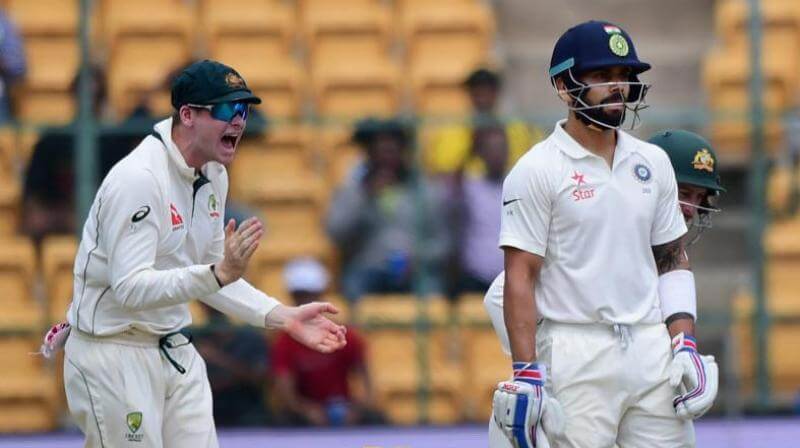
Australian Cricket Team Sledging Opponents Ashes
A player finally relents, and the Australians gather round for stage two of their street theatre.
They viciously pounce on this moment of weakness, whine about it and take it to the higher authorities. The infuriating, annoying brats that sparked the fires yet never got their hands burnt. 
The history books have examples aplenty. The infamous Monkeygate where Andrew Symonds swore at Harbhajan Singh, interpreted his alleged Indian swear as a racial slur and filed a complaint. Glenn McGrath once asked Ramnaresh Sarwan what specific portions of Brian Lara\’s anatomy tasted like, and immediately held up a victim card when Sarwan asked him to ask his wife. Darren Lehmann openly asked spectators in Australia to dig into Stuart Broad and make him go home weeping, yet claimed a spectator sledging his team\’s biggest loudmouth last week South Africa was completely disgraceful. Warner decided to enact the McGrath-Sarwan incident with Quinton de Kock this month, and ensured he played his part to the end perfectly, including the victim card for his final act.
Merv Hughes, meanwhile, deserves an article of his own.
The Australian line and the Australian way ignores profanity directed at Lara, Sarwan, Harbhajan, De Kock, Broad and the countless others who are pulled into their mire of hypocrisy but conveniently stretches to ensconce Symonds, McGrath, Warner, their families, their pets, the people of their neighbourhood and even their local mailman. 
A line of control of convenience. With each successful foray, they gain in confidence. Stuart Broad is treated as a cheat for not walking – a practice majority of the batsman succumb to, the moral grounds of which are still debatable. In their eyes Broad overshadows the honourable showmanship of Greg and Trevor Chappell underarming their way into national ignominy.
A growing, self-sustaining confidence that allows them to apologise if caught and simply move on. Harbhajan warrants a suspension, but Lehmann can blatantly racially abuse the Sri Lankans. Steve Smith can look up to the dressing room for DRS opinions, yet call it a \’brainfade\’ the one instance he was caught – rubbishing claims that it had been happening for a while. 
The examples, as aforementioned, are aplenty.
The honest truth is, ball-tampering is not a new offence and not career threatening. Steve Smith might well never be captain again, or he might just be re-appointed after a possible debacle at World Cup 2019. 
These are the kind of events that stick, but Australians might just move on. The Australian way is to play dirty and apologise later, and with time the apologies gain more merit. One incident is not enough to affect a century-long tradition of playing style. For their infatuation with playing the victim card, ironically they are now truly the victims of their own personas – the ravenous tendrils of the characters they created have engulfed their morality, reasoning and plain logic. New players are expected to sledge, and veterans are expected to whine – or they would be considered too soft to play international cricket the Australian way.
To play international cricket the despicable, contemptible Australian way. 
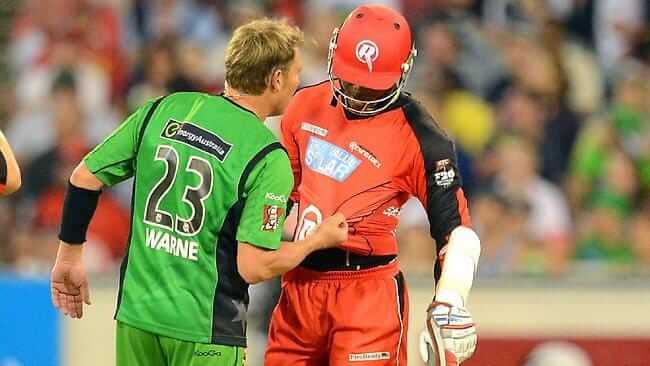
Shane Warne Marlon Samuels Fight Big Bash
* * *

If you liked what you have just read, please do consider spreading the love and sharing this on social media platforms of your choice. Additionally, also consider liking this blog on Facebook, following it on Twitter or following me personally on Twitter. We\’re all artists in our own way, and this is my art that would truly find expression if more people got a chance to read it.

Similar articles:

Why I Feel Virat Kohli, And Not Sachin Tendulkar, Is Indian Cricket\’s Biggest Inspiration: Read More

Why I Stopped Loving Mahendra Singh Dhoni: Read More

Agra: A Teardrop On The Cheek Of Time

A leisurely stroll in Agra would show you blatant abandon, national ostracism and general indifference. Dilapidated kothis (villas), pothole-ridden, cow-dung infested streets, a conspicuous absence of any sort of infrastructure and an unquestionable maxim that cows and pigs have priority on roads and trivial entities like cars and pedestrians must adjust around them.

Even if you look carefully, you will see no residues of former Mughal affluence in this prevalent desert of destitution. But there is an aura to this city, ethereal and inaudible whispers in the air if you will, that seem to murmur ballads of the past.

Of great kings and their begums, of love and war, of ascension and conquest, of the richness of life and the inescapability of death.

With this collection of short stories, I must attempt, once again, to embark on the Indian Quest. Having tried to put in words (and spectacularly failed in the process) my odyssey in East India last year, I must try again not for the elusive outcome, but for the cathartic process. That I will not be able to do justice to India is solid and immutable fact, but I shall feel much lighter and significantly happier having invited you into the concoction of emotions I feel each time I step into this miraculous world.

I am also aware that Agra itself is not unique in evoking these emotions – you would probably feel similar sentiments in your own regions in India. For that, once again the Quest is your own – I can only be true to my own roots.

In the shadow of the Taj Mahal lies one of the former Mughal capitals of India. In that I found a story to be told, a city\’s soul to be explored and so I set out.

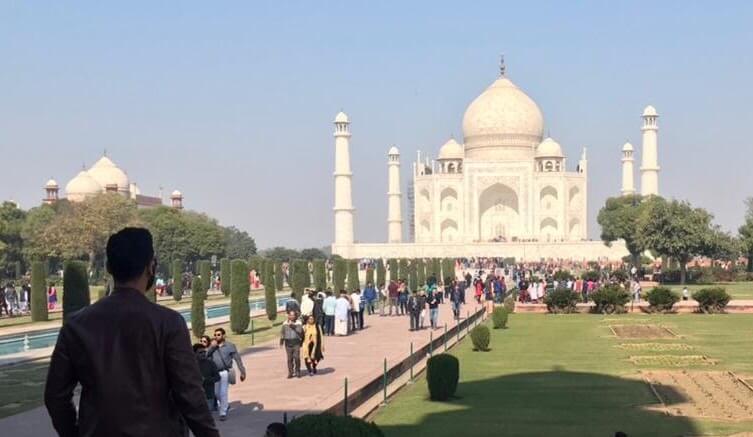
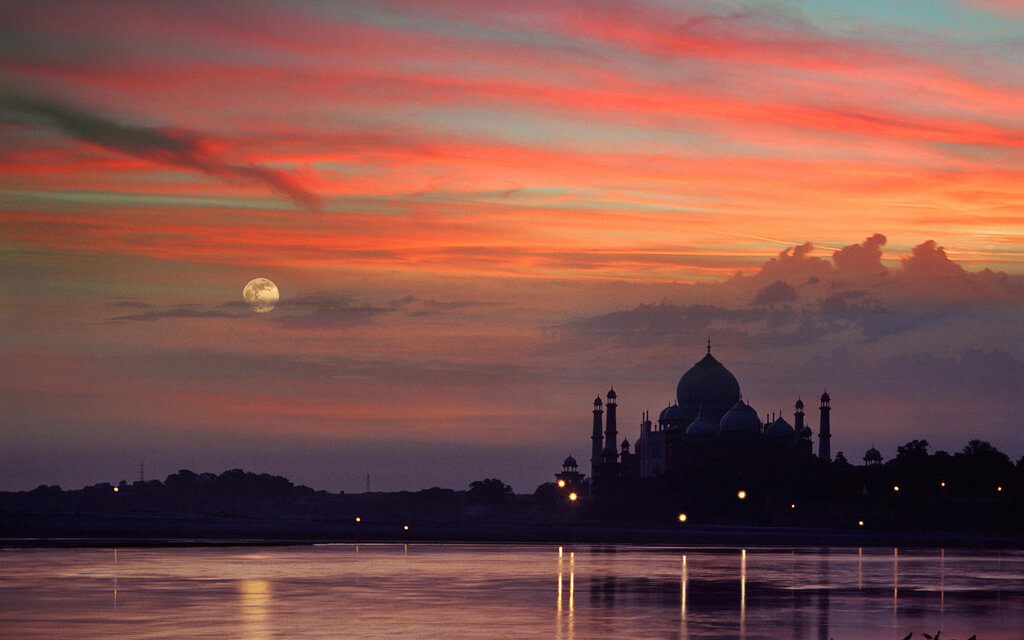
Taj Mahal Agra Seven Wonders Tourism Travel Blog
* * *

I am in the midst of being buffeted by platoons of curries, fried pakodas, barfis, laddoos, pethas, pedas and numerous other delicacies. It seems they are destined for my plate, right from the bubbling-hot-oil-filled cauldron they are raised from, dripping with the glee (and ghee) of taking another victim hostage to the realm of obesity.

In walks another distant relative, his hands pinned to his back as he surveys me. His eyes rake in my features, trying to formulate an assumption of my personality with my appearance. To compare with his database of stereotypical thoughts on \’these foreign kids\’.

\”Aur hero? Tu jaanta hai ki nahi jaanta hai?\” (\”You know or you don\’t know?\”)


\”Ji, jaanta hoon.\” (\”Yes, I know\”)

\”Kya jaanta hai?\” (\”What do you know?\”)

He had last seen me when I was a teenage boy in school. Today I return to his house an adult. His conclusions at the end of his visual and oral scan are ambiguous, but somehow it meant that it was an occasion for stuffing me with even more food. With an incisive snap of his fingers, he motioned to his cook to juggernaut more edibles into my plate.

I raise my hands in protest. 

\”Aur hero? Tu jaanta hai ki nahi jaanta hai?\”


\”Ji, jaanta hoon.\”

\”Kya jaanta hai?\”

It\’s like the last conversation never happened. I was stuck in this endless cycle of existential ignorance interspersed with familial affection. In Agra, have you really eaten if you haven\’t eaten it the right way?

Having been reprimanded multiple times, I ensured my thali had a dry sabzi and two curries. But have you really eaten if you didn\’t begin with a roasted papad, warmed up with a pakoda and ended the meal with an Agra ka petha or a jalebi?

If, by chance, you were to remember that entire sequence what if you forget to try the assortment of pickles? What about the home-made yoghurt and butter?

Why then, young man, you must start your meal all over again because you haven\’t eaten it the right way!

As I\’m being stuffed with laddoos by loving aunts, I am also succumbed by a growing fascination with the value people here put on not just the food, but also the process of eating food. The hurried meals I wolf down on a normal day, usually as an afterthought as I watch a movie, Youtube video or indulge in a conversation stand in stark, discomfiting contrast.

I think I truly ate a meal after ages when my beloved relative paused his fascinating origin story midway when the food arrived and said:

\”This story can wait, let us now enjoy the food.\”

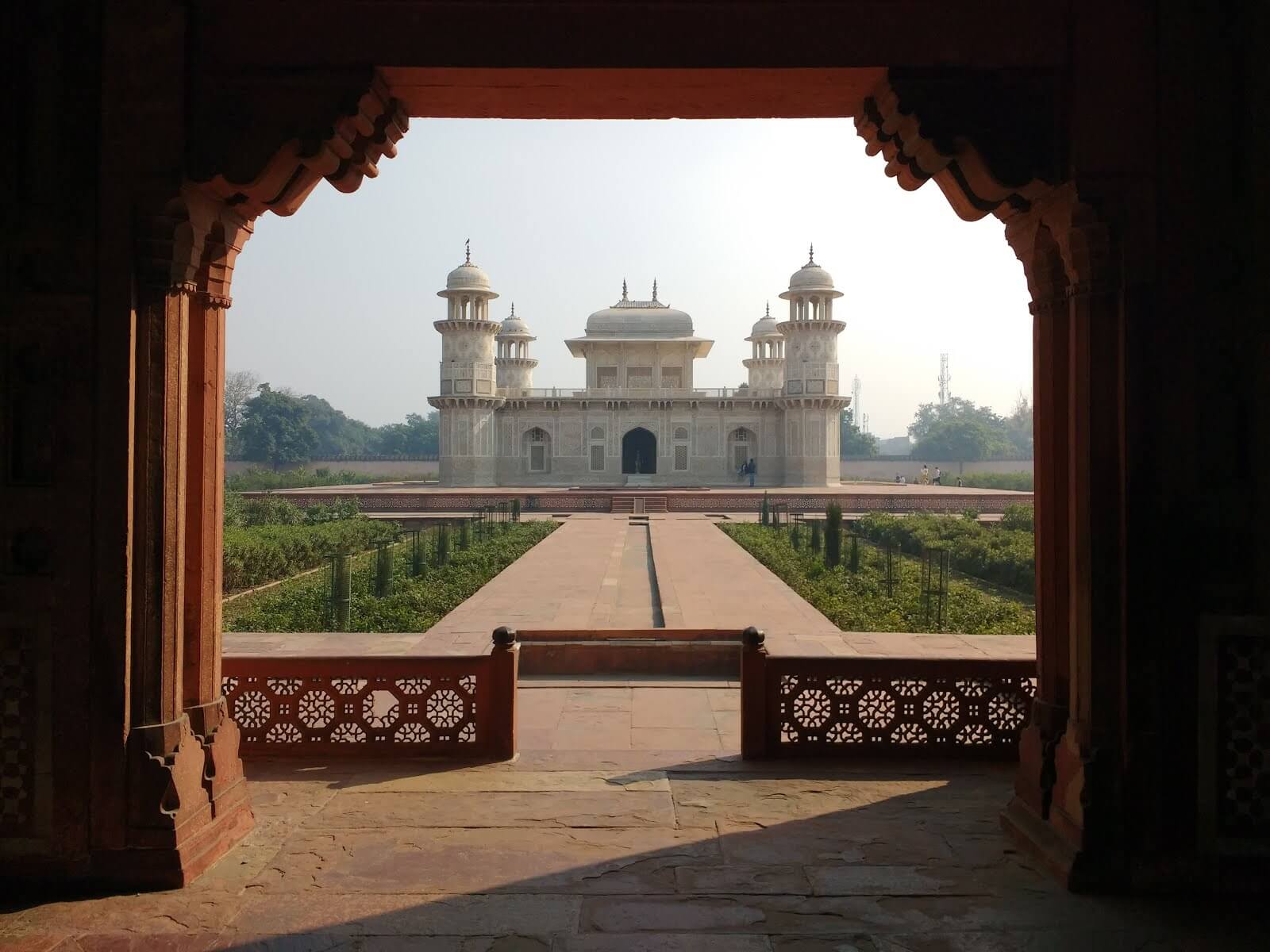
Tomb of Itimad Ud Daulah Baby Taj Mini Taj Agra Tourism Travel Blog

* * *

\”Sirf aapke parivaar ne Raj Babbar ko support kiya tha.\” (\”Only your family had supported Raj Babbar\”)

One fine afternoon, we were paid a surprise visit by a local politician. He walked in barking orders to a faceless sycophant on his phone with exaggerated jerks of his head and hands that were consciously trained to display power.

A lifetime\’s practice of an exhibition of authority.

Gold-rimmed spectacles, a richly tailored suit and a gold watch to display an abundance of wealth. He had come to buy our house, and in turn he gave me a priceless demonstration of sales expertise.

The theatrics were incredible; the script was well planned. The entrance, the attire, the dialogues and climax. A well-structured thespian narrative, coupled with some assertions of power and social status. He had done his research on our entire family, our work, social circle and political affiliations. He warmed up by describing how well he knew many of our relatives. A little bit of caressing craftily injected with some needling. Some probing into his possible contenders, and a hurried exit after setting his price. No time for analysis, justifications or bargaining.

Emails, property websites and laptops aren\’t the norm here. In such a setting, the people you know, the words you say and the impression you make matters. The art of oration, the art of subtlety, the art of persuasion and the art of assertion. Nuances that are often hidden and left underdeveloped in this new age of digital communication, aided by GIFs and emoticons.

Yet right there in a significantly underdeveloped town, I found some of the most soft-skills-proficient humans. Every decision we made, every word we spoke and every person we associated with contributed to a legacy that would stay alive as long as this city did.

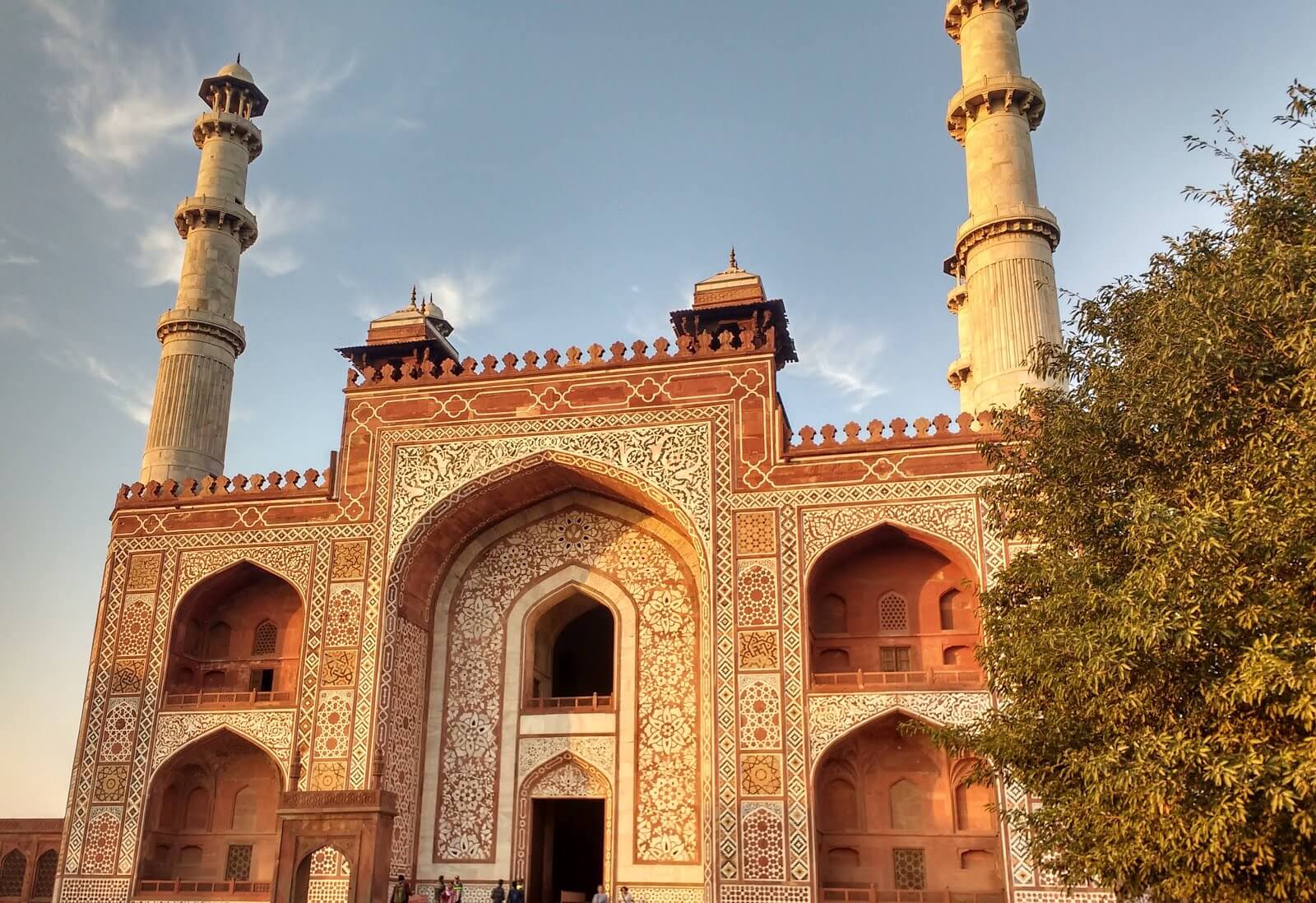
Tomb of Akbar The Great Agra Tourism Travel Blog
* * *

I am looking at Virat Kohli.

Of course, I spend 70% of an average day looking at Virat Kohli in various forms, but right now there seems to be an abstruse disconnect between me and my fanaticism. Kohli is all around me, decked in glistening sherwanis, kurtas and draped like royalty. A floor below him, massive portraits of Anushka Sharma hang over groups of women narrowing down the one lehenga that would somehow denote their social status at a one-day event where people would be too fixated on the food anyway.

This Manyavar store is a reflection of modernism. Simplistic interiors, suave salesmen, elegantly minimalistic attires with heavy price tags.

An Apple store of Indian wear.

Yet the massive glass windows behind the salesman show me a line of paupers, some missing limbs, some their eyes, clattering their stone bowls on the pavement in search for alms.

I\’m not here to preach for poverty – it exists and I don\’t expect the rich to not live like the rich because it does. The contrast, however, is quite poetic – especially in Agra where the crumbling city houses some immensely wealthy people. People often write stories of the \’dark underbelly\’ of booming metropolises like Mumbai or Dubai, but I feel in the case of Agra it would be the rich underbelly – the abundance of wealth lying hidden under the sprawling visage of a poor city in a poor country.

Maybe it is just the love for extravagance – the societal norm to spend a higher percentage of your salary on expensive watches, clothes and big villas. Maybe they earn less but live large with no eye for the future.

Maybe.

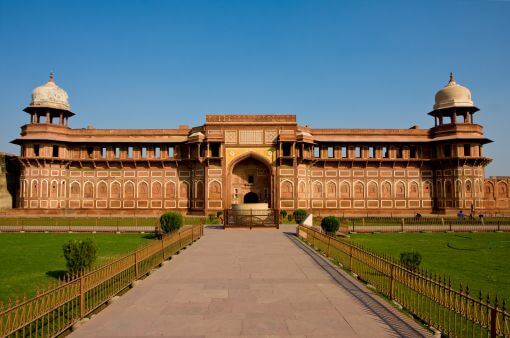
Agra Fort Tourism Travel Blog

* * *

\”Sir, I had the honour of driving Mr. Amrish Puri for a week.\”

I\’m absolutely fascinated by this incredible man driving this Ola cab. A blue turban, a grand white moustache twisted and twirled so that the ends point up and a benign, joyful face. This Sikh man, or Sardarji, seemed to never lose his smile – even in the moments his mouth was busy narrating his life story, the traces of an infectious smile would linger in his eyes.

\”Sir, I was very scared of meeting him. He had this image of an angry and rude man because of all his roles. When I went to pick him, sir, I bowed down and told him I was his driver and would go get the car. Sir, you will be surprised – a man of his stature looked at me with great respect, put his arm around me and said \’Kaka, gaadi kidhar hai? Hum chal ke jaayenge\’ (Where is the car? We will walk to it)\”

I was quite embarrassed to be continually referred to as \’sir\’ by this sixty-year-old man, but this is the money-driven societal hierarchy so deeply ingrained in India, so much deeper than any other country I have visited. A pecking order that makes grown, aged men bow and salute me because I happen to be born in a richer family than them.

The dehumanising of a nation, one money bill at a time.

If I could, I would listen to the stories of Sardarji all night. He went on to describe how Amrish Puri would give way to women and children despite the need for hustle in his busy schedule. He then launched into the story of his escape during the 1984 Sikh Massacre, a story that ended with him driving a car for, non-stop, nearly forty-eight hours. He averaged 14 hours a day driving his Ola itself, and yet it seemed nothing could slay the smile.

\”Sardarji, didn\’t you get tired of driving after all these years and incidents?\”

\”Tired of driving? No way, driving is my passion, sir!\”

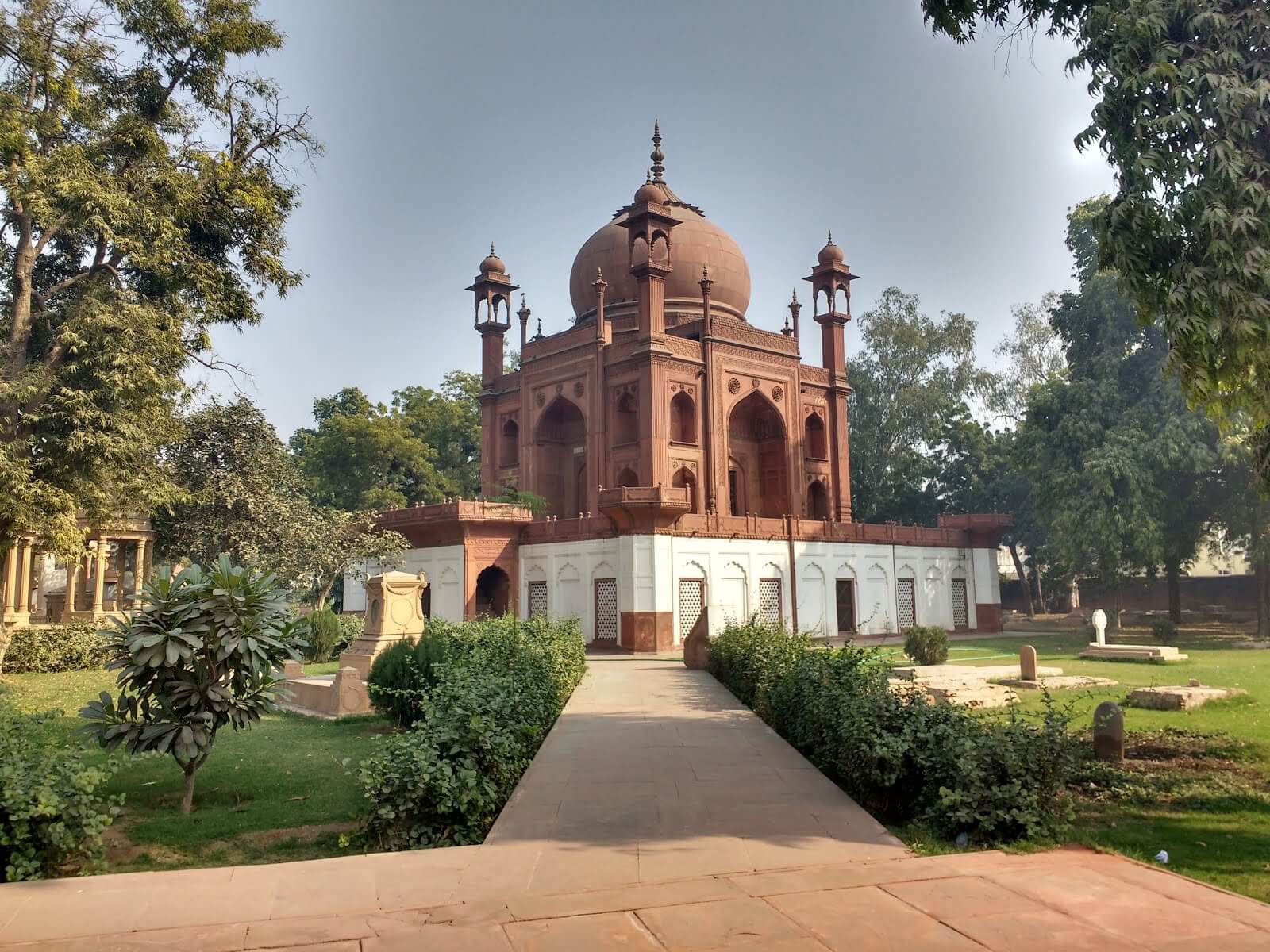
Tomb Of John Hessing Red Taj Agra Tourism Travel Blog
* * *

The Taj Mahal, despite the songs, myths and facts, remains one of the many and probably the biggest paradox for a writer – the apex of this uncontrollable urge to express the assimilation of emotions you feel, yet as I sit down to tell you I find myself increasingly handicapped with each word.

A most perplexing catch-22, I must say.

In this instant I must pay homage to the late Robin Williams, who said it right in Good Will Hunting – no novels, scriptures or pictures could do justice to the beauty of the Sistine Chapel. You need stand there, be there, breath in the smell and gaze up and really see that beautiful ceiling. To really see it. To really be there.

To become one with the Taj Mahal.

A symmetrical marble mausoleum built by Shah Jahan, grandson of Akbar The Great, in memory of his wife Mumtaz Mahal – a story of love, death and everything that comes with a duet between the two.

A spectacle of Mughal creation, a wonder of the modern world.

You would feel having one of the seven wonders of the world would mean something. Agra as a city could have a thriving economy just from the tourism Taj Mahal generates. Yet, the tourist money is fragmented and broken between the rickshaw drivers that take you to the Taj and the freelancing tour guides that badger you with their linguistic skills, having learnt perfect English, Mandarin, Italian or Russian in order to win some meals for the day.

You would also pay the guy below the marble plinth to look after your shoes, and you would also pay the freelance photographers to print polaroids of you. At the end of the experience you would\’ve spent at least a thousand rupees, yet not one person to whom portions of the money went would wake up to a better tomorrow.

Wouldn\’t it be better if the government streamlined the entire process, hired all the photographers, guides, rickshaws, shoe-guardians and charged a fixed all-inclusive ticket to the tourist? All these vendors would have a stable job, there would no false advertisement to loot the tourists and the economy would categorically reflect the benefits of having the damned Taj Mahal in your city.

Not just the Taj Mahal, but you would also glean the benefits of having the Agra Fort, the Tomb of Akbar The Great, the Tomb of I\’timad-ud-Daulah and the hidden, future wonder-of-the-world the Temple of Dayalbagh – all miraculous attractions which up to this point are unknown to the world of being housed in Agra.

Anyway, as an NRI who hasn\’t permanently lived in India what do I know right?

I shall take your leave, draw curtains on this vexing monologue of glutted emotions, with two common fables that linger with the Taj Mahal:

– While the architecture in itself is worth the wonder, not much is spoken of the processes involved in creating this towering structure in an age with no industrial cranes or technology. In fact, accounts have been made of the creation of a 15-km long ramp for elephants to lug blocks of marble to the construction site. According to another legend, the scaffolding itself was so massive that by the end of the construction, having depleted the royal coffers in the process, Shah Jahan had no more funds to get rid of it. Upon consultation with his trusted wazirs, he declared that all the bricks in the scaffolding were free for the general public.

The massive scaffolding vanished overnight!

– Another legend associated with the origins of Taj Mahal was that Shah Jahan planned a black Taj Mahal for himself, which would be situated across the Yamuna looking at the white one.

Lovers forever immortalised in wondrous marble mausoleums.

Yet, probably given the cost of constructing one, and the decades it took to construct along with his ill-fated illness and subsequent house arrest, this vision never came to be. Today his tomb lies right next to the tomb of Mumtaz Mahal in the Taj Mahal, and there they shall rest together until the end of time.

Two diamonds in the teardrop on the cheek of time.

Mehtab Bagh Taj Mahal Agra India Seven Wonders Travel Blog Tourism

* * *
If you liked what you read, then do help me by sharing this on social media platforms on your choosing (Facebook, Twitter, Instagram, G+, Reddit I ain\’t picky). We\’re all artists somewhere, in some field, and this is just my form of art that would truly find expression if more people get the inclination to read it.

You can like this blog\’s Facebook page here, follow the Twitter feed here or upvote this piece on Reddit here. 

Similar articles:

In The Alleys & Valleys Of East India: Read More

Master Of All Nations, Citizen Of None: Read More
Why I Feel Virat Kohli, And Not Sachin Tendulkar, Is Indian Cricket\’s Biggest Inspiration

Sachin Tendulkar never inspired me.

When I started getting into cricket at the age of 9, Sachin was already a nationwide phenomenon.  Cricket fans at the turn of the century were witness to the birth of a contagious, ill-fated cult of personality. Sachin had become omnipresent in Indian pop culture. He could make a nation exult with a pristine straight drive, or make them weep with an early dismissal.

To scrounge some of cricket commentators\’ favourite buzzwords – by the age of 30 he wasn\’t a \’rising star\’, \’talented cricketer\’ or \’wily veteran\’. He wasn\’t just an exceptional batsman. He wasn\’t a heavily lauded athlete. Nor was he just a popular celebrity.

Sachin Tendulkar was a phenomenon.

Over the years as my fascination with, and understanding of, the game evolved so did my reverence for him. Yet, for all his incredulous feats, he never inspired me. There is a fundamental, oft-ignored problem with god-given talent – you could only be born with it.

Sachin could never be compared, emulated or replicated. Sachin had broken a national record with Vinod Kambli at an age where other kids were struggling to ride a bicycle. It just seemed too easy – a feeling aided and abetted by the blatant nonchalance with which he describes his freakish knocks in his autobiography Playing It My Way. He made his test debut at the age of 16 and had surpassed most records well before he was on the brink of retiring. Cricketers like him were meant to be prized and even, if I may take the liberty to claim, worshipped.

Worshipped as a fleeting flash of celestial brilliance that might never be glimpsed again; Sachin was unsurpassable.

Sachin was god.

* * *

The Sydney Cricket Ground was ready for a spectacle.

It was the second semi-final of the 2015 World Cup, in the wake of one of the greatest knockout matches in World Cup history between New Zealand and South Africa. Australia had put on a massive score, yet such scores had shed the accompanying intimidation by 2015. India, a self-professed chasing side, had successfully conquered similar targets multiple times by then, led by the supreme master of chases himself.

The stage was set for an iconic chase, and in walked Virat Kohli to a thunderous ovation.

A burst of pace, some inordinate bounce, an aggressive heave and the world was hushed into overbearing, mind-numbingly engulfing silence as Kohli top-edged a bouncer from Mitchell Johnson. The master of all chases, the saviour of Indian cricket had fallen prey to his own idiosyncrasies.

Seven months later, Kohli was to be found facing South Africa at home, after a poor limited overs cricket season. He hadn\’t crossed a score of 50 in ODI cricket since the World Cup. A pernicious concoction of frustration and desperation was conspicuous in each dismissal.

In the sweltering heat and humidity of Chepauk, Kohli ran and cramped his way past 90. South Africa, often the notorious chokers, sought to choke him in the 90s – hoping to get a few silent overs in the death as Kohli neared his long-awaited century.

A trap Sachin often fell prey to.

The plans were set: spinners would bowl tight lines with long on and long off. Kohli would need to take singles to ensure a century, by which time South Africa would\’ve ensured overs 40-45 were reasonably quiet.

The spinner bowls his line, but the batsman steps out and lofts the ball straight towards long on. There seems to be a trace of disdain in the shot as if to question the gall of the opposition to formulate a specific plan against the creator of the shot. There are a couple of seconds where the batsman watches tentatively as the fielder raises his hands for a catch. But the ball has just a bit more flight, spurted probably by the fragments of disdain it was smacked with to scrape over long on\’s fingers for a six.

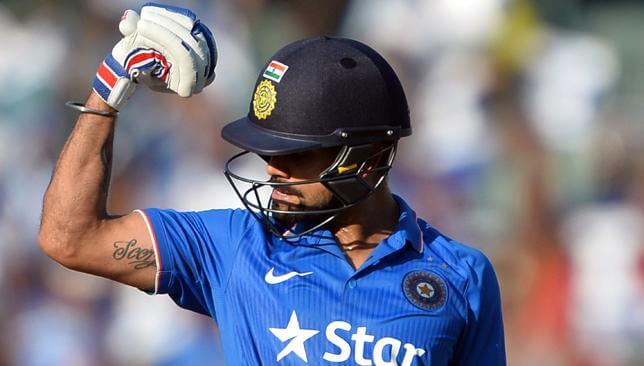
Virat Kohli flings his arms wide and flexes for the crowd.

As I watched it unfold, on a laptop screen in a university lecture hall (as you do), I knew it then. This has never been, and will never be, the story of miraculous ability.

It is a story of evolution.

Virat Kohli flexes muscles South Africa ODI Century

Kohli\’s autobiography, by his own admission, would start with the tale of a chubby teenager who used to love adding extra butter on his aloo parathas. A kid who used to stock up on chips and chocolates before every cricket match and ensured he wouldn\’t be disturbed as he gaped open-mouthed at the heroics of a miraculous man, transfixed by the transience of the magic.

In fact when he finally burst onto the scene, despite being touted as a talented \’rising star\’, he was never lauded as the man with god-given ability. Those sobriquets were taken by Rohit Sharma, a man who could, or so they claimed, time the ball with both eyes closed.

In a recent interview, Gaurav Kapoor mentioned that Rohit seems to have an extra second to time the ball. Kohli corrects him with \’a second and a half\’ with a slightly envious, slightly frustrated sigh. It seems that he is perpetually at war – he stands alone in the centre of an ancient duel arena. As he gazes up at the jeering crowd of naysayers, a resounding gong is heard signalling the entrance of his opponent and longstanding nemesis. A crescendo of drum beats, a distant piercing war cry, and the veil is pulled back, revealing his archenemy.

He does not see Jimmy Anderson swinging deliveries away from him. Nor does he see a visual representation of the nation\’s expectations.

At the opposite end of the arena, ready to lock horns in a fatal battle, he sees himself.

Virat Kohli fights an unceasing battle against his own expectations every day. Regardless of the runs against his name in a match, every dismissal is met with a ruthless volley of common Delhi curses – an intrinsic rage that was probably the manifest of battling the politically oppressive and brutally competitive scene of Delhi cricket.

With this rage spawns hunger. A perpetual, frenzied hunger for winning, scoring runs and improving. A man better than the one yesterday. A hunger so incessant, that it would need divine skills to satiate.

But Virat Kohli never had god-given ability. He was, and still is, like you and me. In his youth he doted obsessively over his cricket heroes. Like you and me. In his early days he gained notoriety for cursing on the field, indulging in revelry off it and adopting every fashion trend in the country. Like you and me. Despite his laurels in ODIs, his place in the Test format was often questioned. As he matured, so did we. Despite his under-19 feats, he still seemed like an above-average individual in his chosen field in life. Just like you and me.

Even his initial IPL performances almost got him dropped from RCB. This is the story of a man who got hit multiple times, and tried to learn from it. The fact that he has built an immortal legacy today is a testament to his hard-work, commitment and drive. In a sport which has seen many potent sportsmen fall prey to indiscipline, complacency, corruption and greed he stands out as a man who has built, Dravid-like, a legacy purely on commitment.

Sachin was never the fittest athlete, but he didn\’t need to be. At times, it felt (unintentionally, I\’m sure) that Sachin was bit detached from the bigger picture. Particularly in his later years, a milestone would bog him down despite the match situation. It would be ignorant, near disrespectful even, to assume that Sachin or Rohit did not put efforts to sustain their magic. But the value of persistence and discipline in comparison to the value in the sustenance of existing skills is up in the air, and I choose the former. Is this why we value a rags-to-riches story more than that of a millionaire who multiplied his wealth?

* * * 

In 2014, I was at the Oval when Kohli edged to the slips. Many cricketers have waned once their shortcomings have been exposed. With each edge it seemed Kohli was losing sense of his own game. A few months later, he took a stance a foot outside his crease to Mitchell Johnson and stroked his way to a career-defining series.

After a series Down Under, in his first Asia Cup match in the subcontinent he pushed too hard on a sluggish pitch against Bangladesh, after having acquainted himself to the pacy pitches of Australia. A rare duck, and in the next match he played the ball later than anyone else to be the only one to combat a formidable Pakistani pace attack.

He wasn\’t born the best batsman in the world, but he just might have evolved into one today and there is nothing more inspirational than that.

As Virat Kohli has grown, so have we.

* * *
If you liked what you have just read, please do consider spreading the love and sharing this on social media platforms of your choice. Additionally, also consider liking this blog on Facebook, following it on Twitter or following me personally on Twitter. We\’re all artists in our own way, and this is my art that would truly find expression if more people got a chance to read it.

Similar articles:

Why I Stopped Loving Mahendra Singh Dhoni: Read More
India At Rio Olympics 2016: No Country For Non-Cricketers: Read More

An Overview of Bitcoin, Blockchains & Cryptocurrencies In The UAE By A Rookie

Please find below an objective compilation of my perusals through several laborious articles and books – the idea is to promote discussion on technology that has the potential be the \’dot-com boom\’ (and bubble) of our era. If you find any glaring mistakes in the text below, do drop me a message and I shall happily rectify it. I am a very nascent pupil of this field, with limited academic qualifications and through this blog post wish to encourage more people to get into the discussion of (and not necessarily investment in) blockchains and cryptocurrencies.

If I can understand bits of it, you definitely can get way, way more.

What this is:

– Your one-stop reference pool for diving into the basics, and not the technical details of cryptocurrencies. A lot of technical information has been omitted and ignored for the readability of this nerd-fest, so treat this as the Harry Potter movies in comparison to the novels.

What this not:

– A guide to cryptocurrency investment, because if you really sit and think about it why on earth would you take investment advice from a blatant rookie? (actually if you think even further, you\’ll find that you should definitely not be taking advice from purported industry experts as well, so I guess that makes my opinion just as valuable as a notorious economist\’s)

(not that valuable)


What is Blockchain?

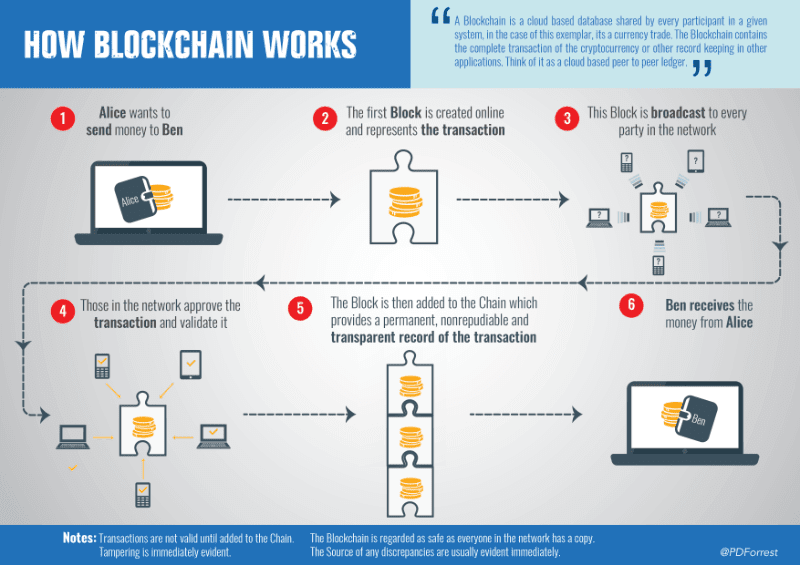
A blockchain is a \’chain of blocks\’ – a series of digital blocks linked to each other to serve as a digital ledger of data. Each block contains within it data relevant to its application – in the case of Bitcoin each block contains transaction history. Additionally, each block contains data linking it to the previous block – consequently creating a chain. It is possible to trace the entire history of one element through its blockchain.

Blockchains are hosted and replicated across millions of systems, thereby decentralising the model and eliminating the possibility of any one person altering the records by hacking into one system.

How Does Blockchain Work Bitcoin Ethereum Ripple
Source: \’Blockchain Introduction\’, JWorks Tech Blog (accessible here)


In a future largely controlled by data (with Mukesh Ambani postulating that it is the new oil) the possibilities of blockchains are endless – decentralised network of data that can be applied to medical history, stock management or event history to name a few apart from digital transactions.


Further Reading

\’What is Blockchain technology?\’, Blockgeeks

\’What is Blockchain technology?\’, CoinDesk


Bitcoin, Ethereum & Cryptocurrencies

Bitcoin is a digital currency. Created by the anonymous Satoshi Nakamoto, bitcoin was created in the wake of the 2008 financial crisis which saw many people lose millions of dollars and served as a modern testament to the fallibilities of banks. Apart from Ripple and Stellar Lumens, most cryptocurrencies were created to combat the vices of banks – which means that if Jamie Dimon of JP Morgan is threatening to fire employees for investing in bitcoin, it is more out of fear of competition than fear of stupidity.

Bitcoins are stored in digital wallets which can be used for transactions. Currently, bitcoins can be obtained by:

  • purchasing them on trade exchanges
  • as a payment 
  • as a reward for mining blocks in the blockchain.

Bitcoin is based on a public blockchain network. Think of blockchain as the operating system or the underlying technology and bitcoin as one possible application (in this case, a decentralized digital currency).

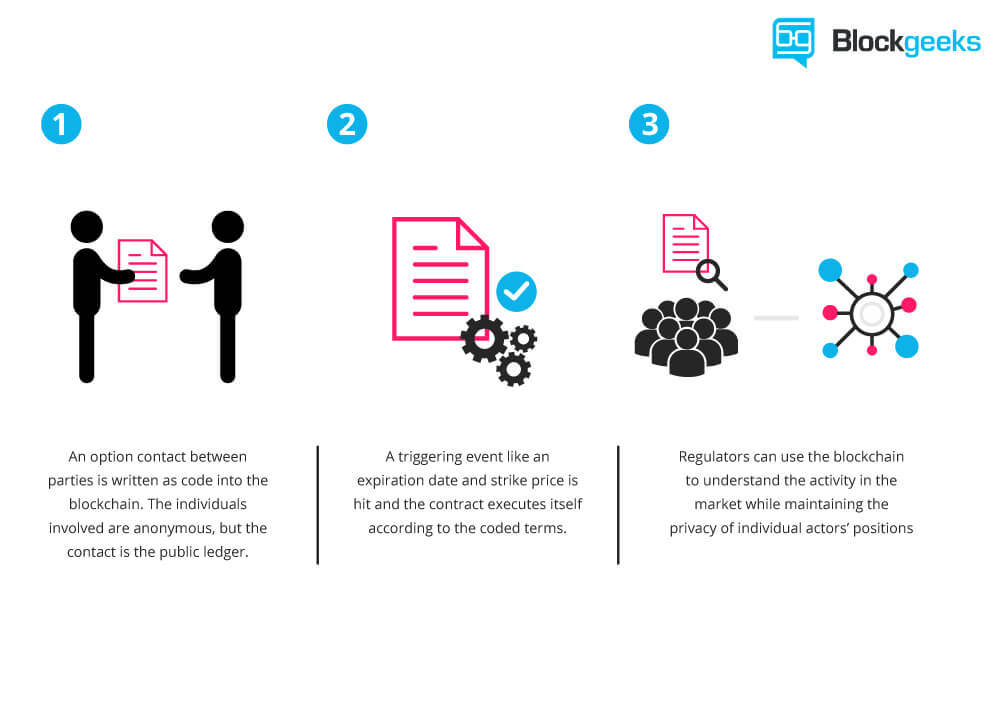
Ethereum is an open-source blockchain network that allows developers to create any application of their choice using blockchain technology. While \’smart contracts\’ is the most popular feature yet, the possibilities of expanding this platform are endless.

Ethereum Smart Contracts
Smart Contracts
Source: \’What Is Ethereum?\’, Blockgeeks

Other notable cryptocurrencies: Ripple, Dash, Zcash, Monero, Bitcoin Cash, Litecoin

Further Reading

2008 financial crisis: The Big Short by Michael Lewis (or you can watch the movie, which might be a slightly more enticing option since it stars Ryan Gosling and Margot Robbie, inevitably endearing to your tastes no matter which way you flow)

Ethereum: \’What Is Ethereum?\’, Blockgeeks


Cryptocurrency Mining

If you care about how exactly bitcoins come into existence, how the number of coins is regulated, the processes ensuring a bitcoin network is secure and what is required to keep the network stable, safe and fast, this video might serve as a good introductory tool. 
The algorithms and hash code encryption techniques that form the core of the mining process might take this compilation of data beyond the realm of comprehensibility. Additionally, I have admittedly come up short in my technical knowledge and interest in the core algorithms defining each and every cryptocurrency, and I shall leave the onus of further research to the reader.


Advantages of Cryptocurrencies

(Bitcoin has been used in several examples but it should be noted that most advantages are not just linked to bitcoin alone – in fact, cryptocurrencies like Ethereum and Ripple have several additional advantages, and consequently, limitations)

Convenience: Imagine being able to instantly transfer money to relatives in a different country, without having to pay Western Union a fee for the service and a higher fee in currency conversion. Imagine not having to deal with change, withered notes and high credit card transaction charges. Imagine not having to wait on a public holiday for a bank to transfer cash the next day. Think about the convenience online banking and payments added to your life, and now expand that to daily transactions.

Counterfeits: With digital currency you combat the possibility of counterfeits as each bitcoin is in essence, an abstraction of digital addresses. Each address is unique and every bitcoin is linked to the blockchain – which means, there is no way to create a counterfeit of a bitcoin.

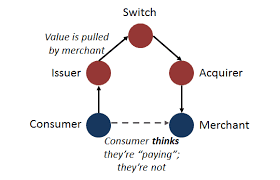
Identity Theft: The current model of credit card transfers works on a \’pull\’ mechanism. When you enter your pin at a card machine, you give access to your entire savings to this particular merchant to \’pull\’ a specific amount. This is analogous to offering your wallet to the merchant and asking them to take exactly the amount you owe them.

This linear bond of trust is susceptible to calamity if your card details fall in the hands of a crook – a crook with access to your entire earnings and the ability pull any amount he or she wishes to. The linearity of this bond of trust is further complicated if you consider that your card details are not just shared with the merchant, as in this process they are also shared with their IT network supplier, the acquiring bank, the issuing bank, any third-party processor, the card network and each employee who works for these entities and handles these transactions.

Suddenly, the argument that cryptocurrencies aren\’t as safe as current options starts to look ugly, does it not?

Pull Credit Card Mechanisms Blockchain Bitcoin Ethereum Ripple
Source: \’Are \’Pull\’ Credit Card Transactions Making You Truly Vulnerable?\’, CryptoCoin News (accessible here

Bitcoin on the other hand uses a \’push\’ mechanism – it pushes an amount of your choosing to the merchant. In comparison to the prevalent pull mechanisms, the potential risks are significantly lowered, though not completely eliminated.

Decentralization & Inflation:

\”Inflation is as violent as a mugger, as frightening as an armed robber and as deadly as a hitman.\” – Ronald Reagan

\”Inflation is when you pay fifteen dollars for the ten-dollar haircut you used to get for five dollars when you had hair.\” – Sam Ewing 

Say, for example, USA owes China a sum of $1 million dollars (all hypothetical, of course). The logistics of current fiat currency transactions ignore the significance of inflation – on paper USA owes China a million dollars regardless of the current value of the dollar.

Since the government controls the currency, they decide that in order to clear this debt they will print more dollar notes than necessary. While the government has literally conjured a million dollars out of thin air and paid off their debt, they have significantly altered the existent supply-demand value. The current value of the dollar is affected by the influx in supply – tipping the scales towards more supply and less demand. As a result, the value of the dollar starts to drop. Your $10 bill now gets you one burger instead of two – for the same bill.

We often underestimate the dangers of inflation – in this exact same scenario there is your average worker who had just accumulated a lifetime of savings worth $200,000. In a month, he watches his savings get diminished by half – as it now costs double to buy the exact same things he could have bought with the original value. Would you want to give an external authority that much power over your hard-earned money?

Bitcoin takes power away from a single, central authority and splits it over a million users that create, sustain and expand the network – which means that no one person can decide the value of your money overnight. The performance of currencies backed by governments is often parallel with the performance of the government itself. Are you willing to bet your money on your government, especially if you did not vote for the ruling party and have explicitly expressed zero faith in their ideologies?

An even more chilling question might be: do you have any other choice?

Disadvantages of Inflation Blockchain Bitcoin Ethereum Ripple
Source: \’Inflation The Evillest Theft\’, The Final Wake Up Call (accessible here)

Further Reading

Identity Theft: Are \’Pull\’ Credit Card Transactions Making You Truly Vulnerable?\’, CryptoCoin News

Inflation: Naked Economics by Charles Wheelan


Disadvantages Of Cryptocurrencies

Double-spend: Initially, due to the small size of the growing network it was possible for a user to gain control of the majority of the hash power – which in turn would allow him to spend the same bitcoin for two transactions. This kind of a scam is known as a double-spend, which gets more and more unlikely as the size of the bitcoin network grows.

Acceptance: We are still months, rather years, away from the day when cryptocurrencies would start getting accepted at your local grocery store. (never forget that one of the first bitcoin transactions was a pizza for 10,000 BTC ~ which would equal $43,000,000 today) The high volatility aspect further results in lack of trust in the currency, but this is expected to stabilise with time.

For a list of top companies that accept bitcoin as payment, click here. Currently, there are over 500 retailers in the UK itself that accept bitcoin as payment, which can be found here.

Deflation & Volatility: Since we will only have a fixed number of coins (21 million for bitcoin), it is possible and already the case that a bunch of investors might hoard up all the coins in hopes of selling when the time is right. The shortage of bitcoin would drive up the price, which would in turn align with the speculative investors\’ ambitions. This is a serious disadvantage of not having a regulatory body in charge.

The consequences can even be felt in the short term, where the small size of the market comes into play as well. Any multi-millionaire or investment fund can decide to drive the price of a coin up or down by indulging in mass selling or buying of coins. The \’pump and dump\’ scheme ensures that as an individual investor your coins are in the hands of manipulative traders (and ignorant speculators who simply follow the market blindly, thereby accentuating each swing)

Hacking, Scams & Lost Wallets: If you lose access to your digital wallet you lose your bitcoins. This has been rectified lately with wallets with multiple keys. Since bitcoins are digital, if your network crashes you lose access to your money.

There have been very popular cases of hackers changing the address of the wallet on popular crowdfunding websites – consequently directing all the donations into their personal digital wallets rather than the person or organisation raising the money.

Fuelled by the meteoric rise of bitcoin, there are thousands of cryptocurrencies out there in the market. Amongst them you will also find Dogecoin, which was created as a joke based on the famous dog meme. Despite the blatant mockery, Dogecoin saw bullish trends of around 1500% this year.

Most coins however, are scams, relying on speculators to purchase the sham coin in hopes of it rising 1000% and higher like other popular digital coins. China is the most recent example of governments getting aware of fraudulent ICOs and trying to clean up the mess that follows any promising venture.

Further reading

Pump And Dump: Wikipedia or The Wolf Of Wall Street (also starring Margot Robbie, so I would definitely recommend)

Cryptocurrencies In The UAE & Investment

Currently, one of the safest ways to obtain bitcoins in the UAE would be through BitOasis, a Middle-East centric trading exchange. With a beta trading exchange that allows you to trade bitcoins and ether, along with a digital wallet for storage of currency it can serve as a good starting point for anyone in UAE looking to join the fun. 
Additionally, you could also explore trading the bitcoins from your local wallet into a US-based trading exchange if you wish to deal with even more cryptocurrencies like Ripple. 
Recently, a local coin called OneGram was announced, back by a physical asset – gold. Being touted as the only Sharia-compliant cryptocurrency in a region where this market is still bubbling, it may seem as an easy entry into the world of crypto investment. 
Having read a bit about it and attended a seminar hosted by the founder and CEO, my personal take is that it is definitely not a currency I would be investing in ever, for multiple reasons. However, as with all investment advice, your best bet is form your own understanding based on your own research. Don\’t let my biased, ill-informed opinion influence your choices!

* * *
If you liked what you read, then do help me by sharing this on social media platforms on your choosing. 

You can like this blog\’s Facebook page here, follow the Twitter feed here, follow me personally on Twitter here.

In The Alleys And Valleys Of East India

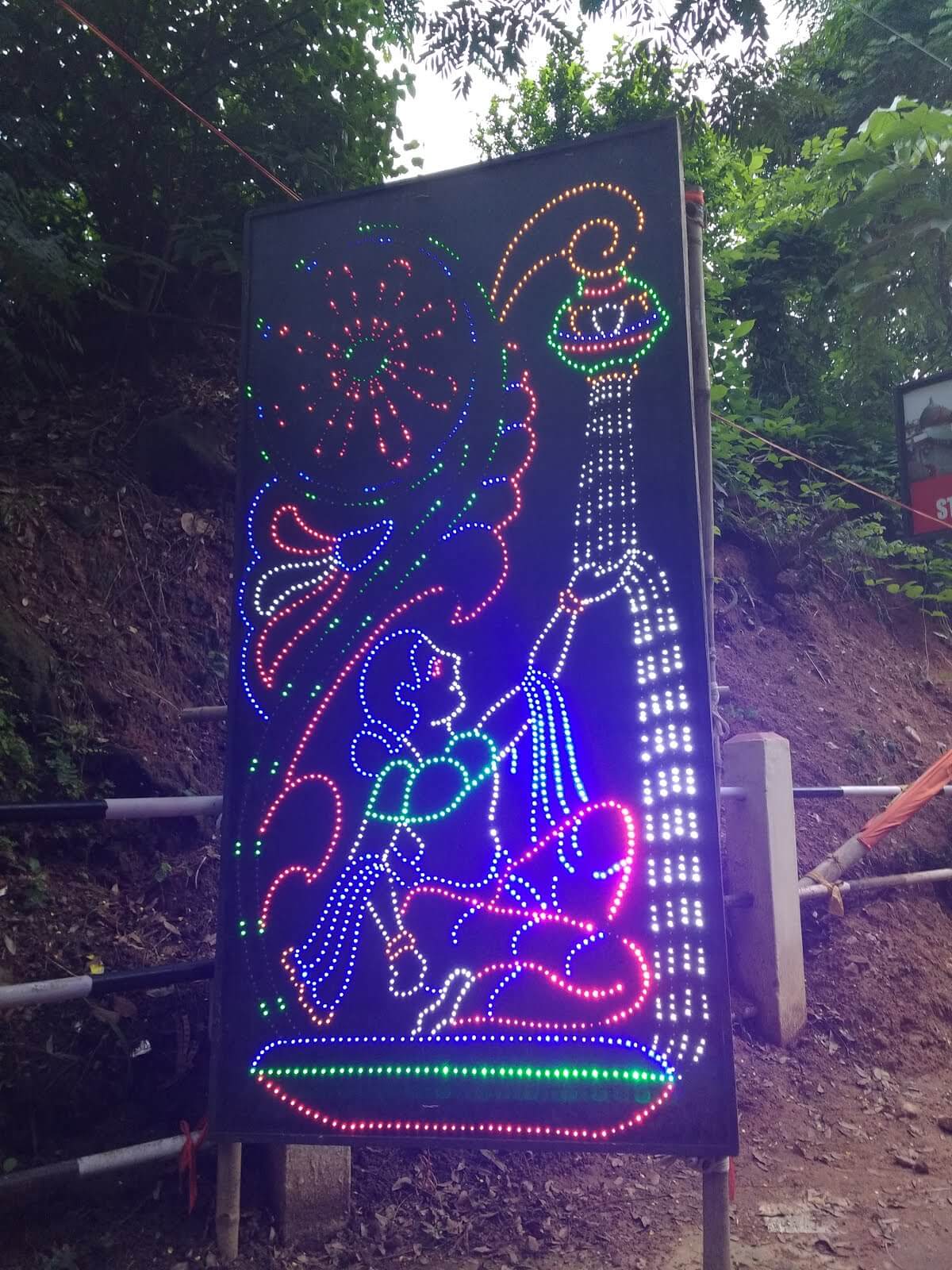
Ambubachi Mela At Kamakhya Temple In Guwahati Assam East India Travel Blog

To describe India, to attempt to describe India, to attempt to describe a region of India would in itself be a self-imposed imminent felony. Irrespective of your prowess in expression (of which I remain woefully amateur) the magic is such that words can try but would inevitably fall ridiculously short of expressing the essence of India.

I will still try as it would be another felony to leave these stories untold. You must understand the monsters I battle as I type this – the constant conflict of contrarian desires where I have to tell you about India, and yet cannot willingly destroy its sanctity by attempting to put it in words. You must understand the sacrifice I make in attempting to pen these thoughts, for it eternally puts me in that club of dreamers who could never truly describe India and once you understand that, I welcome you to construct a statue in my memory for posterity to remember my bravery.

I cannot tell you the best way to travel India because (highly pretentious while that may be) it just doesn\’t exist. India accepts, invites and warrants spontaneity; abhors formulaic wanderings. But we\’re not here to debate styles of wanderlust; each has their own and none of them are good enough for India.

I want you to look at this piece not as a travel guide (because really, I would not be so obliviously foolish to assume I have even touched the surface) but rather as a young man\’s outpour of thoughts. I look at you and invite you to take my proffered hand. Take my hand, and come drown with me in this ocean of colours, cultures, languages, history and emotions. See India as I see it and forever become one with the Quest.

Take my hand, and let us drown in the immense beauty of it all.

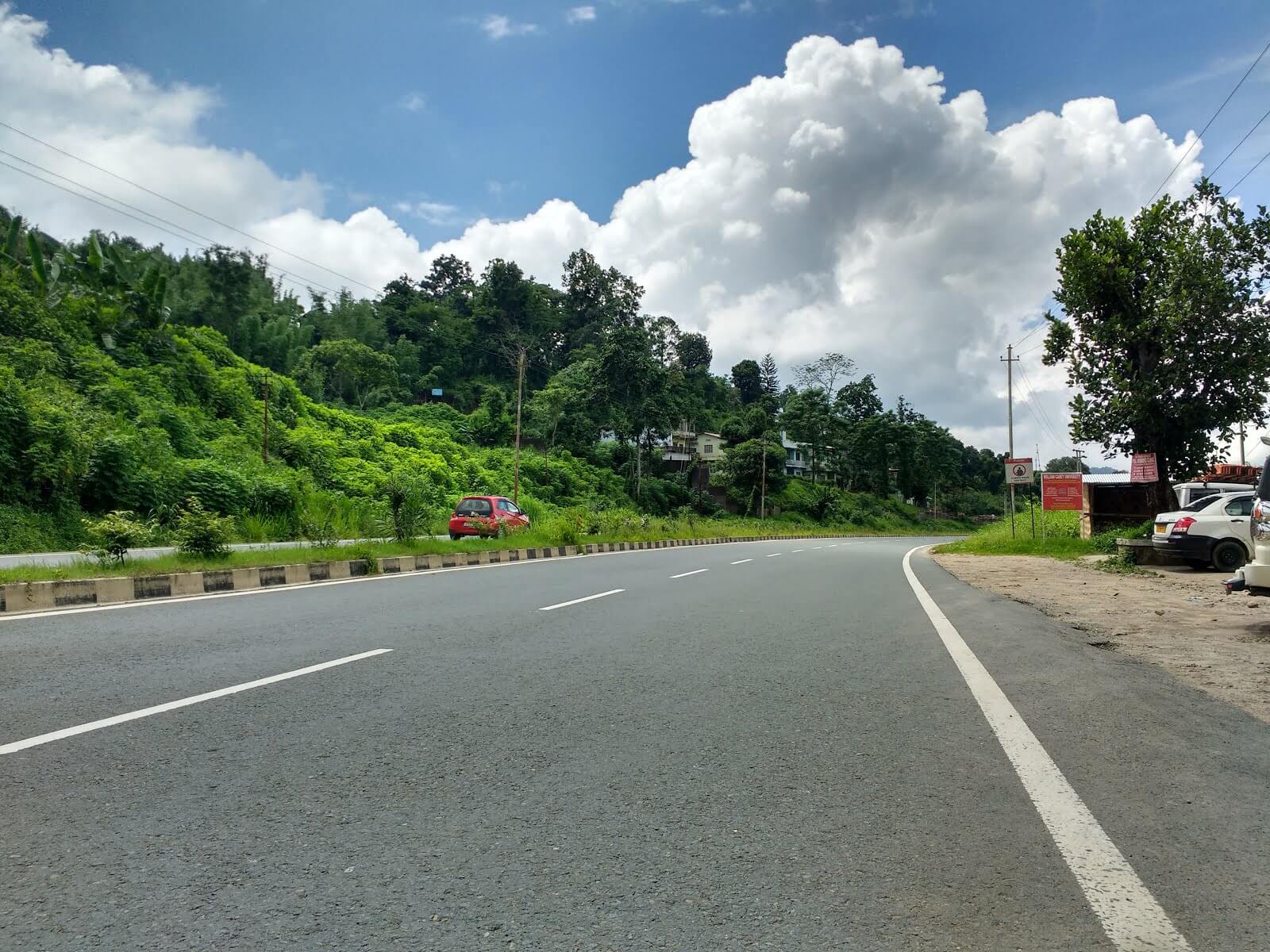
Assam Meghalaya Road Trip Scenery East India Travel Blog

Before we begin this journey, you and I, writer and reader, before we transiently embark together on the Quest for a few moments, you need my context to see my India. An inherently Indian man with a lineage from the city of Taj, I have spent my entire waking life outside India. I view this country in short bursts, and it helps me to appreciate the abnormalities and not dwell on the shortcomings. The cracked roads and cacophonous traffic are art and music, and not imprecations I would fling to authorities. India is far from perfect, but to a traveller with no foreseen future in this country, the imperfection is the biggest appeal.

As an intrinsic stickler for the underdogs, I found in East India an untold chapter of the Indian story. Incredibly distinctive by South East Asian influences, it seemed to be a world of its own. Of course, when it comes to India every state with its language, culture and history was once upon a time (and still is) a complete world of its own. This family of seven sisters, however, was cut off from the ruckus, and it seemed to have carved valleys of serenity out of its state of national neglect.

It takes a while to get used, I assure you. A shopkeeper I would\’ve initially guessed to be Chinese (without context, of course) grins toothily, flashing blood-red paan-stained teeth while asking for \’pachaas rupaiya\’. A pseudo-South-East-Asian kid walks in and asks for a \’phijut spinner\’, and receives dumbfounded stares.

Surprise is one element of this ride, as we move on to Meghalaya, where the official language is English in a country that is predominantly illiterate. A state that celebrates matrilineality in a nation of female prejudice. Where children under 14 are strictly prohibited from labour. Meghalaya, which translates to \’the abode of clouds\’, a state that shelters Mawlynnong, one of the cleanest villages in Asia in a country where educated city-dwellers need celebrities to inspire them to keep their streets clean.

The absurdly varied culture of it all.

I shall drag you up and down the sloping roads of Shillong, very San Francisco-esque in layout, very unheard in coverage, to the teeming Police Bazaar where decked out Mahindra Boleros zoom around with young men blasting Eminem. The Khasi tribe with their pimped out Maruti Suzukis and Bajaj Pulsars that adorn the winding roads. Taxi drivers that paste football club decals on their windshields to flaunt their loyalties.

\”Yahan ke log apni gaadi ka bada khyaal rakhte hai.\” (The people here look after their cars really well)

Do you see it?

We trail through villages in the abode of clouds, honking dogs, cows and children out of the way. The little girl skips across the road mischievously and waves at us ecstatically, delighted at the sight of non-native humans. A little boy holds an umbrella for his younger brother as they hold each other and traipse to school. Wizened men sit on rocks watching the cars whiz past, collecting thoughts and memories that would probably die with them.

The profound depth of it all.

Cherrapunji Meghalaya Scenery Tourism East India Travel Blog

They say East India is the Scotland of the East. Having been to both, I wouldn\’t bring it upon myself to compare either in terms of beauty and history as they have their own individual charms. The Scotland of the East, however, was definitely lighter on the wallet and much harder to scale. I was able to scour the entire actual Scottish Highlands in less than a week, but could hardly journey through more than three of the seven sisters, which happen to be some of the smallest states in India. The might of India, in full display even in its region of seclusion.

Where seclusion lies, there must lie pain also. The pain is an inevitable part of every trip through India. You can only run from it for a while – you can look at the red traffic lights, imploring them to turn green so you can move on and not have to think about the broken families sleeping right under it. Families that live by a timer, a window of sixty seconds when cars stop to obey traffic rules. Their sixty seconds of glory misery, as sticks laden with colourful balloons, toys, trinkets, food and newspapers bob between cars, trying to make a sale as the timer ticks down. Surely this swarm of peddlers would delay the traffic, I wonder, as the cars on the other side of the junction sputter to a stop.

The signal turns green, and there are no peddlers in site. The whimsical circus that lasted a minute.

You can run from it, ignore the beseeching wails and cries as you walk on the streets until you are stopped in your tracks by a child with a bowl, standing right in front and staring right at you.

What do you do then?

There will come a point when you will have to, be forced to, look at their eyes. In that moment, you will understand the consequences of the Quest.

While we stand here, hand in hand, in the middle of the road in Guwahati and watch children with reproachful eyes, eyes that tell stories of dirt, death, poverty and neglect, outstretched hands and missing limbs circle us, I ask you to not ignore this. Don\’t fight these thoughts, don\’t suppress these emotions. Feel the pain they feel, fear the horrors they fear and dream the fantasies they dream.

I am he as you are he as you are me and we are all together. 

In East India destitutes were replaced by entrepreneurial destitutes – where they don\’t beg openly but try to survive the day by selling water or crisps to tourists. Huts upon huts, in villages upon villages, lined with Lays and Kurkure packets and tourist hats. Hordes of people trying to scrape their way through life and fighting for means to survive in order to ultimately die a painful, neglected and dissatisfied death.

The unrelenting, inescapable sadness of it all.

Cherrapunji Meghalaya Tourism Scenery East India Travel Blog

I must now gaze into your eyes, and ask you to let go of my hand. This is, after all, my party. Your experience and understanding of India will ultimately be your own. Your inferences of art in the muck and patterns in the aberrations have to be your own. The Quest is your own.

In retrospect, I have expelled thousands of words and yet I feel a certain dissatisfaction with the result. The magic seems elusive, probably fettered by the constraints of prose. I shall then attempt to infuse a bit of poetry; utter the poetic incantation that would summon the aura that seems unattainable.

Of the lands of India, I say this
A hundred thousand words would still not do it justice.

That I guess, is as much an appropriate description as it is a flawed one for the ethereal, mystical lands of India.

Guwahati Tourism Assam East India Travel Blog
* * *
If you liked what you read, then do help me by sharing this on social media platforms on your choosing. We\’re all artists somewhere, in some field, and this is just my form of art that would truly find expression if more people get the inclination to read it. 
You can like this blog\’s Facebook page here, follow the Twitter feed here or follow me personally on Twitter here.

Similar articles: 

Agra: A Teardrop On The Cheek Of Time: Read More

Master Of All Nations, Citizen Of None: The Life Of A Gulf NRI: Read More

Adding Some Sadness To The Life Of Shyam Prasad

Fiction Short Story In The UAE

Right now, as he walked off into the sunset (or so to speak) from his latest job, he could conclude that his current circumstance could be equated to that of a hapless, thrashing fish out of water. This fascinating analogy, irrefutably and rather unfortunately, hit a small snag on further reflection: a fish out of water had a purpose – to get back in.

He, however, had none.

Ergo, it would be more fitting to equate himself to a dog chasing cars because much like Heath Ledger in The Dark Knight, he wouldn\’t know what to do if he caught one.

That would be it – a canine analogy for the ages. A dog frantically running pell-mell on the street, chasing car after car, each flashier than the one before it.

***

Every story needs context to make you, the reader, understand. To make you feel. To vicariously live out the precedent six months of our protagonist\’s life in the following words, so you can for a few minutes, until you finish perusing this piece, be our protagonist as he traipses off into the sunset, freshly unburdened from fetters of corporate bureaucracy yet sagging under an unshakable, irremovable load of guilt.

Six months back he was where most young university graduates find themselves – in the undesirable dome of unemployment. Some people find monotony in work, but he found it in his endless application-rejection cycle. The grindstones of hope, earnestness and desperation would whir into life, raucously churning out one job application after another, but to no avail. The din of these grindstones would grow louder with each day, with the grindstone of increasing desperation easily overpowering the faltering grindstone of diminishing hope.

It took multiple sparks, some sputtering and some spitting, to ignite a candle in the dark gloom of the dome of unemployment. The grindstones were silenced and after what seemed like ages, there was peace. The clawing nails had been snipped; the crying, wailing voices were muted. There was purpose. This brings us to a couple of months back as he walked into his new job, finally at peace, where on the threshold of his first task he met Shyam Prasad.

Innocuous, unassuming Shyam Prasad.

Shyam Prasad was as normal as normal could be. While our protagonist walked in with an aura of confidence, a penchant for time management and a desire to shine like a diamond, Shyam Prasad did none of those. Having done his undergraduate from a town in Tamil Nadu, he was unaware of the politics of corporate hierarchy. He should\’ve established himself from day one. He just didn\’t know how.

Bumbling, inquisitive Shyam Prasad.

Our protagonist helped him in all his tasks, \’guided\’ him just so he could complete his work on time. Inspired by just good camaraderie, so that fearful, cautious Shyam Prasad could escape the wrath of the head honchos. A little bit of camaraderie to help reduce the woes of Shyam Prasad.

Yet, it seemed on the matter of woes that Shyam Prasad had none, for he seemed to hide every emotion under the widest of smiles. He quickly struck up a bond with all the Tamilians, sharing their food during the lunch break. If one were to simply stare at Shyam Prasad, uninhibited by prejudice, context or perspective, the joyful face of Shyam while he wolfed down balls of rice, content to just listen to the stories of his peers, would paint a serene portrait of satisfaction.

Seemingly satisfied Shyam Prasad.

However, despite managing to carve a niche for himself amidst this throng of employees desperate to shine, our protagonist grew increasingly unsatisfied. As a millennial educated at a globally renowned university and handed opportunities without ever asking for them, he felt entitled to more. Bound by the shackles of unintentional privileges, he felt entitled to more responsibility, more respect and a heavier paycheck.

This false sense of entitlement instigated our protagonist to quit prematurely a job that thousands were vying to secure. In doing so, he spat in the face of all those who sat up all night acquainting themselves with the exemplary etiquettes of immaculate interviewees. A massive, arrogant spit in the face of those who count their savings each day, just so one day they could give their families the comforts that were ruthlessly denied to them.

On his last day, as he was working with Shyam Prasad, Shyam, unaware that this might be his last day of camaraderie with his new friend who had quickly become his support in this confusing, illegible world of corporate bureaucracy, launched into the story of his life.

Shyam Prasad\’s father had abandoned him when he was in the first grade. He had grown up watching his uncles waste their lives away, succumbed to the vices of alcohol and cigarettes. His mother had valiantly tried to give him a childhood that would remain irreparably torn apart. He was sharing a room with his cousin in Karama, surviving on a broken, run-down phone until he could save enough money to buy a laptop to Skype home. He ate from the plates of fellow Tamilians at work to save some money. His mother had taught him to be a \’decent man\’, and having grown up engulfed in the apparent weaknesses of men all his life, he vowed to be everything the men supposed to look after him weren\’t.

He was here in a foreign land, away from his mother. Away from the only person in his life who never gave up on him, never failed him. He was here desperately trying to make her proud by trying to be a \’decent man\’.

Strong, heroic Shyam Prasad.

Shyam Prasad had a purpose because he had no options. While our protagonist here mindlessly chased one fancy car after another, Shyam Prasad stood still, fettered by the unrelenting chains of destiny. While our protagonist was a rebellious challenger of fate – happily waltzing to the strings of temptation, Shyam Prasad was a victim of fate.

These were the thoughts plaguing the mind of our protagonist, as he lumbered off into the sunset. The wailing voices had found intensity once again. He did his best to clear his mind, yet somehow he couldn\’t shake off the image of a lonely Shyam Prasad ticking off days on a paper calendar, counting down the days until he would have saved up enough money to bring his mother to meet him.

He couldn\’t shake it off, because he just knew that as he broke the news of his resignation to his colleagues today, the saddest and the only genuinely sad person in the crowd was alone, alienated Shyam Prasad. Our protagonist was, while a privileged millennial to boot, now the latest addition to the list of people who had deserted Shyam Prasad, given up on him and ultimately failed him.

This was the baggage that he now carried back – a load of unshakeable, irremovable guilt.

The unshakable, irremovable guilt of adding some sadness to the life of Shyam Prasad.

Based on a true story.


If you liked what you read, then do help me by sharing this on social media platforms on your choosing. We\’re all artists somewhere, in some field, and this is just my form of art that would truly find expression if more people get the inclination to read it.

You can like this blog\’s Facebook page here, follow the Twitter feed here or follow me personally on Twitter here.

Similar articles:

The \’Not Bad\’ Tale Of My Driving Instructor: Read More

How To Ace Your Interview By Venkataraman Sundaraman: Read More

TVF\’s Arunabh Kumar, International Women\’s Day, Buzzfeed And The Growing Business of Feminism

TVF Pitchers Arunabh Kumar Sexual Harassment Claims Feminism Sexism

You see, when it comes to India (or just the world in general), sexism isn\’t uncommon. It\’s the sad heartbreakingly disgusting state of the nation, but we find solace in feeble and seemingly apparent spurts of progression. The internet today, unfailing comrade of the millennials, is a shining reflection of the people who sustain it. It\’s largely a progressive medium if you look in the right places. Racism, discrimination, bigotry, sexism, antisemitism – the vicious wyverns of our prejudiced pasts dissected with blatant aplomb in this virtual realm. Them, the harbingers of unattainable justice, trying to change the world one viral post at a time.

It was gratifying to embrace progression on a medium conducive to it. Television soaps still had its women unctuously doting over the men of the house and Bollywood still had its demeaning female acting sensually frolicking roles. The internet, spurned by the emergence of progressive web series creators, was the haven for liberal samaritans.

Or so we thought.

It\’s a shock to watch The Viral Fever burn in flames of its ignominy because it stood for more than just great content. It was the voice of the progressive youth – with shows that openly challenged antiquated traditions and resonated within the hearts and minds of the hopeful. Resonation is important, for it truly bridges the gap between the audience and the creator. Through Shah Rukh Khan, Salman Khan and Madhuri Dixit, we vicariously lived out our dormant romanticism, machismo and versatility. They resonated it with us, and we designated them to positions of importance.

So we did with TVF. An entertainment company that was about to launch its women-centric show \’Bisht, Please\’ this month. It isn\’t however, as we based on fallacious premises, a belief in progression. A desire to cause change, revamp mindsets and awaken the traditionalists. It isn\’t even a facade.

It\’s just business.

A business of feminism. Headed by honchos who openly, lecherously gape at women but jot down the words \’progressive\’ and \’liberal\’ on their meeting room bulletin boards when planning themes for shows. These are not progressive men, these are just closet traditionalists who know that progression sells.

What if there was some credibility to Arunabh Kumar\’s innocence (even though there can\’t be so much coagulated smoke without some fire) – thereby raising the question why people would find the need to conjure up fake molestation stories and thereby getting it answered by the fact that it sells.

Buzzfeed will happily shame any person found guilty of sexism (and rightly so) but would share a \”10 Surprising Porn Habits By Indian Viewers\” in a heartbeat. Another similar pseudo-progressive site would defame the photographer who looks to make some sweet rupee by snapping unflattering pictures of Bollywood actresses (and rightly so), but would happily share \”20 Times Ranveer Singh Made You Thirsty AF\”.

Business. Just good ol\’ business.

On Women\’s Day, you see less celebrating the existence of women in our lives, without whom we would truly be nowhere, and more comparisons between the genders. Rega Jha, editor of Buzzfeed India tweets out (to paraphrase) \”Let\’s celebrate women\’s day by appreciating things men do better than us: genocide…\”

While I\’m sure (positive!) that it was all in jest, a barrage of retweets later the purpose seems to be murky. The trivialisation of issues in the quest for high-impact potentially viral content. It\’s the decision between wanting to shout \”Thank you to all the women\” over \”All men are dogs!\”. The decision between what\’s good appreciation and what\’s good business.

A trifle of transient fame; a little transitory cyber notoriety. The essence of Women\’s Day lost to the business of feminism. Somehow, it seems that on days like these it\’s not the activists who sleep peacefully after spreading awareness but rather the jewellery stores that cashed them ousside howbow dah special promotions. A good day of business.

In midst of it all, us, flitting around from one false mascot of change to another – hoping and praying for progress but somehow, rather surprisingly, getting nowhere.

If you liked what you read, then dial up help-a-homie-hotline and please assist me in making this writing thing something substantial. If you didn\’t, k

You can like this blog\’s Facebook page here, follow the Twitter feed here or follow me personally on Twitter here.

Similar articles:

Indian At Rio Olympics 2016: No Country For Non-Cricketers: Read More

Everything Right, Wrong & Bhai About The Salman Khan Hit-And-Run Controversy: Read More

Everything Wrong & Right About The AIB Roast Controversy: Read More

The \’Not Bad\’ Tale Of My Driving Instructor

Fictional Short Story In UAE About Driving Instructor

If I were to promise you a world hitherto unseen, unheard and unfelt by a mere shift in seating position, kind of like the blog version of a red and blue pill, would you believe? Surely, the sights and sounds of this mundane reality are unfazed by angles – my pet monkey (if I had one) would look equally happy devouring a banana (if he had one) if I viewed him from the balcony of my villa (if I had one) or the passenger seat of my car (as you must\’ve guessed, also if I had one).

Yet we wage a constant battle between presumption and reality. I woke up to the vicissitudes of the road in November by changing my regular position in motor vehicles by just one seat. Strapped into the driver seat of a fuming, faltering and clearly-agonised-by-every-movement Nissan Sunny, I was abruptly shunned into a novel perspective. It was a world I was ignorant to, an unspoken dialect that was previously illegible – the gush of gratitude when that toothless truck driver gave me way and the rush of rage when that spineless bus driver flashed his headlights at me. 
A ravenous student was reborn. Taking his place in the passenger seat was an instructor who was perpetually unsatisfied. I was young again – a little child tottering and slipping on his odyssey towards learning to walk. He took my hand and led me on an asphalt path of discovery. The road is a great leveller of fate, I would posit ruefully, as I made a gleaming, whizzing Range Rover Evoque swerve out of the way of my wailing, whining and clearly-in-astronomical-distress Nissan Sunny. 

\”So bad.\” 

My instructor would sigh. He would lean back, close his eyes and soundlessly mutter incantations, leaving me in the driver seat of a faltering, flailing Nissan Sunny under the inarguable impression that he solely relied on higher powers (over my nascent driving skills) to get us out of the cacophony of Oud Metha road. 

I knew – I just knew. My suspicions were confirmed when he added a beaded necklace to the mix, constantly running a finger down the beads, murmuring to himself while I changed lanes. 

\”So bad.\”

These words were all that drowned the radio – the theme song of my tutelage. So bad. I foresaw a \’so bad\’ before I made the turn. I foresaw another weighted \’so bad\’ much before I entered the freeway. I would randomly hear those words in the middle of Eminem\’s greatest tracks. I would hear them before I crossed the road, on foot. I would nonchalantly dismiss the theatrical jitters of horror movies, yet if I were to hear the words \’so\’ and \’bad\’ randomly strung together in everyday conversation, I would start to sweat. Trepidation would bend me over, convulsing like a fish out of water (to the horror of the aunty I was just discussing my marriage eligibility with), drowning me in the engulfing terrors of driving ineptitude. 

With time it took the role of an unrelenting impetus. Emboldened by the hunger to seek approval, I would constantly learn, unlearn and practice – until there came a glorious, fateful day when I (in my objectively humble opinion) executed a perfect manoeuvre and glanced hopefully at his placid visage.

\”Yallah, so bad.\”

Preposterous! How could anyone criticise the elegance of that action? I would sputter indignantly; I would bombard him with questions, daring him to \’so bad\’ my determined efforts once again.

But he did. I spent weeks perfecting my near perfect movements, but 101.6 So Bad FM was all that resonated within my pleading, beseeching Nissan Sunny. There were times when I made a blatant gaffe and abashedly avoided his probing gaze – him soundlessly taunting me to question once again and me trying to reduce the tally of \’so bad\’s that was a perpetually accumulating glistening heap.

We had our moments in the sun. There was a time when a Chevrolet Corvette tried to bully its way into my lane, and me being the descendent of the regal blood of Mankhool, heir of the nobility of Bur Dubai, would stubbornly assert my priority over my lane with my frantic, frenetic Nissan Sunny. My instructor stepped in, admonishing me to go out of my way to give the Corvette some leeway because in his opinion we were meant to respect a \’good car\’.

\”Tayeb, but what if it\’s a Nissan Tiida?\”

He made a violent spitting motion and chuckled merrily.

Needless to say, at the next given opportunity, I made no qualms about not giving way to a Tiida, viciously spitting at the startled driver.

Also needless to say, my instructor wasn\’t pleased.

It took a few weeks (read: months) (truthfully read: years) but there came a day when (once again in my humble opinion) I moved seamlessly through the fumes spittin\’ bedlam of horns, sirens and thundering engines. My hands blended in with the steering wheel and my foot forged its sweet analogous relationship with the pedals. I twirled my moustache, puffed up my chest and looked at him with burgeoning pride, internally pleading for my first word of praise.

He avoided my gaze and casually ruffled through his papers, determined not to give me the satisfaction of having attained his stamp of approval.

\”Not bad.\”

Not bad? Not bad?! In a frustrating tangle of \’so bad\’s and \’not bad\’s, I became a citizen of the road. For one of the last times in my life, I was in the hands of a teacher and I was out to serenade to the swan song of my student life. Yet, I never got my \’good\’. 


He would never dote, praise or look mildly happy with my improvement. His temporary lapses in demeanour would occur only when I failed, for it seemed that he restrained a modicum of confidence in his student that would emerge when questioned by an external authority. He would take extra hours and work through a diseased liver to give me classes. Yet, I never got my \’good\’. 

Once, to deliberately mess me up into countless sleepless nights (I know, I just know), he uttered \’not bad but not good\’.

Alas! Unable to get the didactic nod from my teacher, I passed all tests immune to the vagaries of external examiners. Their certified and publicly valued stamp of approval was nothing compared to the informal and unacknowledged stamp I never got. After years of car lifts, public transport sagas and guilty car rides, I was liberated to be confined in the white lines of the road. Yet, I still never get my \’good\’.

I went back to him, one last time, equipped with the plastic card that was the certified fruit of my labour and desire. I asked him one last question, completely unrelated to my tenure as his pupil, expecting another traditional \’not bad\’ that would set me on my way, away from the last dregs of my student life. Just one more \’not bad\’ to latch this box of memories, and I would merge silently into the tumultuous tangle of daily traffic.

\”Do you like the Mitsubishi Lancer?\”

I knew what was coming; I was prepared for it.

\”I like you, habibi.\”

I looked into those eyes to see pure, genuine pride and I knew.

I just knew.


p.p1 {margin: 0.0px 0.0px 0.0px 0.0px; line-height: 14.0px; font: 12.0px Arial; -webkit-text-stroke: #000000} p.p2 {margin: 0.0px 0.0px 0.0px 0.0px; line-height: 14.0px; font: 12.0px Times; -webkit-text-stroke: #000000} span.s1 {font-kerning: none}

Based on a true story.

* * *

If you liked what you read then do help me by sharing this on social media platforms of your choosing (Facebook, Twitter, Instagram, G+, Reddit I ain\’t picky). We\’re all artists somewhere, in some field, and this is just my form of art that would truly find expression if more people get the inclination to read it.

You can like this blog\’s Facebook page here, follow the Twitter feed here, follow me personally on Twitter here.

Similar articles:

Adding Some Sadness To The Life Of Shyam Prasad: Read More
How To Ace Your Job Interview By Venkataraman Sundaraman: Read More